Aug 19, 2026
Rufous Hummingbird Migration & Range: The Clockwise Loop Explained
A Rufous Hummingbird banded in Alberta in July can, in theory, be the same bird photographed in Louisiana that December — not because it got lost, but because it's exactly on schedule. Most migratory birds move in a straight line between two points. This one runs a loop around the entire western half of the continent, and knowing where you are on that loop is the difference between "I'll never see one" and "it's due here in three weeks."
This guide covers where the Rufous Hummingbird goes and when — the migration route, the region-by-region breakdown, and the conservation story behind its declining numbers. For how hummingbird migration works in general, across every species, see our hummingbird migration overview. Looking for a different species? Start with our full overview of hummingbird species found in the United States.
Summary: Rufous Hummingbirds run a clockwise loop around the western U.S. — north up the Pacific Coast in spring, breeding as far as Alaska, then south through the Rockies in late summer. Expect them roughly March–May in the Pacific Northwest, June–July in Alaska, and July–September in the Rockies and Southwest, with a growing number now wintering along the Gulf Coast instead of continuing to Mexico.
Quick Facts
- Migration distance: roughly 3,900 miles (6,300 km) one way — Alaska to Mexico
- Relative to body size: about 78 million times its own body length, one of the longest migrations of any bird in the world by that measure
- Breeding range: reaches southeastern Alaska — farther north than any other hummingbird species on Earth
- Wintering range: centered on Mexico, with a growing number now overwintering along the U.S. Gulf Coast
- Population: an estimated 22 million (Partners in Flight)
- Population trend: declining about 2.2% per year, a cumulative 72% loss between 1968 and 2023
- Conservation status: Near Threatened (IUCN Red List)

How the Clockwise Loop Works
Unlike most migratory birds, which travel a fairly direct line between breeding and wintering grounds, the Rufous Hummingbird runs a clockwise loop around the entire western half of the continent. According to Cornell Lab's All About Birds, the birds move up the Pacific Coast in late winter and spring, reaching Washington and British Columbia by May; as early as July they may start south again, traveling down the chain of the Rocky Mountains. Cornell notes that people first realized this pattern by examining detailed field notes and specimens, noting the birds' characteristic arrival dates on each part of the circuit.
The leading explanation for the loop is that it tracks the best available nectar at each stage of the year — the Pacific Coast's earlier spring bloom on the way north, then the Rockies' later, higher-elevation wildflower bloom on the way south. The overall breeding range reaches as far north as southeastern Alaska, the northernmost breeding range of any hummingbird species in the world, while the wintering range is centered on Mexico, with a growing number of individuals now regularly overwintering along the U.S. Gulf Coast instead.
Before either leg of the loop, the bird has to eat aggressively enough to fuel it. Cornell's Birds of the World account attributes the rapid pre-migration weight gain to fat deposition, made possible by unusually high intestinal glucose absorption. The southbound leg shows this most dramatically: a foundational study of Rufous Hummingbirds refueling at isolated subalpine meadows found that most of a bird's weight gain during that stopover — as much as 44% of its body mass — happens in just the four days before it resumes migrating south.
A 2020 study in Avian Conservation and Ecology, led by Josée Rousseau, analyzed 28,948 banding captures from 459 locations across the migration corridor during fall migrations from 1998 to 2013. The research found that each age and sex category migrates roughly two weeks apart — adult males first, then adult females, then the young of both sexes — and that the groups follow subtly different routes, with a greater number of young birds passing south through California than adult females or males.
Key papers: Carpenter, F. L., M. A. Hixon, C. A. Beuchat, R. W. Russell, and D. C. Paton (1993). "Biphasic mass gain in migrant hummingbirds: body composition changes, torpor, and ecological significance." Ecology 74(4):1173–1182. | Rousseau, J., J. Alexander, and M. Betts (2020). "Using continental-scale bird banding data to estimate demographic migratory patterns for Rufous Hummingbird (Selasphorus rufus)." Avian Conservation and Ecology 15(2):2.

How we made this map: each state's status is based on a decade of eBird observations (2016–2025) — where Rufous has actually been reported, not just its core breeding range — and verified against state wildlife agencies and bird records committees. Darker shading marks where the species is reported more often. The four status tiers reflect whether Rufous breeds, resides year-round, passes through, or turns up only rarely in each state.
Following the Rufous Across the Regions
One bird, one loop. Most hummingbirds move north in spring and south in fall along more or less the same path. The Rufous doesn't. It runs a clockwise loop around the entire western half of the continent — up the Pacific Coast in spring while the coastal bloom peaks, then south through the Rockies in midsummer as high-elevation wildflowers open. That single behavior is why this bird turns up in more of the country than any other western hummingbird, and why the right time to watch for one depends entirely on which side of the loop you live on. It reaches all eight U.S. birding regions — as a breeder and resident in the West, a genuine migrant through the middle of the country, and a rarer but real visitor at the eastern edge.

California anchors the western edge of the range year-round — the coast holds Rufous through the seasons, and breeding reaches into the Coast Ranges of the north. The spring coastal push still runs February into April as birds ride the early bloom, but this isn't a state the bird only passes through. At the other end of the loop, southeastern Alaska marks the world's northernmost hummingbird breeding range.
Pacific & West guide →
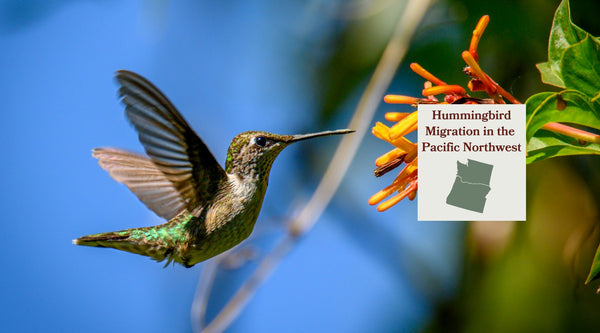
The breeding heartland, and the epicenter of the species' decline. Coastal Washington and Oregon fill with Rufous by late April and May — Washington holds the bird year-round at the state level, Oregon through the breeding season. This is also where breeding habitat has been disappearing fastest — more on that below.
Pacific Northwest guide →
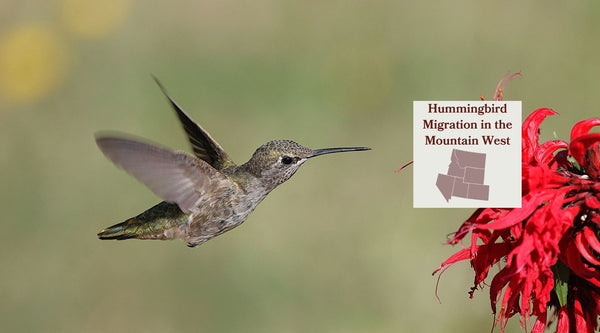
The northern Rockies split two ways here. Idaho, Montana, and Wyoming hold breeding Rufous through the summer, with birds present into the nesting season rather than just passing through. Utah, Colorado, and Nevada see the bird almost entirely from July through September, as it rides the Rockies' late wildflower bloom back toward Mexico.
Mountain West guide →
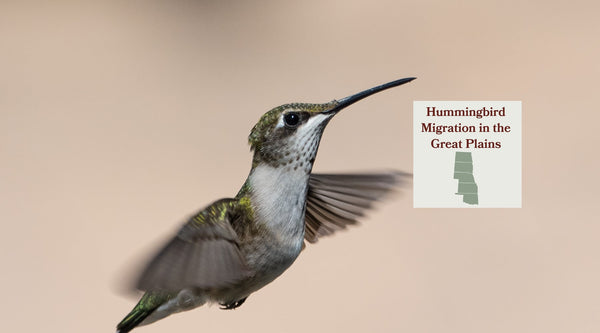
The eastern fringe of that same run. The southbound route clips the far western edges of Nebraska, Kansas, and Oklahoma in late summer, and that's where the mapped range ends.
Great Plains guide →
Arizona catches birds twice, northbound in spring and southbound in July and August, while New Mexico is mostly a one-season state. Texas is two stories at once — the west is a migration corridor, while a growing number of birds now winter along the Gulf coast.
Southwest guide →
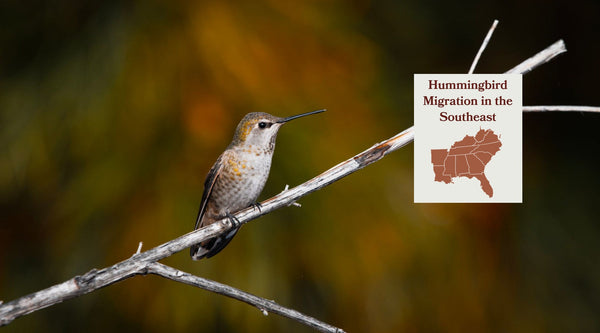
Louisiana and Florida now host Rufous through the winter in real numbers; in Louisiana it's the hummingbird you're most likely to find at a January feeder. Along the coasts of Mississippi, Alabama, and the far southern tip of Georgia, birds reach the immediate shoreline but not much further inland.
Southeast guide →
A real fall and early-winter presence, thinner than out West but genuine — part of the same winter-Selasphorus pattern the East now sees. Ohio, Illinois, Wisconsin, and Iowa all record Rufous on a repeatable schedule, most often at feeders left up past the first frost. Michigan sees a thinner version of the same pattern, while Minnesota — like North Dakota next door — sits at the true rare-visitor edge. Worth watching for from October on.
Midwest guide →
Of all the western hummingbirds that occasionally show up in the East, Cornell notes, the Rufous is the most frequent. Records come mostly in late fall and winter — as far as West Virginia, Vermont, New Hampshire, and Rhode Island — and eastern birders now actively watch for them.
Northeast & Mid-Atlantic guide →Read them in loop order and you're following one bird's year: north up the coast in March, breeding in Alaska by June, and back down the Rockies by September — with a growing number stopping short and spending the winter on the Gulf.
Rufous Hummingbird by Region: Where and When to Find Them
Conservation: A Bird in Real Trouble
All of that remarkable biology comes attached to a genuinely worrying population trend. The Rufous Hummingbird is rated Near Threatened on the IUCN Red List. Breeding Bird Survey data show a decline of roughly 2.2% per year between 1968 and 2023 — a cumulative loss of 72% — and the 2025 State of the Birds report lists the species as an Orange Alert Tipping Point species, meaning it has lost more than half its population in fifty years and has shown accelerated declines within the past decade.
A 2024 study in Avian Conservation and Ecology (Jefferys et al.) set out to find the cause. Using 36 years of satellite imagery and species distribution modeling, the team quantified breeding-habitat change across the Pacific Northwest for the first time. They found suitable habitat had fallen by 34% in the Northern Pacific Rainforest — the core of the breeding range, where the birds are most abundant — and by 53% in the Northwestern Interior Forest, with those coastal habitat losses statistically linked to the steepest population declines. Their Breeding Bird Survey model estimated a further population change of about −43% between 2006 and 2021.
The cause is subtler than clearcutting, and worth getting right. Rufous Hummingbirds need open habitat — forest openings, shrubby early-successional growth, the flower-rich gaps that follow fire or logging. The study found that most of the habitat decline occurred in areas of stable forest cover, meaning nothing was cut down at all. Two things appear to be squeezing this bird from opposite directions: intensive industrial forestry that uses herbicides to suppress the shrubby, flowering understory, and decades of fire suppression on federal lands that has let previously open, early-seral stands mature into dense, closed-canopy forest. As the authors are careful to note, their results do not imply that old-growth forests are poor habitat — the problem is the loss of light gaps and floral resources in between.
There is one hopeful wrinkle. The same study found substantial habitat gains at the interior, northeastern edges of the breeding range — up 160% in the Northern Rockies and 85% in the Great Basin, likely driven by warming minimum temperatures. But as the authors caution, increasing suitability does not guarantee that a species will actually colonize new ground.
Key paper: Jefferys, K. M., M. G. Betts, W. D. Robinson, J. R. F. Curtis, T. A. Hallman, A. C. Smith, C. Strevens, and J. Aguirre-Gutiérrez (2024). "Breeding habitat loss linked to declines in Rufous Hummingbirds." Avian Conservation and Ecology 19(2):2. The 65%-since-the-1970s decline figure and the near-twofold acceleration from 2009 to 2019 come from English, S. G., C. A. Bishop, S. Wilson & A. C. Smith (2021), "Current contrasting population trends among North American hummingbirds," Scientific Reports 11:18369.

Habitat
Rufous Hummingbirds typically breed in open or shrubby areas, forest openings, yards, and parks, and sometimes in forests, thickets, swamps, and meadows from sea level to about 6,000 feet. During migration they turn up in mountain meadows as high as 12,600 feet. In Mexico, wintering birds live in oak, pine, and juniper woods at 7,500 to 10,000 feet, along with shrubby areas and thorn forests.
That preference for open and shrubby is the key to understanding this bird's decline — it's exactly the habitat type that's been disappearing across the Pacific Northwest.

Frequently Asked Questions
How far does the Rufous Hummingbird migrate?
Roughly 3,900 miles one way between Alaska and Mexico — about 78 million times its own body length, which makes it one of the longest migrations relative to body size of any bird in the world.
Where do Rufous Hummingbirds spend the winter?
Primarily in Mexico, in oak, pine, and juniper woodlands at 7,500 to 10,000 feet. A growing number now winter along the U.S. Gulf Coast instead, especially in Louisiana and Florida.
When do Rufous Hummingbirds migrate through my area?
It depends entirely on where you sit on the loop. Expect them in the Pacific Northwest by March, in Alaska for a short breeding summer, and back through the Rockies from July through September on the southbound leg. See the region breakdown above, or find your state in our full guide by state.
Are Rufous Hummingbirds rare or endangered?
Not hard to find within their range, but the population is genuinely declining. They're rated Near Threatened on the IUCN Red List, with Breeding Bird Survey data showing a 72% cumulative decline between 1968 and 2023.
Can Rufous Hummingbirds show up in the eastern United States?
Yes — more often than any other western hummingbird, according to Cornell Lab. Records concentrate in fall and winter, and while they're rare-visitor sightings rather than an established population, they're regular enough that eastern birders actively watch for them.
Why We Created This
Pop's Birding is a third-generation, Idaho-based family business that invented the hummingbird swing. One of the questions our customers ask most often is "when will I actually see a Rufous Hummingbird where I live?" Most migration content describes the general Alaska-to-Mexico loop without ever connecting it back to a specific state or season. We built the region-by-region breakdown — tied to every state along the route — specifically to close that gap, and to show the conservation story that most identification-focused content leaves out entirely.
How We Created This
Every population, migration, and habitat figure on this page was checked directly against its primary source — the actual peer-reviewed paper or Cornell's current published page — rather than assumed correct because it was already live on our own site. State-by-state range claims are cross-checked against our own verified interactive range map, which has already been through this project's full four-tier classification process, so the narrative text and the map data stay consistent with each other rather than drifting apart over time. That's the standard held for every figure here — the exact Bird Conservation Region percentages from Jefferys et al. (2024), the banding-capture counts from Rousseau et al. (2020), and the population trend figures from Cornell were each confirmed against their original source, not repeated because they'd already been published once.
Looking for the rest of the picture on this bird? See our Identification guide and Behavior & Family guide, or browse every species in our full U.S. hummingbird guide. At Pop's Birding, we believe every backyard — big or small — has room for a little more wonder. Explore our feeders, nectars, swings, and wildflower seed blends to start building your own hummingbird sanctuary today.

Bethany Sloan has served as General Manager of Pop's Birding since 2010, continuing the legacy of her grandfather, William "Pops" Sloan, inventor of the Original Hummingbird Swing. A lifelong hummingbird enthusiast, educator, and independent researcher, she leads the company's educational content, including its 50-State Hummingbird Guide series, Regional Guide, Species Guide and Hummingbird Learning Center. Bethany combines scientific research, regional migration data, and more than 16 years of hands-on experience to create trusted educational resources for bird enthusiasts across North America.