Jul 19, 2026
Hummingbird Migration in the Pacific & West: From the Crowded Coast to the Empty North
Quick overview: California and Alaska sit at opposite ends of what a hummingbird community can look like. California is the most crowded hummingbird neighborhood on the West Coast — five or six species overlapping, competing, and in places interbreeding. Alaska has exactly one. Keep feeders up year-round in coastal and southern California, where Anna's and Allen's never leave. In Alaska the whole season fits between April and August.
🗓️ Feeder Timing at a Glance
Put your feeder up: Year-round in coastal and southern California; early April in Alaska
Take it down: Never, in most of California; by early September in Alaska
Which Hummingbirds You'll See in This Region
California holds one of the richest hummingbird line-ups on the continent. Alaska holds one species. Meet everyone first — what happens when they share a landscape is the rest of this guide.
Anna's Hummingbird
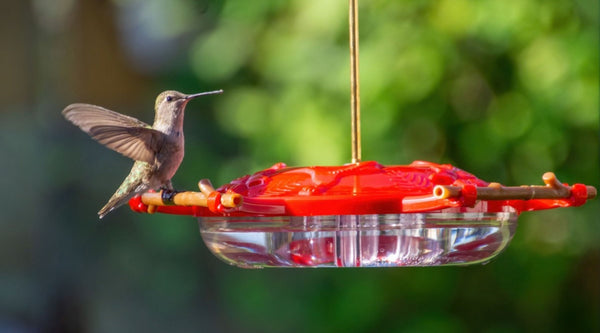
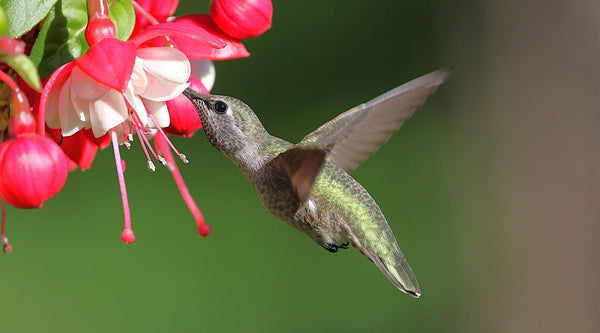
California's year-round resident and the anchor of the whole region. Males wear an iridescent rose-red crown and throat — a full-head shimmer no other North American hummingbird has. It doesn't migrate, nests as early as December along the coast, and is the only hummingbird here you can count on in every season. It's also the most conspicuous singer in the family, delivering a scratchy song from an open perch.

Allen's Hummingbird
A California near-endemic with a world range barely larger than this coastline — and the most complicated bird in the region. Males are coppery-orange with a fiery throat, very close to Rufous in the field. There are really two Allen's here: a migratory form that arrives early, often by December or January, and a sedentary form that never leaves the Los Angeles basin. They are on opposite trajectories, which is a story worth its own section below.

Black-chinned Hummingbird
The interior breeder. Males show a velvety black throat edged with violet that only flashes at the right angle. This is a breeding summer resident through the Central Valley, foothills, and riparian corridors from roughly March into September — not merely a bird passing through, which older accounts often imply. Along the immediate coast and in the far south, most Black-chinneds genuinely are just migrating.

Costa's Hummingbird
The desert specialist, and Anna's closest relative. Males have a violet gorget that flares dramatically at the sides like a moustache. Costa's runs on desert time: it nests February through spring, timed to desert bloom, then largely clears out ahead of the worst summer heat. It isn't strictly a desert bird, though — it also turns up in coastal Southern California sage scrub and chaparral, which puts it face to face with Anna's.

Rufous Hummingbird
The traveller, and the only hummingbird that nests in Alaska. In California, Rufous is overwhelmingly a spring migrant — pushing north up the coast from February into April, refuelling on early bloom and moving on. It runs a clockwise loop, north along the coast and south down the Rockies, which is why California sees the outbound rush and almost nothing of the return. Famously pugnacious for its size.

And in the mountains
Calliope Hummingbird — North America's smallest bird — breeds in the Sierra Nevada and northern ranges, and Broad-tailed breeds in the eastern California mountains including the White and Inyo ranges. Both are genuine California breeders that regional accounts routinely leave out. Rufous also has a small confirmed breeding toehold in the Trinity Mountains of Trinity and Humboldt counties.
What's Actually Happening in This Region
Pair California with Alaska and you get the full range of what a hummingbird community can be.
In coastal Southern California, five species can occur in the same neighbourhood, two of them close enough relatives to interbreed, and one of them currently splitting into two populations with opposite futures. In Alaska, a single species arrives in April, nests, and leaves — with no competitors at all.
Everything below follows from that difference: crowding produces competition, hybridisation, and rapid change. Emptiness produces something else entirely.
The Two Allen's — Evolution You Can Watch
This is the strangest thing happening in the region, and most people living inside it have no idea.
Allen's Hummingbird comes in two forms. The migratory subspecies, Selasphorus sasin sasin, breeds along the coast from Oregon to California and winters in Mexico. The sedentary subspecies, S. s. sedentarius, was a Channel Islands endemic — until it wasn't.
Christopher Clark tracked what happened next using eBird records, published in The Condor in 2017. The sedentary birds colonised the mainland at the Palos Verdes Peninsula sometime before 1966. Since then their range has grown "from ∼70 km² in 1970 to ∼13,000 km² today" — roughly a 700% expansion — spreading through Los Angeles, Orange, San Diego, and western Riverside counties, living in "urban parks, gardens, and campuses." Allen's now appears on about one in five eBird checklists submitted from Southern California.
Meanwhile the migratory form is the one appearing on conservation watchlists. And here is where it gets genuinely interesting: Clark argues the published decline estimates for Allen's are overstated, because standardised breeding surveys run through wildland habitat and largely miss a booming urban population. He called one widely cited figure "not credible," pointing out that it would imply ten million Allen's Hummingbirds existed in 1970 within a very small range, and that the sedentary subspecies has grown its territory sevenfold over the same period.
So when the numbers say Allen's is collapsing and your Los Angeles feeder says otherwise, both can be partly right. They're describing different birds.
The two forms are now meeting, and genetics has caught up with what that means. Godwin and colleagues (2020, Conservation Genetics) sequenced Allen’s Hummingbirds collected across California between 2004 and 2016 and found three genetic clusters — northern mainland, Channel Islands, and the new urban population. That third group turned out not to be island birds at all. Their conclusion: mainland southern California Allen’s “are a hybrid population resulting from admixture between S. s. sasin and S. s. sedentarius.” A separate study using ecological niche models (Myers et al. 2021, Ecology and Evolution) predicts the expansion will continue north along the coast and inland.
The authors offer a hopeful reading. Rather than the island form simply replacing the migratory one, the growing urban population carries a significant share of sasin genes — which could make southern California a reservoir for a subspecies under pressure elsewhere. Philip Unitt of the San Diego Natural History Museum, quoted by eBird, called it what it is: two subspecies differing in multiple aspects of their biology brought into contact, “an opportunity for study of evolution in process.”
That is happening in suburban gardens, right now, and you can watch it from a kitchen window.
The Bird California Exported
Anna's Hummingbird is the other half of the story, and the one that left home.
A hundred years ago it nested only from northern Baja up to the San Francisco Bay area. That was the entire world range. Today it breeds north to Vancouver Island and east into Arizona, and every one of those birds traces back to a California source population. A 2019 study by C. J. Battey in The American Naturalist attributed the expansion to a mix of introduced plants, human facilitation, and the birds' own adjustment of their nesting calendar.
The California ingredients were eucalyptus — planted in enormous quantity and flowering right through winter when native nectar disappears — plus tree tobacco in the south, ornamental gardens, and eventually feeders. California didn't just host that expansion. It assembled the conditions and then exported them.
One wrinkle: the growth is now happening at the frontier, not the source. A 2021 analysis in Scientific Reports found Anna's increasing dramatically since 1970, with the strongest gains in the northern and western parts of the current range. California, where it started, looks closer to full.
Who Wins in a Crowded Neighbourhood
Put five hummingbird species in one place and they spend a great deal of energy arguing about it.
Miller and colleagues (2017, Behavioral Ecology) built a continental dominance hierarchy from 7,685 recorded squabbles among 136 bird species at feeders. Body mass predicted most of it — bigger usually wins — but hummingbirds were a striking exception. As the Cornell Lab summary put it, they "punched above their weight." A three-gram bird routinely displaces species many times its size.
This is why a single feeder in a Southern California yard often means one dominant bird and a lot of chasing, while several feeders spaced out of sight of each other will host more birds and less conflict. It's also why migrating Rufous can pass through in March and briefly take over a yard that a resident Anna's has held all winter.
Crowding has another consequence. Hummingbirds hybridise unusually often for birds — Clark, Rankin and Rudeen (2021, Ornithology) went through nearly a million banding records and found roughly one hybrid per thousand birds where several species breed together, almost all of them west of the Mississippi. Southern California, where Anna's and its sister species Costa's overlap and where two Allen's subspecies are meeting, is one of the places that happens most. If a bird at your feeder refuses to match the field guide, that's a real possibility here rather than a rare curiosity.
🌾 What You Can Do: Feed the Winter, Not Just the Spring
Most of the country plants for spring. California’s problem is the opposite — Anna’s and Allen’s are here in January, nesting as early as December, when almost nothing native is in bloom.
Plant for the cold months. Fuchsia-flowered gooseberry (Ribes speciosum) and chaparral currant (Ribes malvaceum) are the true winter bloomers — the California Native Plant Society calls the gooseberry one of “the quintessential hummingbird attractors,” and it peaks in February. Manzanita flowers through winter, drawing Anna’s when little else is open. California fuchsia carries late summer into fall, bridging toward that window. In desert Southern California, add chuparosa — though it’s a Colorado Desert plant and won’t take coastal frost.
Then spread things out. With five or six species in one Southern California neighbourhood, a single feeder becomes one bird’s property. Several feeders and scattered plantings can’t be monopolised the same way — which means more birds, and more species, get to feed.
In Alaska, skip the planting plan. The season runs April to August and that is genuinely it, so feeders do the work. If you do plant, salmonberry, fireweed, and western columbine are the natives Rufous actually use in the panhandle.
For plant lists matched to your microclimate, see our state guides: California and Alaska.
The Rufous On-Ramp: California in Spring
Rufous doesn't settle here. It refuels here.
Cornell Lab describes the loop precisely: the birds "move up the Pacific Coast in late winter and spring, reaching Washington and British Columbia by May. As early as July they may start south again, traveling down the chain of the Rocky Mountains."
From roughly February into April, Rufous push north along the coast, feeding on the earliest bloom of the year — currants, gooseberries, manzanita, and the same winter-flowering eucalyptus that helped Anna's stay put. They're burning through California as fast as the flowers allow, headed for breeding grounds two thousand miles north.
And they don't come back this way. The return leg runs down the Rocky Mountain spine in late summer, tracking high-elevation wildflowers — covered in the Mountain West guide. If you're on the California coast, you get the northbound rush and almost none of the return.
Alaska: A Community of One
Now the opposite extreme.
Four hummingbird species have been recorded in Alaska. Only Rufous nests there — and it breeds farther north than any hummingbird on Earth. All About Birds puts the limit at southeastern Alaska, while the Alaska Department of Fish and Game describes it as the only hummingbird commonly found in both Southeast and Southcentral Alaska. The Western Hummingbird Partnership documents breeding as far as Prince William Sound, around 61°N.
Strip away the competitors and something interesting happens: all of that famous Rufous aggression has nowhere to go except its own species. There is no dominance hierarchy in an Alaskan yard, because there is nobody to rank against.
The bird's ecological role changes too. In cool, cloudy northern conditions, cold-blooded insect pollinators are at a disadvantage — which makes a warm-blooded hummingbird that can work in poor weather disproportionately important to the plants it visits. In California, Rufous is one nectar-feeder among many. In Alaska, it's essentially the whole service.
The season leaves no slack. Per the Western Hummingbird Partnership, males arrive by April and start south again in July; females arrive in April, incubation runs late May into late June, and young fledge in July. Arrive late and there's no second chance.
Alaska's Second Species
One update most guides haven't caught. Anna's Hummingbird was first recorded in Alaska in 1971. It's now scattered across Southeast and has reached as far north as Kodiak Island — and it turns up in winter. During the December 2021 Christmas Bird Count, 21 Anna's Hummingbirds were documented in Ketchikan, all at feeders. ADF&G attributes the northward push of more than 700 kilometres to feeders directly.
So the same expansion that started in a California chaparral has now placed a second hummingbird at the top of the map, arriving in the season when the first one is long gone. Costa's and Ruby-throated round out the state list as casual vagrants.
Migration Timing by Sub-Region
Pop's tip: In Southern California, spread two or three feeders around the yard rather than hanging one good one. Given how hard these birds fight over food, a single feeder means a single dominant bird. In Alaska, the opposite problem: have your feeder clean and out by early April, because the season has no margin for a late start.
Conservation: What's Actually at Stake Here
- Allen's Hummingbird — the complicated one. Breeding survey data show steep long-term decline and a 2025 Red Alert Tipping Point listing, while the sedentary urban population has expanded sevenfold. Clark's 2017 analysis argues the decline magnitude is overstated because surveys miss urban birds. Both halves deserve stating; the honest summary is that the migratory form is in trouble and the sedentary form is not.
- Rufous Hummingbird — down roughly 72% since 1968, Orange Alert listed and IUCN Near Threatened. California is a migration corridor rather than a breeding stronghold, but the birds passing through in spring are the same population declining farther north.
- Anna's Hummingbird — increasing dramatically since 1970, roughly 9.6 million birds, and a species of low conservation concern.
- Costa's and Calliope — the peer-reviewed Breeding Bird Survey analysis found both relatively stable, though Costa's faces ongoing loss of desert scrub to development.
One note on reading these numbers: the IUCN rates Allen's and Anna's Least Concern while U.S. assessments flag Allen's as Red Alert. That isn't a contradiction. The IUCN weighs global extinction risk across a species' whole range; State of the Birds weighs national trend. And as the Allen's case shows, even a national trend can miss what's happening in a city.
Should I Take My Feeder Down in Fall?
In most of California, no. Anna's is a genuine year-round resident and Allen's is resident across much of the Los Angeles basin, so a clean, reliable feeder does real work in December.
In Alaska the answer flips, for a simple reason: for most of the year there's nothing to feed. Rufous are genuinely absent from roughly September through March. Put feeders up in early April and take them down by early September — while keeping an eye out for a winter Anna's, which is no longer unheard of.
The old worry that a feeder will strand a migrant doesn't hold up. Fall departure runs on day length and the hormonal cascade that follows, not on whether your feeder is full.
How to Help Hummingbirds Through This Region
- Keep feeders up year-round where Anna's or Allen's are resident, and clean them on schedule — a neglected feeder serving a resident population does more harm than no feeder at all
- Use several feeders, spaced apart. In a five-species neighbourhood, one feeder means one dominant bird; several out of sight of each other means more birds actually feeding
- Plant for your specific microclimate. Desert, coastal, valley, and montane California are genuinely different growing environments, and a plant list built for one will underperform in another
- Prioritise native, flower-rich structure with open, sunny gaps — the habitat type both Allen's and Rufous are losing to coastal development
- Time some bloom for late winter and early spring. February through April is when northbound Rufous need fuel and when Anna's is already nesting
- In Alaska, have feeders out by early April and down by early September, and report any winter hummingbird you see — those sightings are genuinely useful data
Frequently Asked Questions
Why does California have so many hummingbird species?
The state packs desert, coast, Central Valley, and high mountain habitat into one place, which supports year-round residents like Anna's and Allen's alongside breeding species like Black-chinned, Calliope, and Broad-tailed, plus heavy spring passage of Rufous. Different parts of the state effectively run different hummingbird calendars.
Which hummingbirds live in Alaska?
Four species have been recorded, but only Rufous Hummingbird nests there — and it breeds farther north than any hummingbird on Earth, reaching south-central Alaska near Prince William Sound. Anna's Hummingbird, first recorded in 1971, is now a rare but increasingly regular fall and winter visitor, with 21 documented in Ketchikan on a single Christmas Bird Count in December 2021. Costa's and Ruby-throated are casual vagrants.
Is Allen's Hummingbird declining or increasing?
Both, depending which one you mean. There are two subspecies: a migratory form that breeding surveys show in steep decline, and a sedentary form that spread from the Channel Islands to the mainland and has grown its range roughly sevenfold since 1970. Research published in The Condor in 2017 argues the published decline figures are overstated because standardised surveys largely miss the booming urban population. So the survey data and your Los Angeles feeder can both be telling the truth.
Why do hummingbirds fight so much at my feeder?
Because they're built for it and there's a lot to fight over. A 2017 study in Behavioral Ecology ranked 136 bird species by dominance at feeders and found hummingbirds punch far above their weight — a three-gram bird will displace species many times its size. In a crowded region like coastal Southern California, one feeder usually means one dominant bird. Several feeders spaced out of sight of each other will host more birds and far less chasing.
Could I be seeing a hybrid hummingbird?
In Southern California, genuinely yes. Hummingbirds hybridise more often than most birds — roughly one in a thousand banded birds where several species breed together, almost all west of the Mississippi. Anna's and Costa's are sister species that overlap here, and two Allen's subspecies are currently interbreeding across the Los Angeles basin.
Should I keep my feeder up year-round in California?
In areas with resident Anna's or Allen's — which is most of coastal and southern California — yes. In areas that see only seasonal migrants, a spring-through-fall schedule is fine.
When should I put my hummingbird feeder out in Alaska?
Early April in the southeastern panhandle, a bit later inland and farther north. Take it down by early September, but stay alert in winter — Anna's now turns up at Alaskan feeders in December.
Why do Rufous Hummingbirds come up the California coast but not go back down it?
They run a clockwise loop — north up the Pacific Coast in late winter and spring, then south down the Rocky Mountains starting as early as July. Coastal California gets the northbound rush and very little of the return.
How We Know This
Range, timing, and population figures come from the Cornell Lab of Ornithology's All About Birds species accounts and Partners in Flight estimates reported there. Alaska status draws on the Alaska Department of Fish and Game and the Western Hummingbird Partnership. The Allen's subspecies story comes from Clark (2017, The Condor), with the genetic findings from Godwin et al. (2020, Conservation Genetics) and Myers et al. (2021, Ecology and Evolution). The Anna's expansion comes from Battey (2019, The American Naturalist), with population trends from English et al. (2021, Scientific Reports). Dominance findings come from Miller et al. (2017, Behavioral Ecology) and hybridisation rates from Clark, Rankin & Rudeen (2021, Ornithology). Rufous habitat findings come from Jefferys et al. (2024, Avian Conservation and Ecology).
Key Takeaways
- California and Alaska are opposite ends of what a hummingbird community can be — five or six overlapping species versus a single one with no competitors
- Allen's Hummingbird is splitting in two: a migratory form in documented decline and a sedentary form that has grown its mainland range roughly sevenfold since 1970
- Those two forms are now meeting and interbreeding across the Los Angeles basin — evolution happening in suburban gardens
- Anna's is California's great export: a bird that spread from a narrow coastal strip to Vancouver Island and Arizona, carried on eucalyptus, gardens, and feeders
- Hummingbirds fight far above their weight class, which is why several spaced feeders beat one good one in a crowded region
- Southern California is one of the likeliest places in the country to see a hybrid hummingbird
- In Alaska, Rufous has no competitors at all — and in cool, cloudy conditions where insect pollinators struggle, it carries a disproportionate share of the pollination work
- Anna's has been a rare but increasing winter visitor to southeastern Alaska since 1971, putting a second species at the top of the map
At Pop's Birding, we believe every backyard — big or small — has room for a little more wonder. Explore our feeders, nectars, swings, and wildflower seed blends to start building your own hummingbird sanctuary today.

Bethany Sloan has served as General Manager of Pop's Birding since 2010, continuing the legacy of her grandfather, William "Pops" Sloan, inventor of the Original Hummingbird Swing. A lifelong hummingbird enthusiast, educator, and independent researcher, she leads the company's educational content, including its 50-State Hummingbird Guide series, Regional Guide, Species Guide and Hummingbird Learning Center. Bethany combines scientific research, regional migration data, and more than 16 years of hands-on experience to create trusted educational resources for bird enthusiasts across North America.