Aug 01, 2026
Calliope Hummingbird: The Smallest Breeding Bird in North America
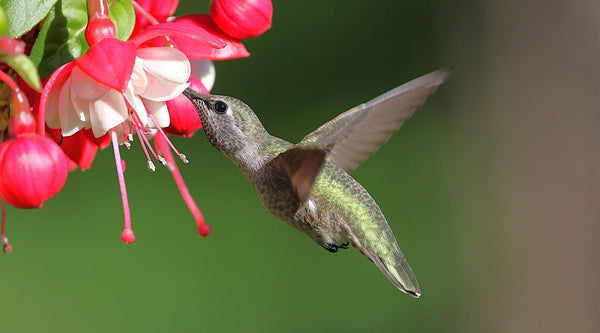
At roughly three inches long and weighing about as much as a ping pong ball, the Calliope Hummingbird is the smallest bird native to the United States and Canada — smaller than a kinglet, smaller than a Bushtit, smaller than nearly anything else with feathers you're likely to see in a day of birdwatching. And yet this featherweight undertakes one of the most disproportionately demanding journeys in the entire animal kingdom: a round-trip migration of roughly 5,600 miles, making it, by most measures, the smallest long-distance bird migrant on the planet.
Quick Facts
- Scientific name: Selasphorus calliope (formerly classified in its own genus, Stellula)
- Length: about 3–3.5 inches (7–9 cm)
- Wingspan: 4.3–4.7 inches (11–12 cm)
- Weight: roughly 0.1 oz (2–3 g)
- Migration distance: approximately 5,600 miles (9,000 km) round trip, twice a year
- Lifespan: the oldest known banded individual lived at least 10 years, 1 month
- Conservation status: Least Concern (IUCN), with a population trend currently listed as increasing — though the species is still considered vulnerable to habitat loss and climate change given how tightly its life cycle is tied to specific mountain-meadow conditions
- Claim to fame: the smallest bird breeding in the United States and Canada, and the smallest long-distance avian migrant known anywhere in the world
The Origin Story: How the Calliope Hummingbird Got Its Name
The Calliope Hummingbird was formally described in 1847 by English ornithologist John Gould, from a specimen with a type locality in Mexico. He named it for Calliope, the Greek muse of epic poetry — a strikingly grand name for the smallest bird on the continent. For much of its taxonomic history, the species was placed in its own genus, Stellula, meaning "little star," a name Cornell Lab's Birds of the World calls especially fitting for the male, whose unique gorget flashes in magenta rays like a tiny burst of starlight. More recent genetic evidence has since moved the species into the genus Selasphorus, alongside its close relatives the Rufous and Broad-tailed Hummingbirds, though many field guides and older references still note the Stellula name.
Where the Calliope Hummingbird Lives: A Small Bird With an Outsized Range
The Calliope Hummingbird breeds across a band of the Pacific Northwest and northern Rocky Mountains, mainly from California north to British Columbia and east to Wyoming, favoring high mountain meadows and open forests. According to Cornell Lab's All About Birds, despite its diminutive size, this hummingbird survives and breeds successfully in genuinely chilling northwestern montane environments. That's a real physiological challenge: as Cornell's Birds of the World notes, a body this small carries a high ratio of heat-losing surface area to heat-producing tissue mass, exactly the opposite of what you'd want for cold-weather survival.
Each year the species undertakes a migration of roughly 5,600 miles round trip to reach wintering grounds in the pine-oak forests of central Mexico — a distance Birds of the World notes makes the Calliope "the smallest long-distance avian migrant in the world." That title reflects real constraints: flight speed, fuel-reserve endurance, and even brain storage capacity for spatial memory are all size-dependent traits that would seem to work against a bird this small traveling this far.
How to Identify the Calliope Hummingbird: Males vs. Females
Adult Males
Unmistakable once you get a clear look: the only North American hummingbird whose iridescent gorget is divided into separate magenta-red rays rather than a solid patch of color, displayed against a white throat background. During display, the male can flare these rays outward in a genuine starburst pattern. The back and crown are green, with flanks tinged buffy. This is also a strikingly short-tailed, short-billed hummingbird, with the wingtips typically reaching all the way to the tail tip at rest — a useful structural cue even at a distance.

Adult Females
A plain white throat, sometimes lightly marked with a few small dark spots, iridescent green upperparts, and creamy-white underparts with a buffy wash. According to the Montana Field Guide, females and immatures can be separated from similar-looking Rufous and Allen's Hummingbirds by a shorter bill, a noticeably shorter tail, very little rufous coloring in the tail (often not visible at all in the field), and a wash of pale buff spread evenly across the breast rather than concentrated on the sides and flanks.

A Note on Sound
The Calliope is a quiet hummingbird. Audubon describes the typical call as a high-pitched tsew. A historical National Park Service account from Yosemite notes a faint, lisping call given when one bird is chasing another, with foraging females giving a softer seet. During courtship dives, males add a sputtering buzz produced by the tail feathers along with a sharp zinging call.
Behavior: Small Size, Real Confidence
Despite being the smallest hummingbird in its range, the Calliope is far from timid. The Animal Diversity Web at the University of Michigan notes the species has been observed diving at and chasing off much larger birds, up to and including Red-tailed Hawks. That said, Birds of the World notes Calliope Hummingbirds are generally less aggressive and less conspicuous than the closely related Rufous Hummingbird, with which they broadly overlap — making them easy to overlook during migration if you're not looking closely.
Feeding and Diet
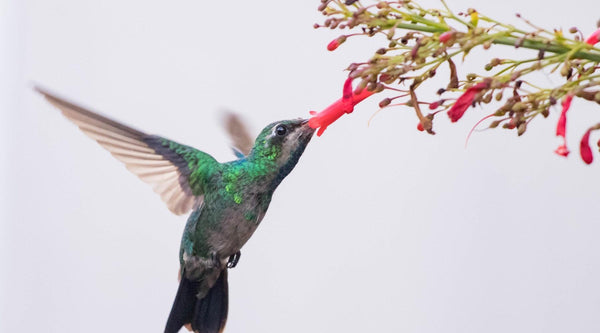
The Calliope Hummingbird feeds mostly on nectar and small insects, extending its bill deep into tubular flowers while hovering, and will also perch or hover at feeders. According to the Audubon Field Guide, the species often visits flowers growing within just inches of the ground — a helpful reminder that a hummingbird garden doesn't need to be built entirely at eye level to be effective. Small insects are caught either mid-air or gleaned directly from foliage, supplying essential protein alongside the nectar.
Courtship and Mating
Males perform dramatic U-shaped display dives for perched females, flashing the magenta rays of their unique gorget while producing a sputtering buzz with the tail feathers and a sharp zinging call. A historical National Park Service account from Yosemite distinguishes the Calliope's display from those of its two close relatives: the Rufous Hummingbird's display traces a repeated semicircular path in a vertical plane, performed many times in rapid succession, while the Anna's Hummingbird's is performed in a more deliberate, unhurried manner — a nice illustration of how much display behavior varies even among closely related hummingbirds. As with virtually all hummingbirds, Calliopes form no lasting pair bond, and the male provides no parental care after mating.
Nesting and Family Life
This is arguably the single most charming fact about the species: female Calliope Hummingbirds frequently build their nest directly on the spot where an old pine cone once grew on a conifer branch, camouflaging the exterior with lichen, moss, and bark fragments bound together with spider silk — until the finished nest can be genuinely difficult to tell apart from a real cone. According to Cornell Lab's All About Birds, nests are most often placed on a branch of an evergreen — lodgepole pine, Douglas-fir, or western red cedar are all documented choices — typically sheltered beneath an overhanging branch that offers real protection from precipitation and cold. Nest height ranges from about 6 to 39 feet above the ground. Females may reuse a nest, or build a fresh one directly on top of an old nest, in a later season.
The nest itself is tiny even by hummingbird standards — about 1.5 to 1.8 inches wide and just over an inch tall on the outside, with an inner cup only about 0.8 inches across. The female lays two white eggs, each roughly the size of a coffee bean, and incubates them alone for about 15 to 16 days. Chicks hatch blind, naked, and helpless, and fledge at around 18 to 21 days, sometimes staying nearby for another week while learning to forage. Some females raise two broods in a single season.
Migration: The Smallest Long-Distance Migrant on Earth
The Calliope Hummingbird's migration is remarkable given its size: a round trip of roughly 5,600 miles (9,000 km) each year between Pacific Northwest and Rocky Mountain breeding grounds and wintering grounds in central Mexico's pine-oak forests. It doesn't retrace its steps, either — like the Rufous, the Calliope runs a large loop, moving north up the Pacific Coast in spring and returning south along the spine of the Rocky Mountains in late summer, following the bloom at each stage. A historical account from Yosemite notes the species is also a famously late arrival compared to many other summer visitors, with some of the earliest documented spring sightings in the Sierra Nevada not occurring until mid-to-late May.
Following the Calliope Across the Regions
For a bird you could mail with a single stamp, the Calliope covers a lot of map. It threads a clockwise loop up the Pacific Coast and down the Rockies, breeding higher and colder than almost any other North American hummingbird and wintering in Mexican pine-oak forest. Arrival runs late — this is one of the last hummingbirds to show up each spring — and the return south begins by midsummer. It reaches four U.S. birding regions as a breeder or regular migrant.
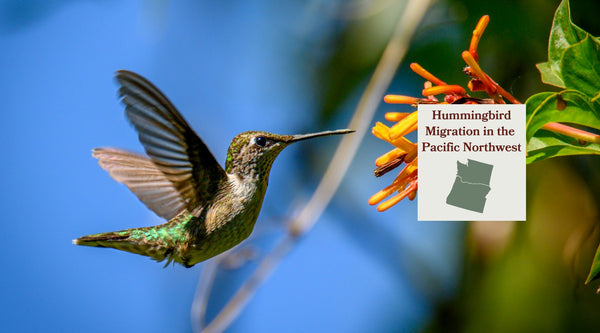
- Pacific Northwest — The core of the breeding range. Mountain meadows and open forest across Washington, Oregon, and into southern British Columbia hold nesting Calliopes from May through late summer, at the northern edge of where the species breeds.
- Pacific & West — The spring highway. California's Sierra Nevada and northern mountains host breeding birds from mid-May, and the coast serves as the northbound migration route in spring before birds swing inland for the return.
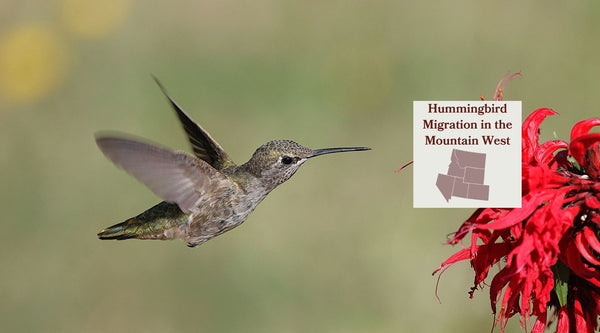
- Mountain West — The high-country heartland and the return corridor. Idaho, Montana, and Wyoming hold breeding birds, while Colorado, Utah, and Nevada see them as regular migrants — and the whole region is the late-summer route south along the Rockies.
- Southwest — The pass-through. Arizona and the rest of the desert Southwest mainly see Calliopes on the move in spring and again in fall, refueling as they travel between Mexico and the mountains to the north.
Beyond those four regions, the Calliope turns up now and then as a long-distance stray. An increasing number now winter along the Gulf Coast rather than in Mexico, and individuals have been documented well east of the range — from Louisiana and Alabama up the Atlantic seaboard as far as New Hampshire — single birds far off course.
Torpor
Like other hummingbirds, the Calliope is capable of entering torpor — a controlled overnight drop in body temperature and metabolic rate — to survive cold nights in its high-altitude habitat. Sources differ on how routinely this species relies on torpor compared to some relatives, but given how much of its life is spent at cold, high-elevation breeding sites, the ability to drop into an energy-conserving state overnight is very likely part of what makes its extreme range possible for a bird this small in the first place.
Habitat
Breeding habitat consists of mountain meadows and open forests high in the northwestern mountains, often along alder- and willow-lined canyons and forest glades. Audubon notes the species breeds mostly from about 4,000 feet up toward treeline, favoring open shrubby areas near streams, and is often most common in second growth several years after fire or logging. A historical Yosemite account records the species foraging chiefly around Indian paintbrush and wild currant blossoms. During migration, Calliopes pass through a much wider range of habitat as they refuel along the route.
Calliope Hummingbird by Region: Where and When to Find Them
Build a Calliope Hummingbird Sanctuary in Your Own Yard
Because this species is so tightly tied to specific mountain-meadow and forest-edge conditions, supporting it well means thinking about your yard the way its natural habitat is structured — layered, sheltered, and rich in native, low-growing flowers as well as taller blooms.
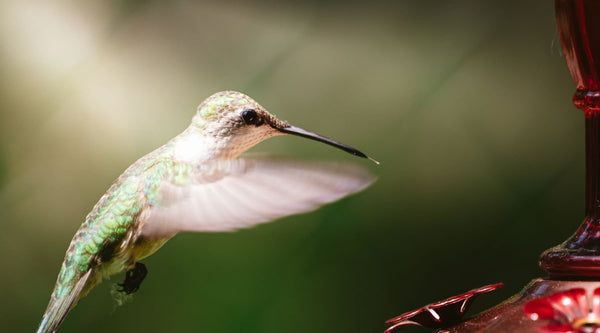
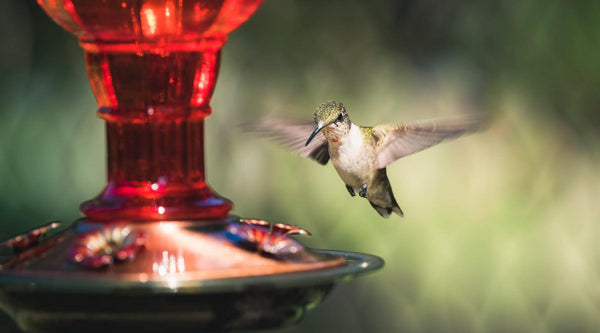
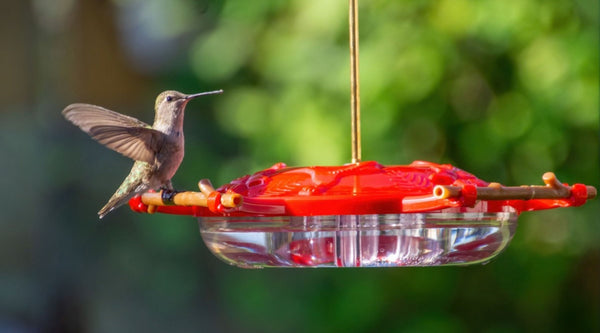
- Use a leak-proof, easy-to-clean feeder like the AspenPerch® Hummingbird Feeder, with a comfort perch so the smallest hummingbird in North America can rest between the frequent small feeding visits it relies on all day.
- Keep nectar fresh through your local breeding or migration window — Pop's Nectar, with added electrolytes and calcium, supports the intense energetic demands of a bird undertaking one of the most disproportionate migrations of any animal on Earth.
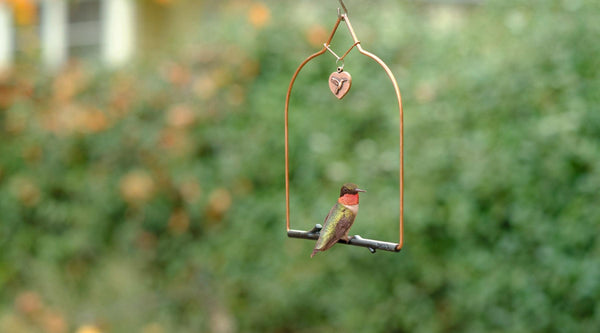
- Add a swing near your feeder — a Pop's Original Hummingbird Swing gives a Calliope a place to rest and watch, much like the bare willow and alder perches it favors on the breeding grounds.
- Don't overlook ground-level and low plantings. Since this species often feeds from flowers growing just inches off the ground, a garden with layered heights — not just tall shrubs and trees — matters more here than for some other hummingbirds.
- Plant native favorites like penstemon, Indian paintbrush, and columbine, all documented favorites in this species' natural mountain habitat, alongside your feeder.
- Skip the insecticide. Since insects are a real part of this species' diet, pesticide use removes food it depends on. Use HummGuard™ nectar tips instead to manage bees and wasps without harming anything else.
Timing is everything with a bird that arrives this late and leaves this early. Attracting hummingbirds in Washington and Oregon means having feeders ready through the short mountain summer, while Montana, Idaho, and Wyoming catch both the breeding season and the late-summer return down the Rockies. Find your own state in the full hummingbird guide by state series.
Frequently Asked Questions
Is the Calliope Hummingbird really the smallest bird in North America?
Yes. At about 3 inches long and weighing roughly one-tenth of an ounce, it's the smallest breeding bird native to the United States and Canada, with a body mass around half that of North America's smallest songbird, the Bushtit.
How does such a tiny bird migrate so far?
The Calliope Hummingbird is considered the smallest long-distance avian migrant in the world, traveling a round trip of roughly 5,600 miles (9,000 km) twice a year between western mountain meadows and pine-oak forests in Mexico. It flies a large loop — north up the Pacific Coast in spring, south down the Rockies in late summer — rather than a straight line.
Why does the Calliope Hummingbird build its nest to look like a pine cone?
Females frequently build directly on the spot where an old pine cone once grew on a conifer branch, and camouflage the exterior with lichen, moss, and bark fragments. The result is a nest that can be genuinely difficult to distinguish from a real cone, offering real protection from predators.
What makes the male Calliope Hummingbird's throat unique?
It's the only North American hummingbird with a gorget divided into separate iridescent magenta rays rather than a solid patch of color, which the male can flare out in a starburst pattern against his white throat during courtship display.
Is the Calliope Hummingbird endangered?
No. It's rated Least Concern by the IUCN, with a population trend currently listed as increasing. Conservationists still note it's vulnerable to habitat loss and climate change, given how tightly its migration and breeding are tied to specific mountain-meadow conditions.
How can I attract Calliope Hummingbirds to my yard?
If you're in its Pacific Northwest or Rocky Mountain breeding and migration range, keep a feeder up during the relevant spring-through-fall window and plant native, tubular flowers like penstemon, paintbrush, and columbine, which this species specifically favors.
At Pop's Birding, we believe every backyard — big or small — has room for a little more wonder. Explore our feeders, nectars, swings, and wildflower seed blends to start building your own hummingbird sanctuary today.

Bethany Sloan has served as General Manager of Pop's Birding since 2010, continuing the legacy of her grandfather, William "Pops" Sloan, inventor of the Original Hummingbird Swing. A lifelong hummingbird enthusiast, educator, and independent researcher, she leads the company's educational content, including its 50-State Hummingbird Guide series, Regional Guide, Species Guide and Hummingbird Learning Center. Bethany combines scientific research, regional migration data, and more than 16 years of hands-on experience to create trusted educational resources for bird enthusiasts across North America.