Jul 02, 2026
Electrolyte Nectar vs. Plain Sugar Water: What Are You Really Feeding Your Hummingbirds?
Quick answer: Plain sugar water (1 part white sugar to 4 parts water, no dye, no honey) is a safe, time-tested way to feed hummingbirds, and there's nothing wrong with making your own. What it can't do is copy everything a wild hummingbird eats. Real flower nectar carries trace amounts of sodium and potassium, hummingbirds get their protein from insects, and field studies have found females eating mineral-rich grit in breeding season, probably for calcium. Pop's Nectarade® and Nectarlyte® start from the same pure cane sugar and add potassium chloride (an electrolyte) and calcium carbonate, modeled on those natural sources. To be clear, no study has yet tested whether fortified feeder nectar makes hummingbirds healthier than plain sugar water. Below is what the research shows, where it stops, and what each option really costs per feeder fill.
Ask ten birders how they fill their feeders, and you'll probably get ten different answers. Plain sugar water has been the backyard standard for generations, and for good reason: it's cheap and it works. But if you've ever wondered what a hummingbird is actually getting from your feeder, and what it gets everywhere else, this one's for you.
The Case for Plain Sugar Water
The classic DIY recipe is simple: 1 part white sugar to 4 parts water, no dye, no honey, no artificial sweeteners. It's a perfectly reasonable way to feed hummingbirds, and we'll never tell you otherwise. It's the ratio Penn State Extension recommends, and it's what most of us grew up mixing on the kitchen counter.
But here's the thing: sugar water is only part of what a hummingbird eats in nature.
Is Sugar Water Actually Good for Hummingbirds?
Yes, when it's mixed and handled correctly. Smithsonian's National Zoo & Conservation Biology Institute recommends refined white table sugar only, with no honey, corn syrup, raw sugar, or powdered sugar (which can contain cornstarch), and no red dye. Penn State Extension adds a pointed warning about honey: fermented honey can cause a fatal fungal disease in hummingbirds. Where sugar water goes wrong is in the handling. A feeder left out too long, or not cleaned between fills, grows mold and bacteria, and that's a far bigger health risk than anything in the recipe.
Why Do Hummingbirds Need Sugar Water at All?
Strictly speaking, they don't. Hummingbirds lived on flowers and insects long before anyone hung a feeder. What sugar water gives them is fast, easy energy. According to the USDA Forest Service, hummingbirds can take in more than half their body weight in nectar every day, plus insects. The National Park Service puts it well: a feeder doesn't draw a hummingbird away from its natural foods, it just gives the bird a quick burst of energy between them. Sugar water is the fuel. Flowers and insects are the rest of the meal. (Wondering when in the season to offer that fuel? See when to put up and take down your hummingbird feeder. Arrival and departure dates vary a lot by region, so it's also worth reading why there's no single hummingbird season.)
Mixing your own? Our guide to the correct hummingbird nectar ratio covers the 1:4 recipe for any batch size, whether you need to boil the water, and why the ratio stays at 1:4 even in freezing weather.
What Nature Actually Offers
In the wild, hummingbirds don't just sip sugar. Their diet has three parts that a bottle of sugar water doesn't fully cover: trace minerals in real flower nectar, extra calcium from non-food sources during nesting season, and insects for protein. Plain sugar water supplies the energy but none of these. It's sweet, but nutritionally it's one-note.
Calcium comes first because nectar has very little of it, and egg-laying females need it to build eggshells. Since the early 1970s, field observers have documented hummingbirds eating sand, soil, wood ash, and fine grit (Verbeek 1971; des Lauriers 1994; Adam & des Lauriers 1998; Graves 2007), and the leading explanation has always been calcium for eggs. A 2021 study in Avian Research examined the stomach contents of 51 hummingbirds in western Mexico and found grit in about a quarter of them. It was almost always in females, and only in the months when they were breeding (Maya-García et al. 2021). One honest wrinkle: the hard grit particles those researchers analyzed were actually low in calcium. They concluded the behavior is probably about meeting breeding-season mineral needs, but that the calcium question "needs further exploration."
Electrolytes tell a related story. Nectar is mostly water, so hummingbirds take in far more water than they need and have to get rid of the excess constantly. Researchers who analyzed urine from eight hummingbird species, and worked out the full salt-and-water budget for Broad-tailed and Rufous Hummingbirds, found that sodium and potassium salts made up a third to a half of what was dissolved in that urine. They also found that the birds can replace those salts mostly from the trace amounts naturally present in flower nectar (Calder & Hiebert 1983). That's the key difference between real nectar and sugar water: a flower delivers those trace salts along with the sugar. Sugar water made from table sugar and tap water doesn't.
Is Nectar Just Sugar Water?
No. Flower nectar is mostly sugar and water, but not only that. A major review of nectar chemistry notes that nectar also contains amino acids and minerals, and that the minerals in some nectars may help pollinators keep their salt balance (Nicolson 2022). Nectar's sugar content also varies widely, from about 10% to 70% sugar across the flowers that have been measured. The 1:4 feeder recipe falls inside that natural range, but it isn't an exact copy of any one bloom. So a good way to think about it: sugar water copies the energy in nectar, not the whole recipe.
Hummingbirds Also Eat Insects
This is the part of the diet feeder conversations tend to skip. Nectar, from a flower or a feeder, is short on protein. The same review notes that nectar-feeding birds get their protein from arthropods, and sometimes pollen. The Forest Service says flatly that hummingbirds "need lots of insects (protein) in their diet." Their bodies are even built for it. Researchers studying how hummingbirds feed discovered that the lower half of the bill actively flexes downward to widen the gape and snap up flying insects (Yanega & Rubega 2004). A 2026 feeding study on Broad-billed and Berylline Hummingbirds describes nectar-feeding birds as regular arthropod eaters, especially when flowers are scarce (Righini et al. 2026). The practical takeaway: no nectar formula, ours included, replaces a yard with insects in it. That's one more reason to skip pesticides around your feeders and flowers.

The only source of real flower nectar, trace minerals and all, is a flower. Pop's Hummingbird & Butterfly Wildflower Seed mixes 12 varieties with a range of bloom shapes, colors, and heights, chosen to draw pollinators to your yard. Fall is the best time to sow it, so the cold can help the seeds sprout on their own next spring.
Shop Wildflower Seed →Do Hummingbirds Drink Water Without Sugar?
Rarely, and mostly they don't need to. Because nectar is so watery, hummingbirds get more than enough water from feeding. Getting rid of the extra is their bigger physiological challenge (Calder & Hiebert 1983; Nicolson 2022). What they do enjoy is bathing. The Forest Service notes that hummingbirds will bathe in dripping water, shallow creeks, and even garden sprinklers. So if you want to offer water, make it a fine mist or a very shallow, moving source, not a deep birdbath. And never fill a nectar feeder with plain water. It gives the bird nothing it came for.
What We Put in Nectarade® and Nectarlyte®
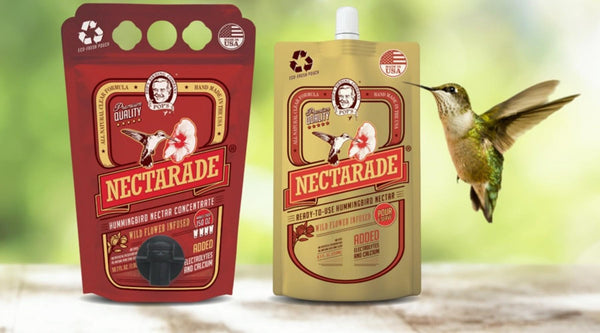
That research is exactly why we created Nectarade® (liquid) and Nectarlyte® (powder concentrate). We wanted nectars that stay close to sugar water's simple idea but borrow a little more from nature. Both share the same core formula:
- 100% pure cane sugar, the same base as any good homemade recipe.
- Potassium chloride, an electrolyte source, modeled on the trace salts found in real flower nectar.
- Calcium carbonate, added because nectar is naturally low in calcium and nesting females seek it out elsewhere.
- No dyes and no preservatives.
The differences are in the liquid: Nectarade® also includes wildflower hydrosols (water steam-distilled from mixed wildflowers) and a little citric acid, added only to adjust pH. Nectarlyte® powder has neither, so it's just pure cane sugar, potassium chloride and calcium carbonate. In other words, our nectars aren't a replacement for sugar water's core idea. They're sugar water's more complete cousin.

Want the full formula, wildflower hydrosols included, with nothing to measure? Nectarade® Ready to Use is pre-mixed. Pour it straight into a clean feeder, and one 8.5 oz pouch fills a standard 8 oz feeder.
Shop Nectarade® Ready to Use →Want the ingredient-by-ingredient story? Read what's in Nectarade® and why each ingredient is there, including how the foil pouch keeps it fresh without preservatives.
Does It Really Make a Difference?
Here's our honest answer. There is nothing wrong with plain, homemade sugar water, and if that's what you use, your hummingbirds are well fed. We didn't make Nectarade® and Nectarlyte® because sugar water fails. We made them to offer a store-bought option with nothing bad added (no dyes, no artificial preservatives) where every added ingredient is modeled on something hummingbirds seek out in nature.
It's just as important to say where the evidence stops. The research above shows that wild hummingbirds get trace salts from flower nectar and that breeding females seek out minerals. No study we know of has compared hummingbirds on electrolyte- or calcium-fortified feeder nectar with birds on plain sugar water, so nobody can yet say fortified nectar makes them healthier. That includes us. Some university extension guidance goes further. Penn State Extension, for example, says commercial nectar mixes are no better than what you make yourself. We think the thinking behind our formula is sound, but we'd rather tell you exactly what's proven than oversell it.
Do Hummingbirds Need Electrolytes?
Yes. Like all animals, hummingbirds need sodium and potassium, and their extremely watery diet makes them lose those salts constantly. In the wild, the research points to flower nectar as the main way they replace them (Calder & Hiebert 1983). What hasn't been tested is whether adding electrolytes to feeder nectar changes anything for birds that are also visiting flowers. Whichever nectar you choose, the best thing you can do for a hummingbird's electrolytes, protein, and overall diet is to pair your feeder with real flowers. Our guide to creating a hummingbird sanctuary in your backyard walks through how to set that up.
Cost-Wise, It's Close
Per ounce, it isn't close, and we'd rather show you the real numbers. Homemade sugar water is about as cheap as bird feeding gets. At the U.S. Bureau of Labor Statistics' July 2026 average of about $1.02 per pound of white sugar (BLS data via FRED), one pound (roughly 2¼ cups) mixed 1:4 makes about 90 oz of nectar, a little over a penny an ounce. Pop's nectars cost more because you're paying for the added electrolytes, calcium, and (in Nectarade®) the wildflower hydrosols.
Where it does get close is per feeder fill. Here's what it costs to fill a standard 8 oz feeder once, using current Pop's prices:
| Nectar | Price / prepared yield | Cost per oz | One 8 oz fill |
|---|---|---|---|
| Homemade sugar water (1:4) | ~$1.02 per lb of sugar / ~90 oz | ~$0.01 | ~$0.09 |
| Nectarade® Concentrate, 50.7 oz (1:2) | $26.99 / ~150 oz | ~$0.18 | ~$1.44 |
| Nectarlyte® Powder, 2 lb (1:4) | $24.99 / ~128 oz | ~$0.20 | ~$1.56 |
| Nectarlyte® Powder, 8 oz (1:4) | $9.99 / ~34 oz | ~$0.29 | ~$2.35 |
| Nectarade® Ready to Use, 8.5 oz | $8.99 / 8.5 oz | ~$1.06 | ~$8.46 |
So the concentrates and powders run roughly $1.44 to $2.35 per 8 oz fill, compared with about a dime for homemade. Ready to Use costs the most because you're paying for zero prep. If you already mix your own sugar water, Nectarlyte® keeps the exact same routine (1 part powder to 4 parts warm water). You just scoop powder instead of sugar.

Already mixing 1:4 at home? Nectarlyte® Powder uses that same ratio, so nothing about your routine changes except what goes in the measuring cup: pure cane sugar plus potassium chloride and calcium carbonate. The 8 oz bag makes about 34 oz of nectar.
Shop Nectarlyte® Powder →Liquid or powder? We break down storage, convenience, and cost for every format in Liquid Nectar vs. Powder Concentrate.
Our Honest Take
Plain sugar water isn't wrong. It's a time-tested basic that will absolutely keep hummingbirds coming back. Nectarade® and Nectarlyte® are for people who want a ready-made option with nothing harmful in it and a few additions modeled on what hummingbirds seek out in the wild, and who are comfortable paying a little more per fill for that. Neither choice replaces flowers and insects, and neither matters as much as freshness. If you're just getting started, here's what a beginner actually needs to start feeding hummingbirds.
Either way, the golden rule stays the same: skip the red dye, skip the honey, and change your nectar every 2–3 days, sooner in hot weather. Heat speeds up spoilage, so the Nectar Change Calculator tells you exactly how often to change it at your own temperatures. For the signs that a batch has turned, see how long hummingbird nectar lasts, and give the feeder a real scrub between fills with our feeder cleaning guide.
Because at Pop's, we don't just want to feed hummingbirds. We want to invite a little more wonder into their world, and yours.
Key Takeaways
- Plain sugar water (1:4, sugar to water, no dye, no honey) is a safe, effective way to feed hummingbirds. It supplies the energy in nectar, not the whole natural diet.
- Real flower nectar carries trace sodium and potassium, and research shows hummingbirds replace the salts they lose mostly from those trace amounts.
- Breeding females have been documented eating mineral-rich grit, likely for eggshell calcium, though the calcium explanation isn't fully settled.
- Hummingbirds get their protein from insects. No nectar, homemade or store-bought, replaces them.
- Nectarade® and Nectarlyte® share a base of pure cane sugar, potassium chloride and calcium carbonate, with no dyes or preservatives. Liquid Nectarade® also adds wildflower hydrosols and a little citric acid for pH.
- No study has yet tested whether fortified feeder nectar improves hummingbird health compared with plain sugar water.
- Homemade costs about a dime per 8 oz feeder fill. Pop's concentrates and powders run roughly $1.44–$2.35 per fill.
- Whichever you choose, skip red dye and honey, and change nectar every 2–3 days (sooner in hot weather).
Frequently Asked Questions
Is plain sugar water bad for hummingbirds?
No. A correctly mixed 1:4 sugar-to-water ratio made with white table sugar, with no dye or honey, is safe and effective. It provides energy but not the trace minerals found in real flower nectar or the protein hummingbirds get from insects.
Do hummingbirds need electrolytes?
Yes. Hummingbirds need sodium and potassium, and their watery diet means they lose those salts constantly in their urine. Research on wild hummingbirds found they replace them mostly from the trace amounts naturally present in flower nectar. Whether adding electrolytes to feeder nectar benefits them hasn't been tested.
Why do hummingbirds need calcium?
Egg-laying females need calcium to form eggshells, and nectar contains very little. Field studies have documented breeding females eating sand, grit, soil, and ash, most likely to make up that shortfall, though researchers say the calcium explanation still needs more study.
Is nectar just sugar water?
No. Flower nectar is mostly sugar and water, but it also contains small amounts of amino acids and minerals such as sodium and potassium. Homemade sugar water matches the energy in nectar, not its full makeup.
Do hummingbirds drink water without sugar?
Rarely. Nectar is so watery that hummingbirds usually take in more water than they need. They do like to bathe, especially in fine mist, dripping water, or very shallow moving water. Never fill a nectar feeder with plain water, because it gives them no energy.
Can hummingbirds live on sugar water alone?
No. Sugar water, like flower nectar, supplies energy but very little protein. Hummingbirds catch insects for protein, which is why a yard with flowers and insects matters as much as the feeder.
Is electrolyte nectar proven to be better than sugar water?
Not yet. The research shows why hummingbirds seek out salts and minerals in the wild, but no study has compared birds on fortified feeder nectar with birds on plain sugar water. Plain homemade sugar water remains a perfectly good choice.
What's different about Nectarade® and Nectarlyte® compared to homemade sugar water?
Both start from the same pure cane sugar base as homemade sugar water, then add potassium chloride (an electrolyte) and calcium carbonate (calcium), with no dyes or preservatives. Liquid Nectarade® also includes wildflower hydrosols and a little citric acid to adjust pH; the powder has neither.
Does electrolyte nectar cost more than plain sugar water?
Yes. Homemade sugar water costs roughly a penny an ounce, or about a dime per 8 oz feeder fill. Pop's Nectarade® Concentrate and Nectarlyte® Powder cost roughly $0.18 to $0.29 an ounce, about $1.44 to $2.35 per 8 oz fill, depending on the size you buy.
Do I need to change electrolyte nectar as often as plain sugar water?
Yes. The same freshness rules apply regardless of formula. Change nectar every 2–3 days, sooner in hot weather, clean the feeder between fills, and always skip red dye and honey.
Summary
Plain sugar water is a safe, time-tested way to feed hummingbirds, but it covers only the energy part of their diet. In the wild, hummingbirds replace lost salts mostly from the trace minerals in flower nectar, breeding females seek out mineral-rich grit, and every hummingbird relies on insects for protein. Nectarade® and Nectarlyte® start from the same pure cane sugar and add potassium chloride and calcium carbonate, modeled on those natural sources, with nothing harmful added. No study has yet shown that fortified nectar makes hummingbirds healthier than homemade, and it costs more per fill, so the choice is yours. Whichever you pick, the fundamentals don't change: no red dye, no honey, fresh nectar every 2–3 days, and a yard with real flowers.
Shop Nectarade® Liquid Nectar and Nectarlyte® Powder Concentrate.
References
Adam, M. D., & des Lauriers, J. R. (1998). Observations of hummingbirds ingesting mineral-rich compounds. Journal of Field Ornithology, 69, 257–261.
Calder, W. A., & Hiebert, S. M. (1983). Nectar feeding, diuresis, and electrolyte replacement of hummingbirds. Physiological Zoology, 56(3), 325–334.
des Lauriers, J. R. (1994). Hummingbirds eating ashes. The Auk, 111, 755–756.
Graves, G. R. (2007). Jamaican hummingbirds ingest calcareous grit. Journal of Caribbean Ornithology, 20, 56–57.
Maya-García, O., Ortega-Flores, M., & Schondube, J. E. (2021). True grit: ingestion of small stone particles by hummingbirds in West Mexico. Avian Research, 12, 62.
Nicolson, S. W. (2022). Sweet solutions: nectar chemistry and quality. Philosophical Transactions of the Royal Society B, 377, 20210163.
Righini, N., Maya-García, O., Pérez-Negrón, E., & Schondube, J. E. (2026). Life is not always sweet! A nutritional geometry analysis of protein and sugar intake by hummingbirds. Physiology & Behavior.
Verbeek, N. A. M. (1971). Hummingbirds feeding on sand. The Condor, 73, 112–113.
Yanega, G., & Rubega, M. (2004). Hummingbird jaw bends to aid insect capture. Nature, 428, 615.
Brittingham, M. C. Hummingbird Feeders. Penn State Extension.
Smithsonian's National Zoo & Conservation Biology Institute. Hummingbird Nectar Recipe.
USDA Forest Service. Attracting Hummingbirds to Your Garden Using Native Plants (FS-1046).
National Park Service. Pollinators: Hummingbirds.
U.S. Bureau of Labor Statistics. Average Price: Sugar, White, All Sizes, U.S. City Average (APU0000715211), via FRED, Federal Reserve Bank of St. Louis. July 2026 observation.
Shop Nectar Made to Mimic Nature
Homemade sugar water is a perfectly good choice. If you'd like a ready-made option with nothing harmful added — plus a few extras modeled on what hummingbirds seek out in the wild — here's the same Pop's formula in all four formats: powder to mix, or liquid to pour.


Bethany Sloan has served as General Manager of Pop's Birding since 2010, continuing the legacy of her grandfather, William "Pops" Sloan, inventor of the Original Hummingbird Swing. A lifelong hummingbird enthusiast, educator, and independent researcher, she leads the company's educational content, including its 50-State Hummingbird Guide series, Regional Guide, Species Guide and Hummingbird Learning Center. Bethany combines scientific research, regional migration data, and more than 16 years of hands-on experience to create trusted educational resources for bird enthusiasts across North America.