Nov 22, 2022
How to Create a Hummingbird Sanctuary in Your Backyard
Quick answer: A genuine hummingbird sanctuary covers five needs: nectar (native flowers plus fresh feeder nectar), water (a mister or dripper, not a traditional deep birdbath), shelter (perches and cover for resting and nesting), a healthy insect population (their main source of protein), and safety (placement away from predators and window strikes). Layering all five together — rather than just hanging a single feeder — is what actually turns a backyard into a place hummingbirds want to stay, not just pass through.
A single feeder will get you visits. A genuine sanctuary gets you hummingbirds that stick around, nest nearby, and return year after year. The difference comes down to covering all of their actual needs, not just the food source most people think of first.
Whether you're working with a balcony rail or half an acre, the same five pieces apply. Here's what each one actually requires — and the details most backyard setups get wrong.
Food: Natural and Supplemental Together
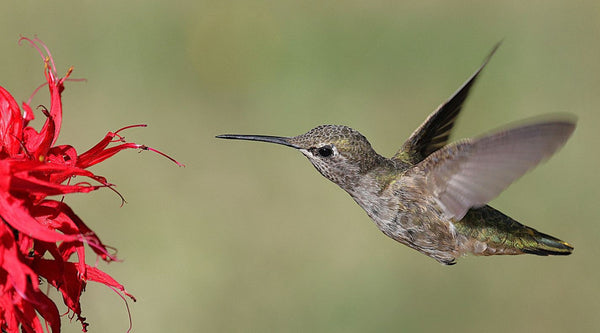
Hummingbirds do best with both natural nectar sources and a reliable feeder as backup. Native, tubular flowers — bee balm, salvia, trumpet honeysuckle, and similar hummingbird-favorite plants — provide natural nectar and signal that your yard is a legitimate feeding ground, not just a single artificial stop. Layering taller flowering shrubs behind lower beds of varying bloom times extends your natural food supply across more of the season.
A feeder fills the gaps between blooms and gives hummingbirds a dependable source they can count on. But which feeder you hang, and how you keep it, decides whether it stays an asset or quietly turns into a problem.
Choose a Saucer-Style Feeder That Doesn't Leak
This is the decision that quietly determines how much pest trouble you'll have all season, and it comes down to physics rather than preference. A bottle-style feeder — the inverted reservoir most people picture — holds nectar above the feeding ports and relies on air pressure to keep it there. As the day warms, the air trapped inside expands and pushes nectar out through the ports. It drips down the feeder, the hook, and the ground below, and that sticky trail is precisely what recruits ants and draws wasps to the feeder in the first place.
A saucer-style feeder inverts the problem. Nectar sits in an open bowl below the ports, so there's nothing for pressure or gravity to push out — no drips, no trail, and far less to clean up. The lower nectar level helps with bees too: a hummingbird's long tongue reaches it easily, while shorter-tongued insects often can't. Pair that with a built-in ant moat, and most of the pest problem is solved by the design rather than by anything you have to spray.
Still weighing feeder types — or where to put one? Our breakdown of saucer vs. bottle vs. window feeders covers the real tradeoffs of each, and our complete feeder placement guide handles sun, height, spacing, and window distance once you've picked one.
Shop the feeder
AspenPerch® Hummingbird Feeder, 8 oz

An open-bowl design that's leak-proof by build, not by luck — no drips means no ant trail and nothing sticky to clean off the hook. The ant moat is built into the frame, it's compatible with HummGuard® Nectar Tips for flying insects, and the patented Polyperch® comfort perch sits above the bowl so birds rest while they drink instead of hovering the whole meal.
Shop the AspenPerch® Feeder →Keeping Ants and Bees Off Without Insecticide
Insect spray is off the table around a feeding station, and not just for the obvious reason. Hummingbirds eat small insects for protein — spraying to protect the feeder removes the very food source the rest of your sanctuary is built to support. Every fix below works without it.
Ants follow a sugar trail, so the first move is giving them nothing to follow: a leak-proof feeder and a wiped-down hanging hook. A water-filled ant moat between the hook and the feeder closes the only remaining route, since ants won't cross it.
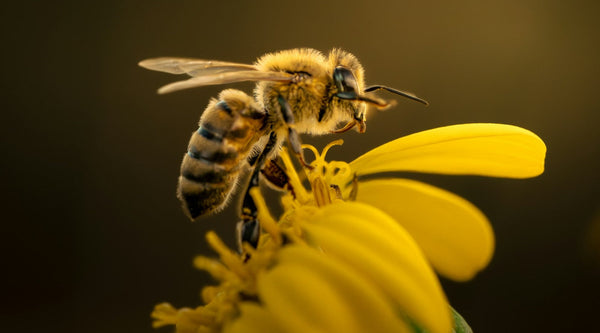
Bees and wasps are harder, because they're after the same nectar the hummingbirds are drinking rather than what's spilled. Shade helps, since scent carries further from a sun-warmed feeder, and a saucer design already keeps the nectar level low. When they're persistent, the reliable fix is a physical barrier at the port itself — one a hummingbird's bill opens easily and a bee can't.
Already have an infestation to undo? Our full guides to keeping ants out of a hummingbird feeder and keeping bees away from a hummingbird feeder cover thirteen fixes between them, none of them insecticide.

That physical barrier, in practice. HummGuard® Nectar Tips slide onto the AspenPerch's feeding ports — the flexible membrane opens for a hummingbird's bill but seals tight against anything larger, so the nectar stays exclusively for the birds it's meant for. No spray, no relocating the feeder.
Shop HummGuard® Tips →Keep the Nectar Fresh
Skip the red dye entirely — your feeder's color does the attracting, and dyed nectar offers no benefit and can be harmful to a hummingbird's health. Keep nectar fresh, changing it every 2–3 days in normal weather and daily in extreme heat. Fill only as much as your birds will actually drink in that window; a half-filled feeder that gets emptied beats a full one that ferments.
Not sure how to mix it, or how long it keeps? Our full hummingbird nectar ratio guide covers the 1:4 recipe and every batch size, and our nectar storage and shelf-life guide tells you exactly when to toss it — often before the calendar says to.

Building your first setup? Nectarade® Ready to Use comes pre-mixed and pours straight into the feeder — no boiling, no measuring, no cooling window — with the electrolytes and calcium a working nesting season actually demands.
Shop the Ready to Use Nectar →Water: Mist and Movement, Not a Deep Bath
This is the piece most sanctuary setups get wrong. Hummingbirds get the large majority of their hydration from nectar itself, and traditional birdbaths are almost always too deep for their tiny feet and legs to use safely. What they actually seek out is shallow, moving water — a mister, dripper, or gentle fountain that lets them fly through a fine spray or hover under a light shower to clean their feathers and cool off, especially in hot weather.
If you already have a birdbath, adding stones to create a shallow shelf, or attaching a dripper or bubbler, converts it into something hummingbirds will actually use. Keep any water feature shallow (well under an inch), clean it regularly to avoid algae and contamination, and place a small perch nearby — hummingbirds like somewhere to preen and dry off immediately after bathing.
Shelter: Cover, Rest, and a Place to Nest
Shelter covers a few different needs: cover from predators, a spot to rest between feedings, and eventually, a place to nest. Mature trees, shrubs, and hedges provide natural cover and nesting sites. Awnings and eaves offer additional shelter close to the house.
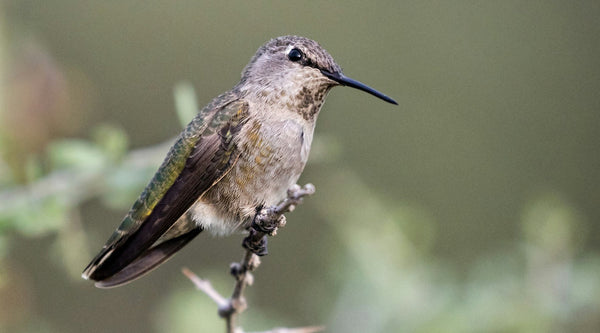
For resting specifically, a dedicated perch matters more than people expect. Field research puts hummingbirds at roughly 20% to 70% of their daylight hours perched rather than flying, depending on how much food is available — and a comfortable perch placed near a feeder gives them somewhere to rest, digest, and keep watch over their feeding territory.
Wondering whether a swing is decoration or function? We dug into the actual behavioral evidence in do hummingbird swings really work, and do hummingbirds really prefer to perch covers where that 20–70% figure comes from.
Do Hummingbirds Use Birdhouses?
No — and this is worth saying plainly, because hummingbird "houses" are widely sold and they don't work. Hummingbirds are not cavity nesters. They build tiny open cup nests out of plant down and spider silk, saddled onto a thin, downward-sloping branch, usually sheltered under an overhanging leaf or limb. A nest box has nothing they're looking for, and no amount of placement will change that.
What genuinely helps instead: leave mature trees and shrubs with fine, flexible outer branches; skip the aggressive spring pruning of the layer where they'd actually nest; keep spider webs around for nest-building material as well as food; and give them a safe perch in the open where they can watch the yard. That combination does what a birdhouse never will.
Insects: Their Other Food Source
Nectar provides energy, but hummingbirds rely on small insects — gnats, small flies, spiders, and similar prey — for protein and fat, especially important for feeding nestlings. A yard that's been treated heavily with pesticides can quietly starve out this food source even while nectar and feeders are plentiful.
Skip pesticides where you can, and don't be too quick to tidy every spider web or let the lawn get slightly longer than usual — both support the small insect population hummingbirds depend on. It's a less obvious piece of sanctuary-building than flowers or feeders, but it matters just as much.
Not sure whether to leave that orb-weaver web alone? Spiders sit on both sides of this one — food source and nest material, but occasionally a hazard. Our guide to spiders and insect predators of hummingbirds explains where the real line is.
Safety: Placement That Protects, Not Just Attracts
A sanctuary isn't complete without addressing the real risks hummingbirds face in a yard: predators, window strikes, and competition between birds. Each one has a straightforward fix, and each one is worth getting right before you add another feeder.
Predators
Keep feeders and water features elevated and away from dense ground-level cover where cats or other predators can lurk unseen. The predators that matter most in a backyard aren't the ones people expect — it's rarely a hawk, and far more often a cat, a praying mantis sitting on the feeder itself, or a nest raider taking eggs.
Want the full list of what actually hunts them? See our complete, fact-checked guide to hummingbird predators — plus the deeper dives on cats and hummingbirds, praying mantises, and what really eats hummingbird eggs.
Window Strikes
Place feeders and water features well beyond windows — more than 10 feet — avoiding the in-between distances where birds can build dangerous speed before a potential collision. Hummingbirds are especially vulnerable here: their flight speed and their habit of darting between a feeder and a perch put them at more risk than their size suggests.
Already had a bird hit a window? Our guide to why hummingbirds are especially vulnerable to window strikes covers the distance rule, the treatments that actually work on glass, and what to do in the first few minutes after a strike.
Territorial Competition
Hummingbirds are famously territorial, and a single dominant bird can monopolize one feeding station — which means a sanctuary with one feeder often supports exactly one hummingbird. Multiple feeders spread well apart, out of sight of each other, let more birds share the space peacefully.
Perches matter here as much as feeders do, and that's the part most people miss. A territorial hummingbird doesn't guard its feeder from the air — it guards from a perch, sitting somewhere with a clear view and chasing off anything that approaches. Give it a dedicated lookout and the dominant bird will often settle there instead of patrolling, which lowers the temperature for everyone. Add a second perch on the far side of the yard, out of the first one's sightline, and a chased-off bird has somewhere to retreat to and wait rather than leaving the yard entirely. Two feeders and two perches will reliably hold more hummingbirds than two feeders alone.
Shop the Perfect Perch
Original Series Hummingbird Swing, Onyx

The simplest way to give a second hummingbird somewhere to be. Hang one near your feeder and the territorial bird claims it as a lookout; hang a second across the yard, out of sightline, and the bird it keeps chasing has a place to wait instead of leaving. It's the product our grandfather invented, and three generations later it's still built in Idaho.
Shop the Original Swing →How far from the feeder should a swing go? Close enough to be claimed, far enough not to crowd the ports — our swing placement guide covers the distance, the height, and why sightlines matter when you're hanging a second one.
Bringing It All Together
Five needs, what each one actually requires, and the mistake that most often undoes it:
| Need | What to Provide | Most Common Mistake |
|---|---|---|
| Food | Native nectar-rich flowers plus a leak-proof saucer feeder with fresh, dye-free nectar | A drippy bottle-style feeder, which lays down the sticky trail ants and wasps follow in |
| Water | Mister, dripper, or shallow fountain — not a deep birdbath | A standard birdbath, which is too deep for them to use at all |
| Shelter | Trees and shrubs for cover and nesting, plus a dedicated perch or swing near the feeder | Buying a hummingbird "house" — they nest in open cups on branches, never in boxes |
| Insects | Pesticide-free yard, some natural "mess" (webs, slightly longer grass) | Spraying the yard, which removes their entire protein source |
| Safety | Predator-aware placement, 10+ feet of window distance, multiple spaced feeders | One feeder in the middle of the yard, close to glass, with cover underneath |
Building yours somewhere specific? Timing, species, and the right native plants all shift by state. Find yours in our 50-state hummingbird guide series for feeder dates and native plant lists built on your own region's data.

The natural-food half of the equation, in one packet. Perfect Little Sanctuary® Wildflower Seed Blend puts 12 nectar-rich varieties in the ground at once, with staggered bloom times so there's real food out there between feeder fills.
Shop the Seed Blend →Key Takeaways
- A true sanctuary covers five needs together: food, water, shelter, insects, and safety — not just a single feeder.
- Native, tubular flowers supplement feeder nectar and extend food availability across the season.
- A saucer-style feeder holds nectar below the ports, so it can't drip — which removes the sticky trail that recruits ants and wasps in the first place.
- Never use insecticide near a feeder — an ant moat, shade, and a port barrier solve pests without removing the insects hummingbirds eat.
- Hummingbirds need shallow, moving water (a mister or dripper), not a traditional deep birdbath.
- Hummingbirds do not use birdhouses or nest boxes — they build open cup nests on thin branches, so cover and perches are what actually help.
- A dedicated perch or swing near feeders supports genuine resting behavior, not just decoration.
- Avoiding pesticides protects the insect population hummingbirds rely on for protein.
- Predator-aware placement and proper window distance matter as much as any single "attraction" feature.
- One feeder usually supports one territorial bird — spacing several feeders and several perches out of sight of each other is what grows the crowd.
Frequently Asked Questions
Do hummingbirds use birdhouses or nest boxes?
No. Hummingbirds are not cavity nesters — they build tiny open cup nests from plant down and spider silk on thin, sloping branches, usually under a sheltering leaf or limb. Hummingbird "houses" sold for backyards don't match anything in their actual nesting behavior. Mature trees and shrubs, unpruned fine outer branches, and a nearby perch are what genuinely help.
How do I create a hummingbird habitat in my backyard?
Layer five things rather than adding one: nectar (native tubular flowers plus a clean feeder), shallow moving water, shelter (trees, shrubs, and a perch), an insect population you haven't sprayed away, and safe placement away from windows and ground cover. Any yard size works — the pieces matter more than the acreage.
What kind of shelter do hummingbirds need?
Three different kinds, and they're often confused. Cover from predators and weather comes from mature trees, shrubs, and hedges. Nesting shelter comes from thin, flexible outer branches under an overhanging leaf. Resting shelter — the one most people skip — is an exposed perch or swing near the feeder where they can watch their territory between feedings.
Do hummingbirds actually use birdbaths?
Rarely, in the traditional sense — most birdbaths are too deep for their tiny legs. They prefer shallow, moving water like a mister, dripper, or fountain with a shallow basin.
How do I make a hummingbird mister?
The simplest version is a fine-spray misting nozzle attached to a garden hose or drip line and aimed through a shrub or over a broad leaf, so there's a wet surface to fly through and a place to land. A dripper over an existing birdbath works too. Keep the spray fine, keep any standing water well under an inch, and put a perch within a few feet so they can preen and dry off.
What do hummingbirds eat besides nectar?
Small insects — gnats, flies, and spiders — provide protein and fat, especially important for feeding nestlings. A pesticide-free yard supports this food source.
Do I need native plants if I already have a feeder?
Native, nectar-rich flowers aren't required, but they extend natural food availability across the season and make a yard feel like a reliable habitat rather than a single artificial stop.
Where should I place water features for hummingbirds?
Keep water shallow and add a nearby perch for preening. Follow the same predator-safety and window-distance guidance used for feeder placement.
Is a hummingbird swing necessary for a sanctuary setup?
Not strictly, but it supports genuine resting behavior — hummingbirds spend roughly 20% to 70% of their daylight hours perched depending on food availability, and a nearby swing gives them a dedicated, comfortable spot to do it.
Why do I only ever see one hummingbird at a time?
Almost always territory, not a lack of birds. A dominant hummingbird will defend a single feeding station and chase off every other bird that approaches. Adding a second and third feeder, spaced well apart and out of sight of each other, is the standard fix.
Summary
A genuine hummingbird sanctuary goes beyond a single feeder — it layers natural and supplemental food, shallow moving water, real shelter and resting spots, a healthy insect population, and predator-aware placement into one cohesive space. Get all five working together, and you're not just attracting passing visitors; you're building a habitat hummingbirds want to stay in and return to season after season.
Shop Everything You Need for Your Hummingbird Sanctuary
A real sanctuary covers all five needs at once — food, water, shelter, insects, and safety. These are the four pieces from this guide that do the most work: a feeder that won't drip or draw pests, nectar that stays fresh without a chore, a perch so more than one bird can share the yard, and native blooms so there's real food between fills.


Bethany Sloan has served as General Manager of Pop's Birding since 2010, continuing the legacy of her grandfather, William "Pops" Sloan, inventor of the Original Hummingbird Swing. A lifelong hummingbird enthusiast, educator, and independent researcher, she leads the company's educational content, including its 50-State Hummingbird Guide series, Regional Guide, Species Guide and Hummingbird Learning Center. Bethany combines scientific research, regional migration data, and more than 16 years of hands-on experience to create trusted educational resources for bird enthusiasts across North America.