Aug 15, 2026
Cats and Hummingbirds: What We've Learned Keeping Both Safe in Our Own Yard
We should say upfront: we're cat people too. We've got an outdoor cat of our own who's free to roam the yard, and we're not about to pretend cats are villains or that loving hummingbirds means you can't love your cat. What we've learned, mostly from watching our own setup, is that you genuinely can have both — it just takes paying attention to a few things most feeder advice skips entirely.
Short answer: Cats — especially free-roaming ones, owned or otherwise — are a real, documented threat to hummingbirds around homes and feeders. Keeping cats indoors is the single most effective thing you can do, backed by every major bird conservation group. If that's not realistic for your household, smart feeder placement is the next-best defense — and it's about more than height. What's around the feeder matters just as much as how high it hangs.
Yes, cats really do hunt hummingbirds — here's what the research shows
Cats are the leading human-linked cause of bird deaths in the U.S. by a wide margin — though that figure is about birds in general, not hummingbirds specifically, and it's worth keeping the two separate. The American Bird Conservancy estimates free-roaming cats kill roughly 2.4 billion birds a year in this country, a figure that traces back to a peer-reviewed study finding free-ranging cats kill an estimated 1.3 to 4 billion birds annually, with the majority of that toll coming from un-owned and feral cats rather than owned pets.
Hummingbirds specifically show up in that toll too, though the research is narrower than you'd expect. A large California study of hummingbird rehabilitation intake — over 6,900 birds across 26 years — found that interactions with domesticated animals, almost entirely cats, were the single largest identifiable admission cause, ahead of any predator or accident on the list. A separate study of over 1,600 landowners across a rural-to-urban stretch of Southeastern Michigan found that free-ranging cats were documented preying on more than 23 bird species locally, including the Ruby-throated Hummingbird specifically. It's genuinely one of the few studies that names hummingbirds directly rather than just "small songbirds" generally — worth knowing, since a lot of what circulates online about "cats being THE top hummingbird predator" doesn't actually trace back to a source that specific. The more defensible claim, and the one we're making here: cats are a real, documented predator of hummingbirds around homes and feeders — not necessarily provably "the" top one by an exact ranking, but significant enough to take seriously, and the best-evidenced threat we know of.
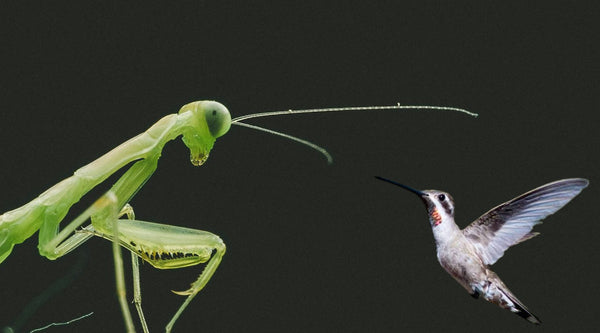
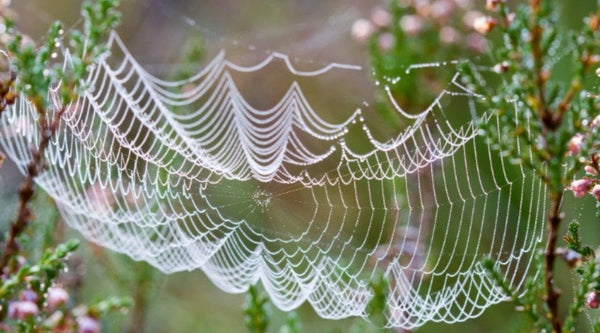
So what else belongs on that list? The invasive Chinese praying mantis is a genuine, if surprising, insect predator — our Praying Mantis guide covers exactly how and when it happens. Orb-weaver spiders occasionally trap hummingbirds in their webs, and rat snakes have been documented catching them at feeders, both covered in our Spiders and Insect Predators and Snakes guides. Jays, crows, squirrels, and chipmunks are the best-documented threats to eggs and nestlings specifically — see our Hummingbird Egg Predators guide. A handful of small, fast birds, like the Sharp-shinned Hawk and Merlin, are genuine adult-hummingbird predators too, covered in our guide to birds that prey on hummingbirds. And sometimes the danger isn't even a predator at all — a feeder placed too close to a window can pose just as much risk as any animal on this list, which is exactly why we wrote a dedicated Window Strikes guide. In fact, in that same large rehab study, predators as a whole weren't even the leading reason a hummingbird needed help — simply being found on the ground, weak from exhaustion or bad weather, was the single most common cause of all. We should be upfront: no study has actually ranked hummingbird predators from most to least common, so we won't pretend otherwise. We cover the complete lineup, honestly caveated, side by side, in Hummingbird Predators: The Complete Guide.
There's also research on how hummingbirds behave around this kind of risk. A study on Anna's Hummingbirds found that birds feeding from spots with an obstructed view — think a feeder tucked next to a bush, where a predator could approach unseen — became noticeably more cautious, sometimes reducing how much they fed just to stay alert. The researchers' conclusion is worth sitting with: the fact that we don't often witness a cat catching a hummingbird doesn't mean hummingbirds aren't taking the threat seriously. They're managing it constantly, in ways that are easy for us to miss.

What actually works — starting with the one thing every expert agrees on
Every major bird conservation group — the American Bird Conservancy, Audubon, Cornell Lab — lands in the same place: keeping cats indoors is the single most effective thing you can do. It's not just better for birds, either. Indoor cats live meaningfully longer than cats who spend real time outdoors, so this isn't really a birds-versus-cats tradeoff. It's a genuinely rare case where the best answer for hummingbirds is also the best answer for your cat.
That said, we know full-time indoor life isn't realistic or desired for every household — ours included. If your cat is going to spend time outside, here's the harm-reduction ladder, roughly in order of how well the evidence actually supports each option:
- A catio or secure outdoor enclosure — lets a cat enjoy the outdoors without ever having open access to hunt. The most effective option short of staying fully indoors.
- A brightly colored collar cover (the Birdsbesafe style, not just any bright collar) — peer-reviewed studies found cats wearing one caught meaningfully fewer birds than uncollared cats, in some trials by a factor of several times fewer. Worth knowing: this research was done on general songbirds, not hummingbirds specifically, and it works by giving prey a visual warning to flee — which may matter less for a hummingbird already committed to a hover at the feeder.
- A CatBib-style pounce-guard — a flexible panel that hangs from the collar and interferes with a clean pounce. Independently studied and shown to meaningfully cut down successful catches.
- A bell on the collar — the most commonly recommended fix, and honestly the weakest one. Research on this is mixed, and several studies found bells made little to no real difference for birds specifically. Don't rely on a bell alone.
- Ultrasonic deterrents or motion-activated sprinklers — popular, but there's no real published research showing these protect birds at feeders specifically. They may discourage a cat from lingering in a yard generally; we wouldn't count on them as a dedicated hummingbird safeguard.
Placement is your best tool — but it's about more than height
This is the part we learned mostly by watching our own yard. Most feeder advice stops at "hang it 4 to 6 feet up" and calls it solved. That height range is genuinely good guidance — it's roughly the point where a cat can't casually leap up and grab a feeding bird. But height alone isn't the whole picture, and treating it like it is can leave a real gap.
Ask what's around the feeder, not just how high it hangs. A feeder at a perfect 5 feet, hung from a tree branch a cat can easily climb, isn't actually 5 feet away from a cat — it's right at claw's reach the moment the cat gets up the trunk. Same problem with a nearby patio table, a low wall, or a deck railing a cat can walk or jump onto: any of those effectively cancels out the height you thought you had. The real question isn't "how high is the feeder," it's "what's the closest thing a cat could use to get to that height." Move the feeder — or move the furniture.
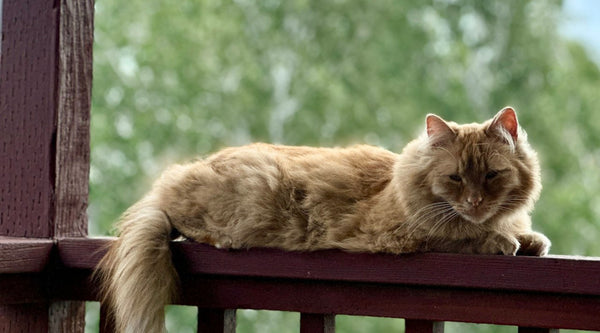
This is our indoor/outdoor cat, Tiger, casually parked on the deck railing — right where our hummingbird feeders used to hang. He still had to jump for it, but the railing put him well within range. That's exactly why we moved them.

📋 Free download: Cat-safe feeder placement checklist
It's easy to miss one of these while standing in your own yard. Print our quick walkthrough checklist and take it outside with you — height, nearby climb points, sightlines, and a quick device-effectiveness reference if your own cat spends time outdoors.
📍 Full placement details
Height, distance from cover, and the reasoning behind both are covered in depth in our complete guide to feeder placement.
Get to know your own cat's habits
If you have your own outdoor cat, the most useful thing you can do costs nothing: pay attention. Watch whether your cat is actually stalking the feeder — crouched, staring, tail twitching — versus just hanging out nearby. A cat genuinely hunting looks different from a cat sunbathing on the same railing it always sunbathes on.
A cat that's actively bored is more likely to treat a feeder as entertainment, hunting instinct or not. Keeping your cat mentally and physically enriched — regular play sessions, puzzle feeders, something to climb and scratch that isn't your feeder pole — genuinely helps here, the same way it helps with most unwanted cat behavior. A cat with an outlet for its hunting instinct is less likely to fixate on the one at your window.
And if you do catch your cat actively stalking a feeder, take it as useful information, not a failure. It just means that spot isn't working — move the feeder somewhere your cat can't stage an ambush from, and keep an eye on whether the behavior follows it.

A word on feral and community cats
Most of the research on cat predation actually points to un-owned and feral cats as the bigger overall contributor to bird deaths nationally, not owned pets. If your yard has visits from a cat that isn't yours, the same placement principles apply — but you don't have the option of enrichment or an indoor lifestyle for a cat you don't own. In that case, the feeder-placement steps above matter even more, since they're the one lever you fully control regardless of whose cat is in your yard.
Summary
| Fact | Detail |
|---|---|
| Overall US bird deaths from free-roaming cats | Estimated 1.3–4 billion/year; ABC commonly cites 2.4 billion — mostly from un-owned/feral cats |
| Hummingbird-specific documentation | A Southeastern Michigan landowner study documented cats preying on Ruby-throated Hummingbirds specifically, among 23+ local bird species |
| Most effective protection | Keeping cats indoors — endorsed by every major bird conservation authority, and better for cat lifespan too |
| If your cat goes outside | Catio > colored collar cover > pounce-guard bib > bell (weak) > ultrasonic devices (unproven for birds) |
| Feeder height guidance | 4–6 feet is standard expert advice, not a peer-reviewed number — but the real key is what's climbable or jumpable nearby |
| Watching your own cat | Stalking behavior is a real signal to relocate the feeder; enrichment reduces boredom-driven hunting |
Frequently Asked Questions
Do cats really hunt hummingbirds?
Yes. Cats are documented predators of hummingbirds around homes and feeders — a study of landowners in Southeastern Michigan specifically found free-ranging cats preying on Ruby-throated Hummingbirds among 23+ local bird species. Cats overall are the leading human-linked cause of bird deaths in the U.S., with the majority of that toll coming from un-owned and feral cats.
What's the single best way to protect hummingbirds from cats?
Keeping cats indoors, according to every major bird conservation authority. It's also better for the cat — indoor cats live meaningfully longer than cats with regular outdoor access.
Do bells on cat collars actually work?
Not reliably. Research on bells is mixed, and several studies found they made little real difference in how many birds a cat caught. A colored collar cover or a pounce-guard bib has stronger evidence behind it, though neither has been tested on hummingbirds specifically.
How high should a feeder be to keep it safe from cats?
4 to 6 feet is standard expert guidance, though it isn't from a dedicated research study — it's the height range where a cat generally can't leap up and grab a feeding bird. Just as important: check what's near the feeder that a cat could climb or jump from, like a tree branch, patio table, or deck railing. Height alone doesn't help if a cat can use something nearby to close the gap.
My cat sits near the feeder but doesn't seem to be hunting — should I worry?
Watch the behavior, not just the location. A cat crouched and staring with a twitching tail is stalking; a cat lounging in the same spot it always lounges probably isn't. If you do catch genuine stalking behavior, it's a useful signal to relocate the feeder — and keeping your cat enriched with play and activities can reduce boredom-driven hunting in general.

Bethany Sloan has served as General Manager of Pop's Birding since 2010, continuing the legacy of her grandfather, William "Pops" Sloan, inventor of the Original Hummingbird Swing. A lifelong hummingbird enthusiast, educator, and independent researcher, she leads the company's educational content, including its 50-State Hummingbird Guide series, Regional Guide, Species Guide and Hummingbird Learning Center. Bethany combines scientific research, regional migration data, and more than 16 years of hands-on experience to create trusted educational resources for bird enthusiasts across North America.