Aug 24, 2026
Do Spiders Eat Hummingbirds? What Orb-Weavers Really Mean for Your Feeder
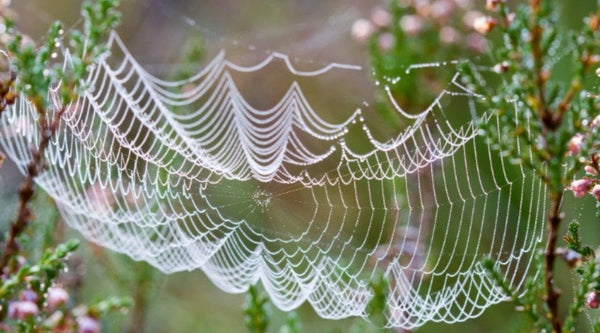
A Pop's Birding customer in North Georgia wrote to us last fall about something she'd found while trimming back her butterfly bush: a shimmering, dinner-plate-sized web strung between two branches, just a few feet from her hummingbird feeder — and, near its center, a spider bigger than any she'd ever seen in her yard. She wanted to know, honestly, whether she needed to worry about her Ruby-throated Hummingbirds.
It's a fair question, and one we hear often enough that it deserves a real answer. So we went to the actual research — published ornithology journals, Cornell Lab, Audubon, and university entomology programs — rather than repeating the panicked version of this story that circulates online.
How Common Is This, Really?
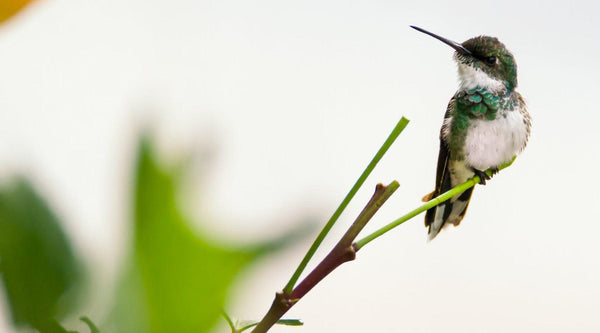
More documented than you'd expect, but still uncommon for any individual feeder. A peer-reviewed review published in the Wilson Journal of Ornithology examined 69 published cases of birds caught in spider webs across 54 species and found hummingbirds were the most diverse and most frequently entrapped family — 9 species and 20 total cases — with the Ruby-throated Hummingbird the single most-recorded species of any bird in the entire study, at 6 documented cases. A separate peer-reviewed paper on bird-eating praying mantises (a topic we cover in its own guide) also names large orb-weaving spiders as one of the few genuine invertebrate predators of North American hummingbirds, specifically pointing to two spider genera as the ones responsible.
How It Actually Happens
This isn't a spider stalking a hummingbird — it's a hummingbird flying into danger it didn't see. Large orb-weavers build big, strong webs, often in open, sunny spots near flowers and feeders where hummingbirds naturally spend time. A hummingbird can fly straight into one at speed, or become genuinely stuck while doing something else entirely: gathering silk. Spider silk is a key building material for a hummingbird nest — Cornell Lab notes that Ruby-throated Hummingbird nests are built from thistle and dandelion down held together with strands of spider silk, which lets the tiny nest stretch as the chicks grow. That means a hummingbird visiting a web isn't always careless; sometimes it's on a deliberate supply run that goes wrong.
Interestingly, orb-weavers may even be trying to warn birds off. Cornell's NestWatch program explains that many arachnologists believe the thick, zigzag silk pattern woven into some webs — called a stabilimentum — serves as a visual warning to birds and other large animals that the web is there. Even so, NestWatch confirms it has been documented, in rare cases, that a golden orb-weaver will take advantage of a snared bird, wrap it in silk, and eat it — and these rare cases consistently involve smaller birds, especially hummingbirds and kinglets.

Which Spiders to Know
Two orb-weavers come up again and again in the documentation: the golden silk orb-weaver (genus Trichonephila, formerly Nephila) and the yellow-and-black garden spider (Argiope aurantia), both large, common, and capable of building webs strong enough to hold a hummingbird's weight. A study of hermit hummingbirds in Costa Rica documented three separate cases of birds tangled in golden silk orb-weaver webs, noting that these spiders tend to place their webs in exactly the spots hummingbirds favor — which suggests this kind of entanglement likely happens more often than it gets reported. Georgia's Department of Natural Resources has documented and rescued a live hummingbird found tangled in a spotted orb-weaver's web outside a customer's kitchen window, safely freeing and releasing the bird the next morning — proof that not every encounter ends badly, especially if it's found in time.
If You Find a Hummingbird Trapped in a Web
Act gently and quickly. If the bird is still alive, carefully cover it with a soft cloth to keep it calm, then work slowly to remove every strand of silk from its wings, feet, and body — silk is remarkably sticky and can trap a bird even after it's freed from the web itself if any is left behind. Avoid pulling on the body or wings. Once it's fully clear of silk, offer it a moment to rest in a small, dark, ventilated box before assessing whether it can fly on its own. If it seems injured or can't take off within a short time, contact a licensed wildlife rehabilitator rather than attempting further care yourself.
Dragonflies: A Genuinely Rare Threat
Dragonflies deserve an honest mention here, precisely because the honest answer is "almost never." Across nearly a century of birdwatching records, only a handful of documented dragonfly-hummingbird encounters exist. In 1934 near Kenora, Ontario, witnesses found a large dragonfly gripping a male Ruby-throated Hummingbird by the neck — they drove the dragonfly off and the bird survived, so this one wasn't a kill at all. A single published note from 1977 in the ornithological journal The Loon documents what appears to be the one confirmed case of a dragonfly actually killing a Ruby-throated Hummingbird. And in September 2015, a birder in Port Arthur, Texas photographed a Common Green Darner — one of the largest, most common dragonflies in North America — feeding on a dead hummingbird pinned to a picnic table; Audubon's own coverage of the photo is careful to note some real doubt about whether the dragonfly caused the death or simply found the bird already gone. Three incidents in roughly ninety years is a real phenomenon, but not remotely a common one.
Robber Flies: The Rarest of All
Robber flies are large, aggressive predatory insects — some over an inch long — and Missouri's Department of Conservation notes that while they're mostly known for ambushing bees, wasps, and grasshoppers, there are scattered accounts of them attempting to take prey as large as a hummingbird. The agency's own framing is refreshingly honest: this happens rarely, and typically the hummingbird escapes unharmed. We couldn't locate any published, peer-reviewed case of a robber fly actually killing a hummingbird — the strongest documentation is a single observed encounter with a large "red-footed cannibalfly" from a nonprofit nature research station. Of every predator in this guide, robber flies have the thinnest evidence behind them, and we think that's worth saying plainly rather than dressing up.
How We Built This Guide
Pop's Birding has been helping hummingbird lovers for three generations, and "should I be worried about that spider web near my feeder?" is a question that comes up often enough that we wanted a real, sourced answer. Every claim in this guide was checked against peer-reviewed ornithology journals, Cornell Lab of Ornithology, Audubon, state wildlife agencies, and university entomology programs before it made the page.
Where the evidence was strong — like the documented pattern of orb-weavers entrapping hummingbirds — we said so clearly. Where it was thin, like robber flies, or actively contradicted a popular claim, like the Joro spider, we said that plainly too, rather than repeating what sounds dramatic. That's the same standard we bring to every guide in this Learning Center.
About Pop's Birding
Pop's Birding has been a family-owned, three-generation hummingbird company since the very beginning — the same family that invented the original hummingbird swing. Based in Idaho, with a second home in Atlanta, we've spent decades learning what actually helps backyard hummingbirds thrive, and we bring that same care to every guide we write.
What You Can Do to Help
You don't need to eliminate every spider in your yard — most spiders are helpful, harmless, and never come near a hummingbird. A few simple habits lower the real risk:
- Check for large webs near feeders and flower patches regularly, especially big, open orb webs strung at hummingbird height, and relocate them gently if you find one too close for comfort.
- Give feeders some open space. Orb-weavers favor spots between structures like eaves, branches, and posts — the same kind of placement thinking covered in our complete feeder placement guide helps here too.
- Check on a nest-building hummingbird's usual routes if you notice a large web has appeared nearby, since collecting silk is exactly when this kind of encounter tends to happen.
- Don't panic over one spider. A single garden spider isn't a threat to your feeder visitors — it's the rare, specific combination of a very large web in exactly the wrong spot that occasionally causes trouble.
Spiders join a short list of animals genuinely documented preying on hummingbirds. Cats remain the single most significant threat overall, covered in our Cats and Hummingbirds guide, and the invasive Chinese praying mantis shares this same "ambush predator hiding near a feeder" pattern with orb-weavers — see our Praying Mantis guide. Rat snakes occasionally catch hummingbirds at feeders too (our Snakes guide), while jays, crows, squirrels, and chipmunks are the best-documented threats to eggs and nestlings (our guide to hummingbird egg predators). A handful of small, fast birds of prey round out the list of real adult-hummingbird predators, covered in our guide to birds that prey on hummingbirds. And sometimes the danger isn't a predator at all — a feeder placed too close to a window can pose more risk than any animal here, which is why we wrote a dedicated Window Strikes guide. In fact, the largest published study of hummingbird rehab admissions found predators weren't even the leading cause — being found on the ground, weak from exhaustion or bad weather, was. No study has actually ranked predators from most to least common, and we won't pretend otherwise; see every threat side by side in Hummingbird Predators: The Complete Guide.
Spiders & Insect Predators, at a Glance
| Predator | How Well Documented | The Honest Take |
|---|---|---|
| Orb-weaver spiders | Well documented in peer-reviewed research | Real but rare per feeder — entrapment, not hunting |
| Joro spiders | Strong web confirmed; no documented hummingbird kills | Viral claim not supported by UGA research |
| Dragonflies | Three traceable cases in ~90 years | Genuinely rare; one confirmed kill |
| Robber flies | No peer-reviewed case located | The rarest and least-documented of all |
Frequently Asked Questions
Do spiders eat hummingbirds?
Occasionally, yes. Large orb-weaver spiders don't hunt hummingbirds, but a hummingbird can fly into a web or get tangled while gathering silk for its nest, and in rare documented cases the spider will trap and eat it. It's uncommon for any individual feeder, but well documented across published research.
What kind of spider eats hummingbirds?
The two spiders most consistently named in the research are the golden silk orb-weaver (genus Trichonephila) and the yellow-and-black garden spider (Argiope aurantia), both large orb-weavers capable of building webs strong enough to hold a hummingbird.
Do Joro spiders eat hummingbirds?
There's no documented case of it happening. Joro spider webs are unusually strong, but University of Georgia entomologists have found no evidence of a Joro spider actually catching or eating a hummingbird, despite the claim circulating widely online.
What should I do if a hummingbird is caught in a spider web?
Gently cover the bird with a soft cloth, carefully remove all silk from its wings and body without pulling, let it rest briefly in a small dark box, and see if it can fly on its own. If it seems injured or can't take off, contact a licensed wildlife rehabilitator.
Do dragonflies eat hummingbirds?
Very rarely. Only a handful of documented cases exist across nearly a century of records, and just one is confirmed as an actual kill rather than a survived attack or a case of a dragonfly feeding on a bird that was already dead.

Bethany Sloan has served as General Manager of Pop's Birding since 2010, continuing the legacy of her grandfather, William "Pops" Sloan, inventor of the Original Hummingbird Swing. A lifelong hummingbird enthusiast, educator, and independent researcher, she leads the company's educational content, including its 50-State Hummingbird Guide series, Regional Guide, Species Guide and Hummingbird Learning Center. Bethany combines scientific research, regional migration data, and more than 16 years of hands-on experience to create trusted educational resources for bird enthusiasts across North America.