Aug 24, 2026
Snakes and Hummingbird Feeders: What's Actually Going On
Imagine this scenario, you're sitting outside, enjoying a morning cup of coffee and view of your hummingbirds when a slim, gray-scaled snake stretches along the shepherd's hook, coiled just beneath the feeder, perfectly still. That was one customer's story who wrote to us asking if snakes are harmful to hummingbirds.
If you've searched "snake on hummingbird feeder" because you've just seen the same thing, you're not imagining it and you're not alone. It's one of the more startling questions our customers bring to us — so we went straight to wildlife agencies, herpetologists, and peer-reviewed research to give you an honest answer, not a shock-value one.
Is This Really Happening? Here's the Documentation
This isn't an internet myth. Georgia's Department of Natural Resources has published a firsthand account from wildlife biologist Terry W. Johnson, who watched a young rat snake — about three feet long — draped across a feeder with a hummingbird already caught in its mouth. He safely relocated the snake, and by his own account, it was the first time he'd witnessed this in decades of watching hummingbirds. South Carolina Public Radio's longtime naturalist Rudy Mancke independently documented the same behavior, confirming the culprit as a juvenile rat snake. Georgia herpetologist Jim Rodgers, consulted separately by a Georgia gardening expert about a snake photographed on a feeder, identified it as a gray rat snake — well able, in his assessment, to strike and injure a hummingbird that ventures too close.
The snake responsible is almost always a rat snake — most often the Eastern (or "black") rat snake, Pantherophis alleghaniensis, or its close relative the gray rat snake, Pantherophis spiloides, depending on region. Both are non-venomous, both are excellent climbers, and both are common backyard residents across much of the eastern and central United States.
How Rare Is This, Really?
Here's where we want to be honest rather than dramatic: this is a real but uncommon event, not a routine threat. Georgia's wildlife agency has called cats the single most significant hummingbird predator, and snake predation is genuinely rare by comparison — well behind more commonly documented threats. Research on snake predation across the Southeast (where most of the documented feeder incidents cluster, likely tied to the region's dense rat-snake populations) still finds it a relatively rare cause of adult-bird mortality compared to cats, window strikes, or nest predation by jays and crows, which we cover in our guide to hummingbird egg predators.
That distinction matters: the snake behavior covered there is nest raiding — eggs and featherless chicks. What we're covering here is different and rarer still: a snake climbing to an active feeder and catching an adult, flying hummingbird.
How Big Do These Snakes Get, and How Do They Actually Climb?
Adult rat snakes commonly run about 3.5 to 6 feet long, with well-documented records over 7 feet and a confirmed maximum of roughly 8.4 feet. They're genuinely impressive climbers — but not for the reason most articles claim. It isn't "rough, rigid scales" doing the work; rat snakes climb using broad, outward-projecting belly scales that grip vertical surfaces, combined with a muscular, concertina-style motion that lets them work up poles, tree trunks, and even brick walls. Their back scales are only weakly keeled.
That climbing ability does have real limits, though — and this is genuinely useful information. Research on rat-snake locomotion has found they struggle to climb large, smooth trunks. That single fact is the entire logic behind the most effective deterrent, which we'll get to next.
What Actually Works: Deterring Snakes From Your Feeder
There's no controlled study testing snake deterrents on hummingbird feeders specifically — but there is strong peer-reviewed research on keeping snakes and other predators off nest boxes, and the physics transfer directly to a feeder pole. A study drawing on more than 24,000 nest records submitted to Cornell's NestWatch program found that boxes fitted with predator guards had meaningfully higher nesting success than those without. Based on that research and wildlife-agency guidance, here's what genuinely helps:
- Use a real baffle, sized correctly. Wildlife agencies recommend a stovepipe-style baffle roughly 24 inches long and 8 inches in diameter, mounted so its top sits at least 4 feet off the ground. This matters more than it sounds: a narrow 4-inch PVC baffle isn't wide enough to stop a rat snake, which can simply coil around it and keep climbing.
- Choose a smooth metal pole. Since rat snakes struggle to climb large, smooth surfaces, a slick metal pole is naturally harder to scale than a rough wooden post or a trellis-style hanger.
- Keep the pole isolated. Position feeders away from trees, shrubs, fences, and structures a snake could use as a bridge to bypass the baffle entirely. Our full feeder placement guide walks through exactly how much clearance to give.
- Address the real draw: rodents. Rat snakes come into yards primarily hunting small mammals, not hummingbirds. Clearing brush piles, spilled birdseed, and other rodent food sources is a genuine long-term fix, not just a feeder-specific one.
- Skip the grease and the netting. Oiling or greasing a pole can coat feathers and fur and cause real harm to birds and other wildlife who touch it. Netting around a pole can trap and injure snakes and hummingbirds alike. Neither is worth the risk.
If You Find a Snake on Your Feeder
It's an unsettling sight, but try not to panic. Rat snakes are non-venomous and, outside of this occasional feeder incident, are genuinely beneficial to have around — they're excellent at keeping rodent populations in check. If you'd rather it move along, the safest approach is usually to calmly relocate the feeder rather than the snake, giving it space to leave on its own. In some states, snakes are protected wildlife, so it's worth checking your local regulations before handling one directly.
How We Built This Guide
Pop's Birding has been helping hummingbird lovers for three generations, and "is that really a snake on my feeder, and should I be worried?" is exactly the kind of question our customers bring us. We wanted a real, sourced answer rather than a recycled one, so every claim here was checked against state wildlife agency publications, herpetology programs and peer-reviewed research before it made the page.
Along the way, we corrected two claims that show up often but don't hold up: the idea that rough scales (rather than belly-scale grip and muscle) are what let a snake climb, and the idea that hummingbirds' frequent feeding meaningfully raises their risk near a feeder. We'd rather tell you what the research actually shows than repeat what sounds tidy — the same standard we bring to every guide in this Learning Center.
About Pop's Birding
Pop's Birding has been a family-owned, three-generation hummingbird company since the very beginning — the same family that invented the original hummingbird swing. Based in Idaho, with a second home in Atlanta, we've spent decades learning what actually helps backyard hummingbirds thrive, and we bring that same care to every guide we write.
Other Threats to Know About
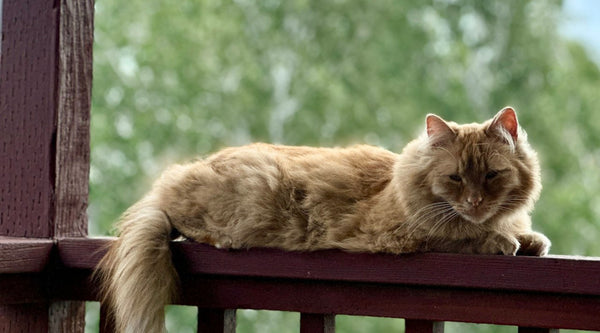
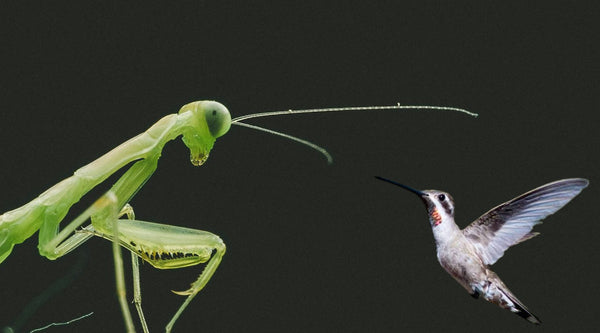
Snakes are just one entry on a longer list. Cats remain the single most significant documented threat to hummingbirds overall, covered in our Cats and Hummingbirds guide. The invasive Chinese praying mantis is a genuine insect threat at feeders (our Praying Mantis guide), and orb-weaver spiders occasionally trap hummingbirds in their webs too (our Spiders and Insect Predators guide). Eggs and nestlings face a different set of threats — mainly jays, crows, squirrels, and chipmunks — detailed in our Hummingbird Egg Predators guide. A handful of small, fast birds of prey are real adult-hummingbird predators as well, covered in our guide to birds that prey on hummingbirds. And sometimes the danger isn't a predator at all — a feeder placed too close to a window can be more dangerous than any animal, which is exactly why we wrote a dedicated Window Strikes guide. In fact, the largest published study of hummingbird rehab admissions found predators weren't even the leading cause — being found on the ground, weak from exhaustion or bad weather, was. No study has actually ranked predators from most to least common, and we won't pretend otherwise; see our full, honestly caveated comparison in Hummingbird Predators: The Complete Guide.
Snakes and Hummingbird Feeders, at a Glance
| Question | What's Actually True |
|---|---|
| Does it really happen? | Yes — documented independently by Georgia and South Carolina wildlife/naturalist sources. |
| Which snake is it usually? | A rat snake — Eastern/black (Pantherophis alleghaniensis) or gray (P. spiloides) |
| How common is it? | Genuinely rare — well behind more commonly documented threats like cats |
| How big do they get? | Typically 3.5–6 ft, with records over 7 ft |
| Best deterrent? | An 8-inch stovepipe baffle on a smooth, isolated pole |
Frequently Asked Questions
Do snakes eat hummingbirds?
Yes, though it's uncommon. Rat snakes have been independently documented by wildlife agencies and naturalists climbing feeder poles and catching adult hummingbirds. It happens far less often than predation by cats or nest-raiding by jays and crows.
What kind of snake eats hummingbirds?
The rat snake — most often the Eastern (black) rat snake, Pantherophis alleghaniensis, or the closely related gray rat snake, Pantherophis spiloides. Both are strong, non-venomous climbers common across the eastern and central U.S.
How do I keep snakes off my hummingbird feeder pole?
Fit the pole with an 8-inch-diameter stovepipe-style baffle at least 4 feet off the ground, use a smooth metal pole rather than wood or a trellis, and keep the pole isolated from trees, shrubs, and structures a snake could use as a bridge.
Are snakes near a hummingbird feeder dangerous to people?
Rat snakes are non-venomous and not a threat to people. They're actually beneficial to have in a yard, since they help control rodent populations.
Should I kill a snake I find on my feeder?
We'd recommend against it. Relocating the feeder rather than the snake is usually the safer, easier option, and in some states snakes are protected wildlife — it's worth checking local regulations before handling one.

Bethany Sloan has served as General Manager of Pop's Birding since 2010, continuing the legacy of her grandfather, William "Pops" Sloan, inventor of the Original Hummingbird Swing. A lifelong hummingbird enthusiast, educator, and independent researcher, she leads the company's educational content, including its 50-State Hummingbird Guide series, Regional Guide, Species Guide and Hummingbird Learning Center. Bethany combines scientific research, regional migration data, and more than 16 years of hands-on experience to create trusted educational resources for bird enthusiasts across North America.