Aug 24, 2026
What Really Eats Hummingbird Eggs? A Caring Look at Nest Raiders
One morning, a Pop's Birding customer looked up from her coffee just in time to see a jay slip out of the maple tree behind her feeder pole. The tiny nest she'd been watching for two weeks — the one holding two eggs no bigger than jellybeans — was empty. No shells, no mess. Just gone.
It's one of the questions our customers ask us more than almost any other: what actually gets into a hummingbird nest? The honest answer surprises most people, because it isn't the animal that gets blamed the most often online. We built this guide to give you a direct, carefully sourced answer — not the recycled list of "usual suspects" you'll find on most hummingbird sites, but what's actually documented by ornithologists, wildlife agencies, and researchers who study this for a living.
Jays, Crows & Ravens: The Best-Documented Egg Predators
If one family of animals has the strongest paper trail for raiding hummingbird nests, it's the corvids — jays, crows, and ravens. Cornell Lab's All About Birds describes the American Crow plainly as a frequent nest predator that eats the eggs and nestlings of many species, and Steller's Jays are documented the same way — common nest predators that steal both eggs and chicks from a wide range of birds.
Hummingbirds aren't spared from this. Jays are named among the documented predators of Ruby-throated Hummingbird nests, and in one of the most-cited hummingbird studies of the last decade, researchers in Arizona's Chiricahua Mountains actually caught Mexican Jays on camera pillaging Black-chinned Hummingbird nests (more on that fascinating study in a moment). Corvids are intelligent, opportunistic, and built for exactly this kind of foraging — which is why, of every animal on this list, they have the most direct evidence behind them.
Snakes: Real Climbers, Real Threats
Snakes are the other well-documented threat to a hummingbird nest, particularly rat snakes and gopher snakes, both of which are capable, patient climbers. State wildlife agencies and naturalists have long recorded snakes working their way up feeder poles and into shrubs and trees where hummingbirds nest, and once a snake reaches a nest, tiny eggs and featherless chicks make an easy meal. It's a slower, quieter kind of predation than a jay's quick raid — but it's every bit as real, and it's part of why nest and feeder placement (more on that below) makes such a difference.
Squirrels & Chipmunks: Real Nest Raiders, Not Aerial Hunters
Squirrels and chipmunks genuinely do belong on this list — just not for the reason most articles claim. Squirrels are documented omnivores that will take eggs and nestlings from a wide range of bird species, especially when their usual diet of nuts, seeds, and buds is scarce. A landmark review in the Great Basin Naturalist found this kind of opportunistic predation across at least 30 squirrel species, tied closely to season and food availability — and a controlled study published in The Auk found that rodents including squirrels do take eggs and nestlings, though how much they can eat is limited by the size of the egg itself and how hungry they are at the time.
Squirrels and chipmunks are both named among the documented nest predators of the Ruby-throated Hummingbird for exactly this reason — an unattended nest, especially during a lean stretch, is an easy target.
Here's what we couldn't verify, though, no matter how many sources we checked: the widely repeated claim that squirrels or chipmunks snatch full-grown hummingbirds out of the air. We traced that claim back as far as we could, and it doesn't appear in any peer-reviewed research, any wildlife agency publication, or any ornithology reference — it circulates almost entirely on hobby and lifestyle sites that don't cite an original source. Even the "fox squirrels are unusually predatory" version of the claim doesn't hold up; wildlife agency research on the species actually notes that fox squirrels are less agile in the treetops than other squirrels and tend to forage more on the ground, which cuts against the idea that they're aggressively hunting overhead. We'd rather tell you plainly what we couldn't confirm than repeat a claim just because it's popular. What's real and well-supported is this: squirrels and chipmunks are opportunistic nest raiders of eggs and nestlings — not hunters of adult hummingbirds.
How We Built This Guide
Pop's Birding has been helping hummingbird lovers for three generations, and "what's actually eating my hummingbirds' eggs" is one of the questions we hear most from customers watching a nest in their own yard. We wanted to give a real answer, not a recycled one — so every claim in this guide was checked against Cornell Lab of Ornithology's All About Birds and Birds of the World, Audubon, peer-reviewed journals, and state and federal wildlife agencies before it made the page.
Where a claim only appeared on hobby or lifestyle sites with no original source behind it — like squirrels catching adult hummingbirds mid-flight — we said so plainly rather than repeating it because it's popular. And where a well-known study is often summarized in a way that blurs who the actual predator is (the hawk research above is the best example), we went back to the original paper and the researchers' own follow-up coverage to get the attribution right. That's the same standard of care we bring to every guide in this Learning Center.
About Pop's Birding
Pop's Birding has been a family-owned, three-generation hummingbird company since the very beginning — the same family that invented the original hummingbird swing. Based in Idaho, with a second home in Atlanta, we've spent decades learning what actually helps backyard hummingbirds thrive, and we bring that same care to every guide we write.
What You Can Do to Help
You can't stop every predator, and you shouldn't try to — jays, crows, and squirrels are all a normal part of a healthy backyard, and hummingbirds have been navigating these threats for a very long time. But a few thoughtful choices genuinely help tip the odds:
- Think about placement, not just visibility. Feeders and favored nesting spots that are farther from dense cover give climbing predators like snakes fewer easy routes in. Our complete feeder placement guide walks through exactly how far and how high to go.
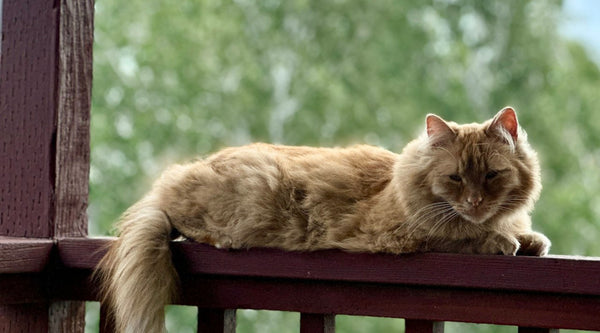
- Keep cats indoors or supervised outside. Cats are a different kind of threat than nest raiders, but they're one of the most preventable ones — our Cats and Hummingbirds guide covers what actually helps.
- Resist the urge to intervene at the nest itself. Moving a nest or handling eggs can cause a parent to abandon it — the best help is usually distance and patience.
- Keep an eye out, not a hand in. Watching from a respectful distance is one of the genuine joys of hosting nesting hummingbirds — just let nature do what it's done for millions of years.
Other Threats to Know About
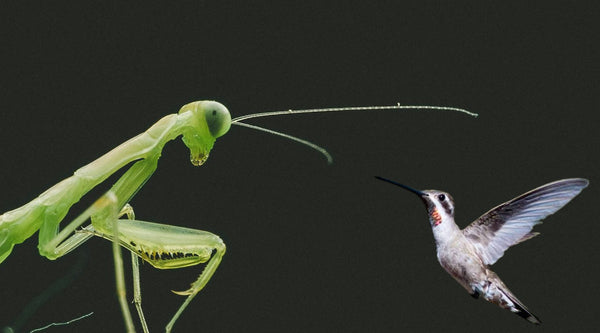
Eggs and nestlings are just one part of the picture. Cats remain the single most significant documented threat to hummingbirds overall, and we cover exactly what helps in our Cats and Hummingbirds guide. The invasive Chinese praying mantis is a real, if surprising, threat at feeders — see our Praying Mantis guide. Adult hummingbirds also face orb-weaver spiders, which occasionally trap and eat them (our Spiders and Insect Predators guide), rat snakes that climb feeder poles (our Snakes guide), and a handful of small, fast birds like the Sharp-shinned Hawk and Merlin (our guide to birds that prey on hummingbirds). And sometimes the real danger isn't a predator at all — a feeder placed too close to a window can pose more risk than any animal on this list, which is exactly why we wrote a dedicated Window Strikes guide. In fact, in the largest published study of hummingbird rehabilitation admissions, predators weren't even the leading cause — simply being found on the ground, weak from exhaustion or bad weather, was the single most common reason a hummingbird needed help. No study has actually ranked predators from most to least common, so we won't pretend otherwise; for our full, honestly caveated comparison across every threat, see Hummingbird Predators: The Complete Guide.
Hummingbird Egg Predators at a Glance
| Predator | What They Actually Take | How Well Documented |
|---|---|---|
| Jays, crows & other corvids | Eggs and nestlings | Strongest evidence — directly observed and camera-documented |
| Snakes (rat & gopher snakes) | Eggs and nestlings | Well documented by wildlife agencies and naturalists |
| Squirrels & chipmunks | Eggs and nestlings, opportunistically | Documented in peer-reviewed research on rodent nest predation |
| Squirrels & chipmunks "catching adult hummingbirds" | Not supported | No original source found in any peer-reviewed or agency reference |
Frequently Asked Questions
What eats hummingbird eggs?
The best-documented predators are jays, crows, and other corvids, which have been directly observed — and in at least one well-known study, camera-confirmed — raiding hummingbird nests. Snakes, particularly rat and gopher snakes, are also well documented reaching nests. Squirrels and chipmunks are real, if more opportunistic, egg and nestling predators as well.
Do jays eat hummingbird eggs?
Yes. Jays are among the most consistently documented hummingbird nest predators, including Mexican Jays, which were camera-confirmed raiding Black-chinned Hummingbird nests during a well-known Arizona research study.
Do squirrels eat hummingbird eggs?
Yes, opportunistically. Squirrels are documented omnivores that will take bird eggs and nestlings, especially when other food sources are scarce, but the amount they can eat from any one nest is limited by how small hummingbird eggs actually are.
Do squirrels eat hummingbirds?
There's no verified research supporting the popular claim that squirrels catch adult hummingbirds in flight. What's actually documented is squirrels raiding unattended nests for eggs and nestlings — a real but different threat than "hunting" adult birds.
What animals eat hummingbird nests?
Jays, crows, snakes, squirrels, and chipmunks are the animals with real documentation behind them as hummingbird nest predators, most often taking eggs or featherless nestlings rather than adult birds.

Bethany Sloan has served as General Manager of Pop's Birding since 2010, continuing the legacy of her grandfather, William "Pops" Sloan, inventor of the Original Hummingbird Swing. A lifelong hummingbird enthusiast, educator, and independent researcher, she leads the company's educational content, including its 50-State Hummingbird Guide series, Regional Guide, Species Guide and Hummingbird Learning Center. Bethany combines scientific research, regional migration data, and more than 16 years of hands-on experience to create trusted educational resources for bird enthusiasts across North America.