Jul 22, 2026
Ruby-throated Hummingbird: How to Identify Males, Females and Juveniles
The default mental image most Americans have when someone says "hummingbird" is this species — and for good reason: it's the only hummingbird that breeds anywhere across the eastern United States. But "the only one" doesn't mean "the only one you'll ever see there." A wandering Black-chinned Hummingbird can turn up in identical plumage, especially as a female, and even within its own species, adult males, adult females, and juveniles all look different enough from each other to trip up a quick glance at the feeder.
This guide focuses entirely on identification — what to look for on males, females, and juveniles, and how to separate Ruby-throated from the species it's most often confused with. Looking for a different species entirely? Start with our full overview of hummingbird species found in the United States.
Quick answer: Adult male Ruby-throated Hummingbirds are unmistakable once the light hits that red throat — but the same throat can look solid black a moment later, and females and juveniles have no red at all. The look-alike comparisons below matter more than the basic field marks, especially for telling a female Ruby-throated from a female Black-chinned.
Quick Facts
- Scientific name: Archilochus colubris
- Length: 2.8–3.5 inches (7–9 cm)
- Weight: 0.1–0.2 oz (2–6 g) — adult females average about 3.5 g, adult males about 3.0 g, per Cornell's current Birds of the World account (an older Cornell reference gives slightly higher averages, 3.8 g / 3.4 g — the two haven't fully converged)
- Wingspan: 3.1–4.3 inches (8–11 cm)
- Fastest field cue: the only hummingbird that breeds across the entire eastern United States — but not the only one that can show up there (see below)
How to Identify the Ruby-throated Hummingbird: Males vs. Females vs. Juveniles
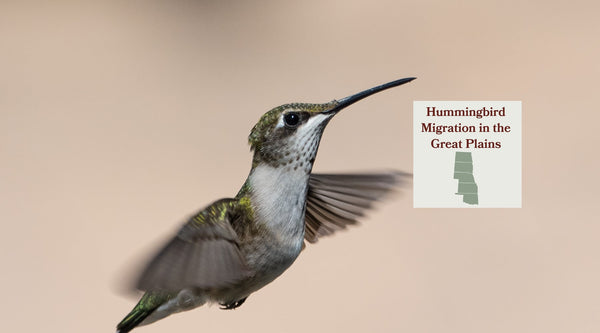
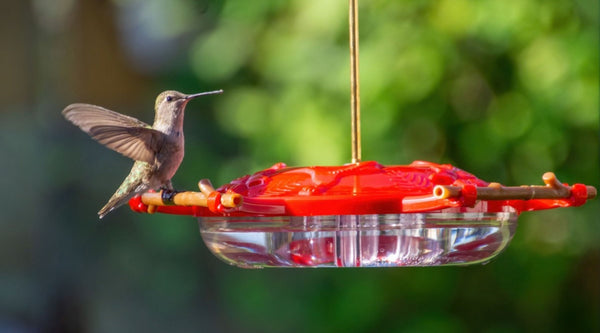
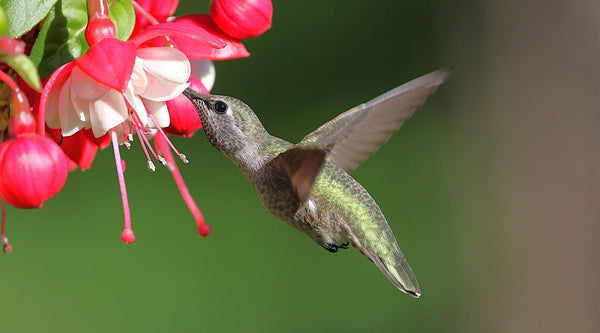
Before splitting hairs between sexes, here's the general shape to look for regardless of age or sex: a small hummingbird with a slender, slightly downcurved bill and fairly short wings that don't reach all the way to the tail when perched — the same overall size as a Black-chinned Hummingbird, which matters given how often the two get confused. Once that silhouette clicks, color is what actually separates males from females from juveniles.
Adult Males
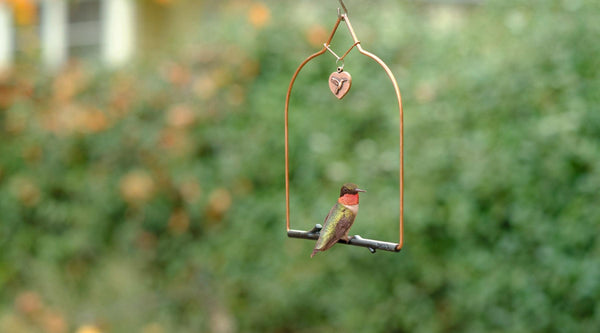
The gorget is the giveaway: a brilliant iridescent ruby-red throat patch, bordered by a thin band of black around the cheek area, that can appear to switch on and off entirely depending on the angle of light — brilliant crimson one moment, nearly black the next. The back and crown are bright emerald or golden-green, the underparts gray-white, and the tail is forked and mostly black. The bill is slender and very slightly downcurved. Males are somewhat smaller than females, with marginally shorter bills.

Adult Females
No red throat at all — instead, a plain whitish throat, sometimes lightly marked with faint dusky streaks or small dark stipples. The tail is notched rather than deeply forked, with white tips to the outer feathers, visible as pale corners in flight. Females average slightly larger than males, a reversal of the usual pattern in birds.

Juveniles and Immatures
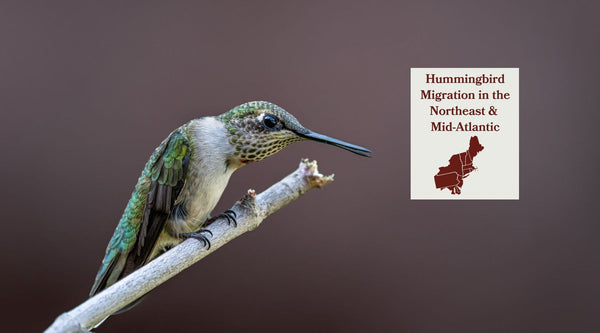
Young birds of both sexes closely resemble adult females at first — plain or lightly marked white throats and green-backed plumage. Juvenile males typically show heavier throat markings than females, and by late summer many begin developing a handful of scattered iridescent red feathers in the gorget as it fills in toward its adult appearance.

A Quick Note on Sound
Ruby-throated Hummingbirds beat their wings an average of 53 times per second — the source of the low humming sound that gives the entire family its name — with the rate increasing further during chases and courtship displays. Sharp, metallic chip notes are used during close-range disputes and territorial encounters, along with rapid chattering or squeaky scolding sounds during feeder disputes.
Ruby-throated Look-Alikes: How to Tell It Apart From Similar Species
Four species get confused with Ruby-throated regularly enough that Cornell's All About Birds flags them directly on its own species-comparison pages — though within their normal ranges, Black-chinned is really the only one that poses a routine identification challenge. For two of them — Anna's and Broad-tailed — the "how to tell them apart" answer is simply that their ranges don't overlap at all; the other two, Black-chinned especially, require an actual look.

Black-chinned Hummingbird
Why they're confused:
Ruby-throated's only congener and closest relative — where their ranges overlap, mainly central Texas and the southern Great Plains, they're genuinely difficult to separate, especially females and immatures.
How to tell them apart:
Adult males in poor light both look dark-throated, but Black-chinned's throat is purple where Ruby-throated's is red. For females and immatures, check the folded wings on a perched bird: Black-chinned's wings reach the tip of the tail or slightly beyond, while Ruby-throated's tail extends well past the wingtips.

Broad-tailed Hummingbird
Why they're confused:
Similar overall plumage pattern — green back, pale underparts — though their breeding ranges don't actually overlap with Ruby-throated's at all.
How to tell them apart:
Adult male Broad-tailed lacks the dark eye patch Ruby-throated males show. Female/immature Broad-tailed has cinnamon-colored tail feathers, while Ruby-throated's tail is green and black — but range alone rules this pair out in most cases.

Anna's Hummingbird
Why they're confused:
Both are common backyard hummingbirds people default to comparing against — Anna's in the West, Ruby-throated in the East — even though their ranges don't overlap.
How to tell them apart:
Adult male Anna's has a glittering red forehead in addition to the throat, which Ruby-throated males never show. Female Anna's has greener-washed sides than female Ruby-throated.

Rufous Hummingbird
Why they're confused:
Breeding ranges don't overlap, but Rufous is the western species most likely to wander east — a green-backed Rufous female or immature can suggest a lingering Ruby-throated to an eastern birder unfamiliar with it.
How to tell them apart:
Female/immature Rufous shows cinnamon-washed flanks that Ruby-throated never shows — Ruby-throated's sides stay whitish to pale gray. An adult male Rufous, orange from crown to tail, isn't a realistic confusion with any Ruby-throated plumage.
Sources: All About Birds species-comparison pages (Cornell Lab).
The real story with this bird isn't conservation status — it's the migration. A bird barely heavier than a penny flies nonstop across 500 miles of open Gulf of Mexico water using fat reserves built in the two weeks before departure. That full story — the physiology, the research, and exactly when to expect this bird in your region — lives on our Migration & Range guide.
Frequently Asked Questions
Why is it called the Ruby-throated Hummingbird if only males have a red throat?
The species was named for the male's gorget, the iridescent red throat patch that gives the bird its common name. Females and juveniles lack this feature entirely, but naming conventions for birds typically describe the more visually distinctive sex, which in hummingbirds is almost always the male.
How can I tell a female Ruby-throated Hummingbird from a female Black-chinned Hummingbird?
Look at the folded wings on a perched bird. Black-chinned's wings reach the tip of the tail or extend slightly beyond it, while Ruby-throated has a longer tail that extends well past the wingtips. Outside their zone of range overlap in Texas and the southern Great Plains, location alone usually settles it.
What's the fastest way to identify a male Ruby-throated Hummingbird?
Wait for the light to hit the throat directly — a brilliant iridescent red gorget is diagnostic. In poor light or from the wrong angle, that same throat can look solid black, which is exactly when it gets confused with a male Black-chinned Hummingbird's purple throat.
Are juvenile Ruby-throated Hummingbirds hard to identify?
They closely resemble adult females — plain or lightly marked white throats, green-backed plumage — but juvenile males typically show heavier throat markings, and by late summer many begin showing a few scattered iridescent red feathers as the adult gorget starts coming in.
Is the Ruby-throated Hummingbird the only hummingbird in the eastern United States?
It's the only one that breeds there. Rare western vagrants — Rufous most often, occasionally others — do show up in the East, mostly in fall and winter, and Black-chinned overlaps with Ruby-throated along the central Texas coast where their ranges actually meet.
Why We Created This
Pop's Birding is a third-generation, Idaho-based family business that invented the hummingbird swing. One of the questions our customers ask us most often is "is this actually a Ruby-throated, or something that just looks like one?" Most identification content treats this as a solved problem, since Ruby-throated is "the only eastern hummingbird" — but that framing misses that Cornell itself flags four look-alike species, not one, and that the one genuine overlap zone (Black-chinned, in Texas) is a real, documented identification challenge even for experienced birders. We built the full comparison specifically because the "only one in the East" framing, while true, isn't the same as "the only one you'll ever need to identify."
How We Created This
Every field mark and look-alike comparison on this page is checked directly against Cornell Lab's All About Birds species-comparison pages — the live pages themselves, not a secondhand summary of them. All four confusion pairs above were verified this way, including the two (Anna's, Broad-tailed) where the actual answer is range rather than plumage — we state that plainly rather than manufacturing a plumage distinction that isn't the real reason these species aren't confused in practice.
Looking for the rest of the picture on this bird? See our Migration & Range guide and Behavior & Family guide, or browse every species in our full U.S. hummingbird guide. At Pop's Birding, we believe every backyard — big or small — has room for a little more wonder. Explore our feeders, nectars, swings, and wildflower seed blends to start building your own hummingbird sanctuary today.

Bethany Sloan has served as General Manager of Pop's Birding since 2010, continuing the legacy of her grandfather, William "Pops" Sloan, inventor of the Original Hummingbird Swing. A lifelong hummingbird enthusiast, educator, and independent researcher, she leads the company's educational content, including its 50-State Hummingbird Guide series, Regional Guide, Species Guide and Hummingbird Learning Center. Bethany combines scientific research, regional migration data, and more than 16 years of hands-on experience to create trusted educational resources for bird enthusiasts across North America.