Jul 16, 2026
How to Attract Hummingbirds in Kansas: A Backyard Sanctuary Guide
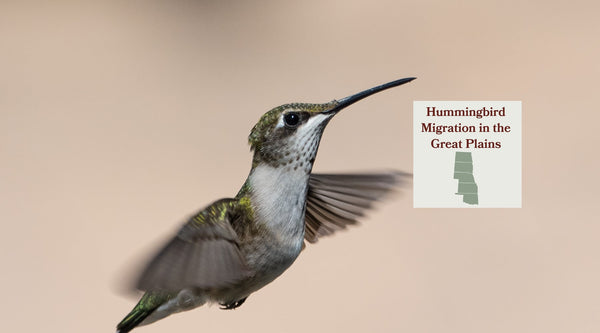
Every year, Kansas Ornithological Society secretary Chuck Otte builds a fresh county-by-county map showing exactly when Ruby-throated Hummingbirds are expected to return, using real eBird sighting data from the past several years. It's genuine citizen science in action — and Otte is refreshingly candid about the limits of it too, noting that far western Kansas sits at the edge of the species' natural range, with some counties that have no Ruby-throated Hummingbird records at all.
Whether you're gardening in Wichita, Kansas City, or the western High Plains, this guide will walk you through everything you need to turn your space into a Kansas hummingbird destination: when to expect them, how to size your setup to any space, feeder and nectar care, pest-safe cleaning, and the native plants and wildflower seed varieties that thrive in Kansas's climate.
The short version, if you're in a hurry:
To attract hummingbirds in Kansas, put up a leak-proof feeder filled with fresh, dye-free nectar by mid-April, keep it clean and refilled every 1–6 days depending on heat, skip the insecticide so hummingbirds can still hunt insects for protein, and plant native, nectar-rich flowers like columbine, bee balm, and salvia so your yard offers real food alongside the feeder.
- Species you'll see: Ruby-throated is Kansas's dominant statewide breeder; Black-chinned, Broad-tailed, and Calliope are genuine western-corner specialties; Rufous is fully established statewide; Anna's and Broad-billed are recurring rarities; and Mexican Violetear, Rivoli's, Costa's, and Allen's are historic rarities
- Best feeder type: leak-proof design with a comfort perch, like the AspenPerch® Hummingbird Feeder
- Best nectar: plain 4:1 water-to-sugar ratio, no red dye — or Pop's Nectar with added electrolytes and calcium
- Feeder timing: up by mid-April, especially in the eastern half of the state where sightings are most reliable
- Nectar change frequency: every 1–2 days above 90°F, every 5–6 days below 70°F
- Pest control: no insecticide — use vinegar-water spray and HummGuard® nectar tips instead
- Top native plants: columbine, bee balm, salvia, phlox, blazing star (varies by region — see below)
- Best wildflower planting window: October, for spring bloom timed to spring migration
Which Hummingbirds You'll See in Kansas

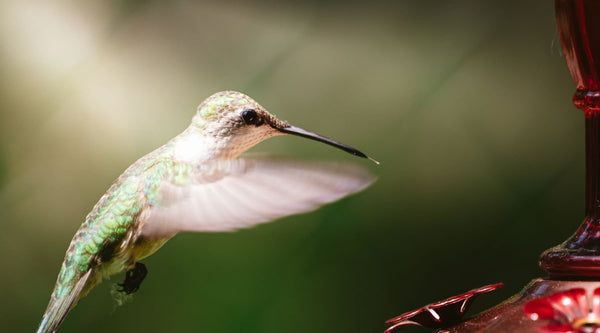
Kansas's documented list runs to eleven species — one dominant statewide breeder, three genuine western-corner specialties, one fully established statewide visitor, and six documented rarities. Ruby-throated Hummingbird is the only species commonly seen and known to nest in Kansas, concentrated in the eastern two-thirds of the state. Black-chinned Hummingbird is a genuine, localized breeder in Kansas's far-southwest corner, exempt from documentation there. Broad-tailed Hummingbird and Calliope Hummingbird are both regular west of I-135/US-81, the exact line Kansas's own bird records committee draws for their documentation exemption. Rufous Hummingbird is Kansas's only fully established western hummingbird, present statewide from late July through fall with no documentation required anywhere. Anna's Hummingbird is Kansas's most-documented rarity, with 17 accepted records through 2025, and Broad-billed Hummingbird is a recurring rarity with 5 accepted records, most recently in 2022. Mexican Violetear, Rivoli's Hummingbird, Costa's Hummingbird, and Allen's Hummingbird are each historic rarities that have gone quiet for two decades or more, with Allen's Kansas's only accepted record dating back to 1992.
For full identification help — photos, field marks, and the real Kansas Bird Records Committee history behind all eleven documented species — see our complete Hummingbirds in Kansas species guide.
When Do Hummingbirds Arrive and Leave Kansas?
Ruby-throated Hummingbird breeds across the whole state and arrives the same week everywhere that matters — late April, in both Wichita and the Kansas City metro. What differs is intensity, not timing: numbers dip in June while females nest, then build all summer to a real peak in early September that runs far higher in the Kansas City metro (over 40% of checklists) than in Wichita or statewide. Kansas's far southwest corner sees a different, more localized pattern built around a small Black-chinned Hummingbird breeding population.
Based on eBird checklist data (Cornell Lab of Ornithology), 2016–2025.
🗓️ Feeder Timing at a Glance
Put your feeder up: By mid-April, a week or two ahead of the late-April statewide arrival
Take it down: About two weeks after your last sighting — for most of the state that means late October
Worth knowing: a rare Anna's Hummingbird has turned up as late as January — if a hummingbird shows up after October, keep nectar from freezing rather than assuming it's a mistake.
For the full month-by-month breakdown — the statewide season chart, both counties' numbers week by week, and the far-southwest's own genuinely different community — see our complete Kansas hummingbird calendar.
Attracting Hummingbirds No Matter Your Space
You don't need acres of land to invite wonder into your yard. Hummingbirds are famously adaptable — all they're really looking for is a dependable food source, a safe place to perch, and a little color.

- Small patio or balcony: One feeder hung from a bracket or shepherd's hook, paired with a container of red or orange tubular blooms like salvia, is plenty to get noticed. Hummingbirds are solitary feeders by nature, so a single feeder works great in tight spaces. For the full setup, see our guide to the best hummingbird products for a small patio or balcony.
- Average backyard: Add a mix of feeders and native blooms along a fence line or garden bed, and give your visitors a swing or two nearby to rest and survey their territory between sips.
- Large yard with trees: Take advantage of the shade, and think in three layers — a back row of small trees for perching and nesting, a middle band of shrubs and taller perennials, and a sunny front edge for your lowest, most visible blooms. Position multiple feeders out of sight from each other to reduce territorial disputes.
Choose a Leak-Proof Feeder
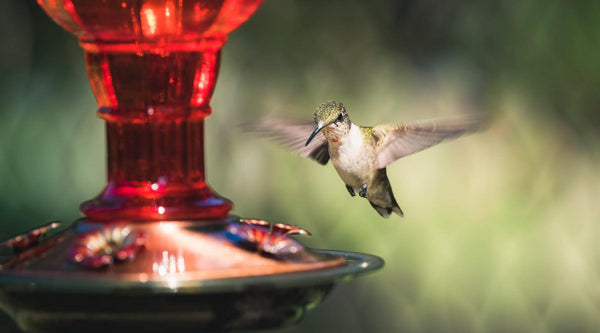
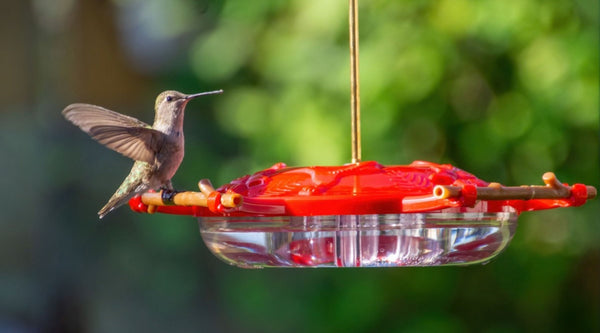
A feeder is only as good as what's in it — and how well it's kept. Pop's AspenPerch® Hummingbird Feeder is leak-proof by design and paired with our patented Polyperch® comfort perch, so your hummingbirds can rest and feed at the same time instead of hovering the whole meal.
Shop the feeder
AspenPerch® Hummingbird Feeder, 8 oz

Leak-proof by design, with a patented Polyperch® comfort perch built in — so your hummingbirds can rest and feed at the same time instead of hovering through the whole meal. You get to see their tongue in action versus their back!
Shop the AspenPerch® Feeder →Keep Feeders Clean with Fresh Nectar
Skip the Red Dye
Your feeder's color does the attracting; dyed nectar offers no benefit and can be harmful to a hummingbird's health.
Use a Real Nectar Recipe
Use a 4:1 plain sugar-water ratio to make your hummingbird nectar and read our full recipe guide to get your batch right. You can also use our nectar mixing calculator for any unit of choice to get the full breakdown on sugar to water ratio. Or skip the math with the ready-to-use option below.

Just getting your first feeder going? Nectarade® Ready to Use Liquid comes pre-mixed and ready to pour — no measuring, no mixing, nothing to commit to before you know how much traffic you'll get.
Shop the Ready to Use Nectar →Only Fill Enough to Change Often
An 8 oz feeder rarely needs to be topped all the way off — overfilling just means more nectar sitting around long enough to spoil, especially during Kansas's hot summer stretches.
Wondering how long nectar actually lasts? Our full guide to how long hummingbird nectar lasts covers storage, fermentation, and warning signs in more depth.
How Often to Change Nectar in Kansas
Sugar water ferments faster the hotter it gets. Kansas Ornithological Society's own advice keeps it simple: clean your feeder every two to three days in warm weather, without exception. Use this as your fuller rule of thumb:
| Outdoor Temp | Change Nectar Every |
|---|---|
| Below 70°F | 5–6 days |
| 70–80°F | 3–4 days |
| 80–90°F | 2–3 days |
| Above 90°F | 1–2 days |
If the nectar ever looks cloudy before that window is up, change it early — cloudiness means it's already started to ferment.
Keeping Feeders Pest-Free Without Insecticide
Hummingbirds don't live on nectar alone — small insects make up a big part of their protein diet, especially for feeding chicks. That means insect spray is off the table around your feeding station; it removes a food source hummingbirds depend on and can be harmful to them directly. Clean your feeder every time you change the nectar, using warm water and a bottle brush — no soap residue, no bleach. A little vinegar and water solution works great for breaking down sticky buildup or the beginnings of mold.
Ants
Deter ants with a vinegar-water spray around (not on) the feeder ports, or wipe down the hanging hook where ants tend to march down. Coating the wire or string hanging your feeder with a thin layer of mineral oil also keeps crawling insects from reaching the nectar.
Dealing with a real ant problem? Our full guide to keeping ants out of a hummingbird feeder covers every fix that actually works.
Bees and Wasps
Bees and wasps are drawn to the same sugar water your hummingbirds are after.
Bees and wasps still crashing the party? Our full guide to keeping bees away from a hummingbird feeder has the fixes.

HummGuard® Nectar Tips slide right onto the AspenPerch's feeding ports — the flexible membrane opens easily for a hummingbird's beak but closes tight against anything bigger, keeping your nectar exclusively for the birds it's meant for.
Shop HummGuard® Tips →Plant a Kansas Native Hummingbird Garden
Feeders are a wonderful supplement, but nothing beats real, native nectar. Native plants evolved right alongside Kansas's hummingbirds, so they bloom on the right schedule and produce exactly the nectar these birds are looking for.
Best native nectar plants for Kansas:
- Columbine — an early, reliable bloomer
- Bee balm — a reliable midsummer favorite
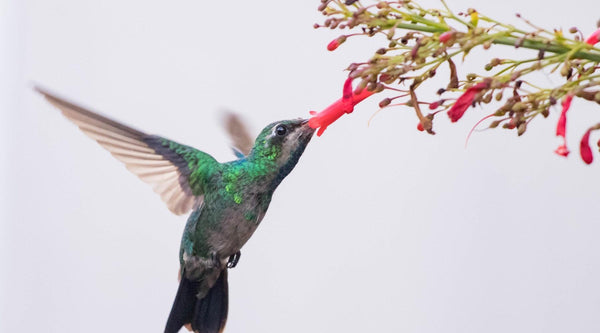
- Salvia — widely appealing to hummingbirds across Kansas's varied habitats
- Phlox and blazing star — additional reliable performers recommended for Kansas gardens
Pop's tip: Plant in groups or drifts rather than single specimens, and mix in early, mid-season, and late bloomers so something is always flowering while hummingbirds are present in Kansas — that continuous nectar supply matters more than any single showpiece plant.
To make this easy, our Perfect Little Sanctuary® Wildflower Seed Blend is designed to bring nectar-rich color into your yard with minimal fuss.
If You're Near the Border
Hummingbirds don't check a map before deciding where to feed, so if you're near a state line, your best guide might be a blend of both.
Near Nebraska: Nearly identical Great Plains pattern — both confirmed native for Lance-Leaved Coreopsis, but neither for Coneflower or Lupine. See our Nebraska guide for more.
Near Missouri: Eastern Kansas's timing and humidity are closer to Missouri's than western Kansas's. See our Missouri guide for more.
Near Oklahoma: Southern Kansas shares Oklahoma's story of Black-chinned Hummingbirds steadily expanding their range eastward. See our Oklahoma guide for more.
Near Colorado: Western Kansas shares Colorado's drier high-plains climate and Siberian Wallflower performance. See our Colorado guide for more.
When to Plant the Perfect Little Sanctuary® Blend in Kansas

Fall is the best planting window across Kansas — aim for October. This timing is based on the germination needs of the blend's own 12 varieties: 9 of the 12 either need or benefit from a cold, moist stratification period before they'll germinate well, including Black-Eyed Susan and Lance-Leaved Coreopsis, and Kansas's winter cold does that work naturally. Early spring is a solid backup window if you miss fall.

Ready to plant? Perfect Little Sanctuary® Wildflower Seed Blend packs all 12 varieties into one packet — no separate shopping trips before Kansas's fall planting window.
Shop the Seed →Top Performers in Kansas
The Perfect Little Sanctuary® blend contains 12 varieties, and Kansas's confirmed native ranges point to a solid lineup:
- Lance-Leaved Coreopsis (Coreopsis lanceolata) — confirmed native to Kansas in official USDA distribution records
- Black-Eyed Susan (Rudbeckia hirta) — broadly native and a reliable performer through Kansas's growing season
- White Yarrow (Achillea millefolium) — broadly native, extremely drought tolerant
- Indian Blanket (Gaillardia pulchella) — not confirmed native to Kansas specifically, but heat- and drought-tolerant enough to hold its own on the prairie
- Siberian Wallflower (Cheiranthus allionii) — not a Kansas native, but its preference for cool, dry conditions suits the climate well
- Painted Daisy (Chrysanthemum carinatum) — not a Kansas native, but a dependable, heat-tolerant annual bloomer
Pop's tip: You don't need to do anything special to favor the strong performers — just sow the blend as directed. The rest of the mix still adds seasonal color, but these varieties are the ones that will do the heaviest lifting in a Kansas yard.
Give Them a Place to Rest
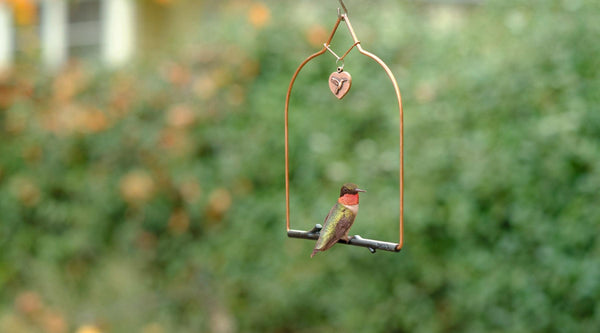
Hummingbirds spend a surprising amount of their day perched, not flying — watching their territory, digesting, and simply resting between feedings. A Pop's Original Hummingbird Swing hung near your feeder gives them exactly that spot, and it turns your feeding station into a front-row seat for watching them up close. Hang it about 1 foot from your feeder, at the same height (Pop's rule of thumb) — see our guide on where to hang your hummingbird swing for placement tips — and don't be surprised if a hummingbird claims it as their own personal lookout post.
Shop the Perfect Perch
Original Series Hummingbird Swing, Onyx

Give hummingbirds a place to rest between sips, and turn your feeding station into a front-row seat for watching them up close.
Shop the Original Swing →Keep Your Sanctuary Safe from Predators
A feeding station draws more than hummingbirds, and knowing what's actually worth worrying about — and what isn't — makes for a safer yard. Cats and window strikes are the two best-documented threats to hummingbirds around any home. See our full Hummingbird Predators guide for the complete picture. Praying mantis predation on hummingbirds is a real, documented phenomenon nationally; we were not able to confirm a Kansas-specific record before this guide's publication, so treat that risk as real but unconfirmed locally rather than either dismissed or overstated.
Summary: Key Takeaways for Attracting Hummingbirds in Kansas
Building a hummingbird-friendly yard doesn't take a green thumb or a big budget — just a little consistency and the right setup. Here's everything from this guide in one place:
- Ruby-throated Hummingbirds are the only species commonly seen and known to nest in Kansas, especially in the eastern half of the state
- Black-chinned, Broad-tailed, and Calliope are genuine western-corner specialties; Rufous is fully established statewide; Anna's and Broad-billed are recurring rarities, and Mexican Violetear, Rivoli's, Costa's, and Allen's are historic rarities
- Feeder timing: up by mid-April, especially in eastern Kansas where sightings are most reliable
- Any size space works — one feeder is plenty for a balcony; larger yards can support multiple feeders spaced apart, since hummingbirds are territorial
- Use a leak-proof feeder with a comfort perch, like the AspenPerch®, and fill it only as full as it'll be drunk in a few days
- Skip red dye in nectar; a plain 4:1 sugar-water ratio or Pop's Nectar (with electrolytes and calcium) both work
- Change nectar every 1–2 days above 90°F, up to every 5–6 days below 70°F
- Clean the feeder at every nectar change with warm water and vinegar — no soap or bleach
- Never use insecticide near feeders; hummingbirds rely on insects for protein. Use vinegar-water spray and HummGuard® nectar tips for pest control instead
- Add a hummingbird swing near the feeder to give hummingbirds a place to rest and be observed up close
- Cats and window strikes are the two best-documented threats to hummingbirds around any home
- Native, nectar-rich plants (columbine, bee balm, salvia, phlox) do more for hummingbirds long-term than feeders alone
- Sow wildflower seed in October for blooms timed to spring migration; Lance-Leaved Coreopsis, Black-Eyed Susan, White Yarrow, Indian Blanket, Siberian Wallflower, and Painted Daisy are the strongest Kansas performers in Pop's Perfect Little Sanctuary® blend
Get these basics in place, and the wonder takes care of itself.
This guide covers what's specific to Kansas — the species, the timing, the plants that belong here. For the fundamentals that apply anywhere, including water sources, shelter, and how the pieces work together, read our guide to building the ultimate hummingbird sanctuary.
Frequently Asked Questions
A few of the questions we hear most from fellow hummingbird lovers across Kansas:
When should I put my hummingbird feeder out in Kansas?
Mid-April is a safe target, especially in eastern Kansas. Set your feeder out about two weeks before you expect the first arrivals in your specific area for the best odds of catching early scouts.
Are hummingbirds common in western Kansas?
Not especially — western Kansas sits at the edge of the Ruby-throated Hummingbird's natural range, and some counties there have no regular sighting records at all.
Do hummingbirds stay in Kansas year-round?
No. Ruby-throated Hummingbirds, Kansas's only regularly nesting species, migrate south each fall, typically departing by the last week of October.
How often should I clean my hummingbird feeder in Kansas?
Clean it every two to three days in warm weather, using warm water and a vinegar rinse rather than soap or bleach, which can leave residue.
What are the best plants to attract hummingbirds in Kansas?
Columbine, bee balm, and salvia perform well across the state, with phlox and blazing star as strong supporting choices. Native, tubular, red or orange flowers are the general rule of thumb.
Kansas Hummingbird Resources
Audubon Chapters
Kansas is home to several local Audubon chapters across the state. Find the one closest to you with Audubon's Find Your Local Audubon tool.
If You Find an Injured or Grounded Hummingbird
Hummingbirds are protected under federal and Kansas state law, so only a licensed wildlife rehabilitator can legally care for one.
- Kansas Dept. of Wildlife and Parks — Permitted Rehabilitators — the official statewide list
- Operation WildLife (OWL) (Kansas City metro area) — the largest publicly funded wildlife rehabilitation service in Kansas, serving nine counties since 1989
Sources
- Kansas Bird Records Committee (KBRC), Review List of Kansas Birds — source for review-species status, exemption zones, and accepted-record counts referenced on this page.
- Kansas Ornithological Society (KOS), Checklist of Kansas Birds — source for Ruby-throated's and Rufous's established, non-review status.
- eBird bar chart data, Cornell Lab of Ornithology — Kansas statewide.
Why We Built This Guide
Pop's Birding has been helping hummingbird lovers for three generations. One of the questions our customers ask most often is "How do I actually attract more hummingbirds to my yard?" — we built this guide to give a direct, practical answer, not a generic one. Kansas genuinely doesn't run on a single statewide calendar: Ruby-throated dominates the eastern two-thirds, while a real cluster of western species — Black-chinned, Broad-tailed, and Calliope — shows up regularly in a mapped far-western zone that most general references flatten into "rare." We wanted a guide that reflects that real east-west split, not one that treats Kansas as a single uniform region.
How We Built This Guide
The species and status information here points back to the Kansas Bird Records Committee's own Review List and the Kansas Ornithological Society's state checklist, rather than re-deriving the analysis on this page — the actionable takeaways are the mid-April statewide feeder window and the real western-corner exemption zone for three review species. The nectar-change schedule uses the same temperature bands as every state's guide, since fermentation speed is driven by heat rather than anything Kansas-specific. We checked whether praying mantis predation, a real documented risk nationally, has a confirmed record in Kansas specifically, and could not find one either way — so we treat it as real but unconfirmed locally, not silently skipped or assumed either direction.
Know before they arrive
You don't have to keep this calendar taped to the fridge. Insider Birding Access members get seasonal notes timed to your region — when to have feeders out, what the birds are doing right now, and what's worth doing in your yard this season. We take the guesswork out of the calendar. Joining takes about thirty seconds, and there's 10% off your first order in it.
Join Insider Birding Access →Free to join. 10% off your first order.
Your Kansas Backyard Sanctuary
Every real hummingbird sanctuary comes down to the same staples: mess- and pest-free food, a place to perch, native flowers, and fresh nectar. Here's everything from this guide to get all the bases covered in your own Kansas yard.


Bethany Sloan has served as General Manager of Pop's Birding since 2010, continuing the legacy of her grandfather, William "Pops" Sloan, inventor of the Original Hummingbird Swing. A lifelong hummingbird enthusiast, educator, and independent researcher, she leads the company's educational content, including its 50-State Hummingbird Guide series, Regional Guide, Species Guide and Hummingbird Learning Center. Bethany combines scientific research, regional migration data, and more than 16 years of hands-on experience to create trusted educational resources for bird enthusiasts across North America.