Aug 24, 2026
Hummingbird Predators: The Complete, Fact-Checked Guide
A Pop's Birding regular emailed us three times in a single August. First, she was worried about a hawk circling lazily over her yard. Two weeks later, it was a snake stretched along her feeder pole. By the end of the month, she'd watched a jay slip away from a nest she'd been checking on all summer. Same yard, same season, three completely different worries — and honestly, three very different answers.
That's exactly why we built this guide. "What's actually threatening my hummingbirds?" is one of the most common questions we hear, and the honest answer is more nuanced, and often more reassuring, than the internet's usual list of scary suspects. We went deep on each real predator category — cats, snakes, spiders, insects, hawks, and the animals that raid nests — sourcing every claim from Cornell Lab, Audubon, peer-reviewed research, and state wildlife agencies, and correcting the myths along the way. This page pulls it all together in one place.
How These Threats Actually Compare
We want to be upfront about something most sites gloss over: nobody has published a study ranking hummingbird predators from most common to least common. What follows is our best-reasoned read of the strongest evidence available — not a documented ranking — and we think you deserve to know the difference.
The best hummingbird-specific evidence we have comes from wildlife rehabilitation intake data, not predation studies. In the largest such study — over 6,900 California hummingbirds admitted across 26 years — interactions with domestic animals (almost all cats) and window collisions were the two leading identifiable causes, well ahead of any single predator species. Every other predator on this page is documented mainly through individual case reports and small compiled studies, not population-level data, which is exactly why we can't hand you a clean numbered list and call it science.
With all of that said, here's our honest, best-reasoned order for adult hummingbirds around a home or feeder, from strongest evidence to weakest:
- Cats — the best hummingbird-specific evidence of any predator, and the single largest documented cause of bird deaths overall.
- Window strikes — not a predator, but co-leading with cats in the rehab data, and worth taking just as seriously.
- Praying mantis — the best-documented insect predator, though at a much smaller absolute scale.
- Orb-weaver spiders — comparable evidence to mantises, similarly small scale.
- Small raptors and the Greater Roadrunner — genuine, camera- or eyewitness-documented cases, but anecdotal rather than population-level, and the roadrunner is geographically limited to the Southwest.
- Rat snakes at feeders — real, but even wildlife agencies that have documented it call it rare.
Eggs and nestlings face a different lineup entirely, and blending the two into one list would misrepresent both:
- Jays, crows, and other corvids — the best-documented nest predator, including camera-confirmed footage from a controlled research study.
- Squirrels and chipmunks — genuinely opportunistic egg and nestling raiders, though the hummingbird-specific evidence is thinner than for corvids.
We'll say it once more because it matters: this is our honest best guess at relative significance, built from the strongest evidence we could find — not a scientific ranking. If a real hummingbird-specific mortality study is ever published, we'll update this page to match it.
Cats: The Most Significant Threat Overall
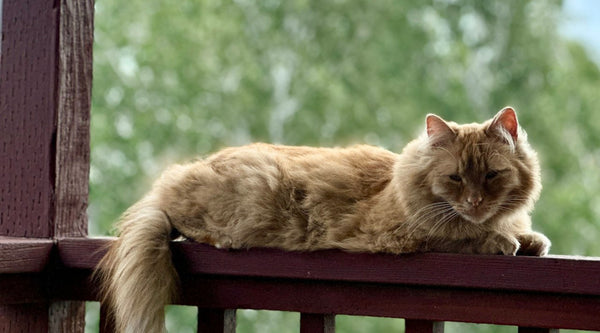
Free-roaming domestic and feral cats are the single largest human-caused source of bird mortality in the United States — a peer-reviewed study estimated cats kill somewhere between 1.3 and 4 billion birds a year nationwide, commonly cited around 2.4 billion. That figure is about birds in general, though, not hummingbirds specifically, and it's important not to blur the two. The actual hummingbird-specific evidence is narrower, but it points the same direction: the same large California rehab study found "interactions with domesticated animals" — almost entirely cats — was the single largest identifiable admission cause among hummingbirds, and a separate landowner survey in Southeastern Michigan documented free-ranging cats preying on Ruby-throated Hummingbirds by name, among 23-plus other local species. So cats are a real, well-documented predator of hummingbirds around homes and feeders, not necessarily provably "the" single top hummingbird predator by a precise number, but significant enough that it's the one fix worth prioritizing above all others. Our full Cats and Hummingbirds guide covers exactly what helps, but the short version is simple and effective: keep cats indoors, or supervised and contained outside.

Praying Mantis: The Invasive Insect Threat
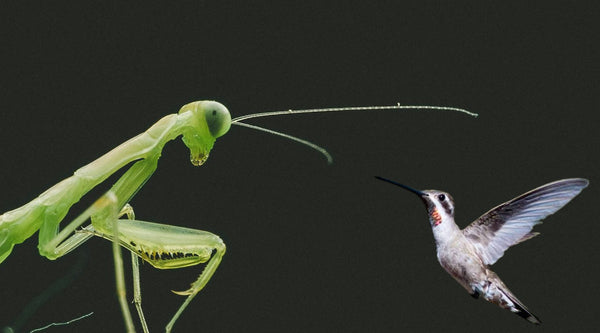
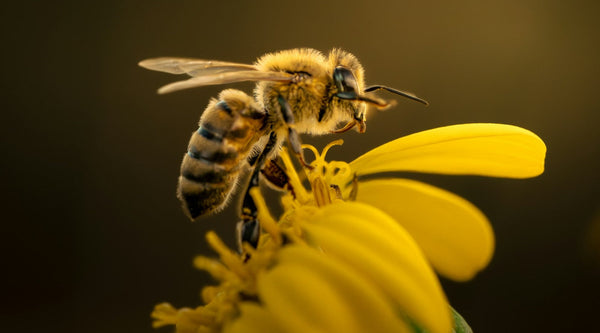
It sounds unlikely, but it's genuinely documented: a 2017 peer-reviewed study compiled 147 cases worldwide of mantises capturing small birds, about 114 of them hummingbirds, typically ambushed at a feeder while the mantis was actually hunting insects. Just over half of the identifiable North American cases involved non-native species, mainly the large Chinese mantis — though native mantises are documented doing this too. You'll often see mantises called "the second-biggest predator after cats," but that specific ranking doesn't actually trace back to the research, and the study itself says the true rate has never been measured. What the evidence does support: mantises are very likely the most significant insect predator hummingbirds face. Our full Praying Mantis guide covers how to spot one and what to do if you find it staked out on your feeder.

Spiders & Other Insects: Rarer, but Real
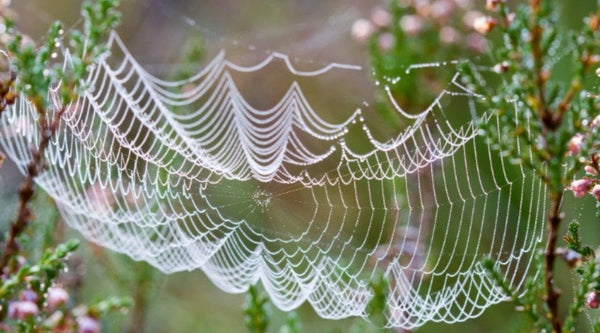
Large orb-weaver spiders don't hunt hummingbirds, but a hummingbird can fly into a big web near a feeder, or get tangled while gathering silk for its nest — and it's more documented than most people expect, with Ruby-throated Hummingbirds the single most-recorded species in a peer-reviewed review of birds caught in spider webs. Dragonflies and robber flies can very rarely take a hummingbird too, though the documented cases are genuinely few. Our full Spiders and Insect Predators guide also covers the truth about the invasive Joro spider — its web is remarkably strong, but there's no documented case of one actually catching a hummingbird.

Snakes: Uncommon, but Documented
Rat snakes are skilled climbers, and wildlife agencies in Georgia and South Carolina have independently documented them scaling feeder poles and catching adult hummingbirds. It's a genuinely rare event for any individual feeder — Georgia's own wildlife agency ranks it well behind cats and mantises — but it does happen, and a properly sized baffle on a smooth pole is a real, evidence-based fix. Our full Snakes guide covers exactly how and why.

Egg & Nest Raiders: Jays, Crows, Squirrels & Chipmunks
This is the best-documented category on the whole list. Jays and crows are the most consistently documented nest predators, including camera-confirmed footage of Mexican Jays raiding Black-chinned Hummingbird nests during a well-known Arizona study. Squirrels and chipmunks genuinely take eggs and nestlings too, especially when food is scarce — though the popular claim that they snatch full-grown hummingbirds out of the air doesn't hold up to any real scrutiny. Our full Hummingbird Egg Predators guide has the complete, myth-checked picture.

Birds of Prey: Small and Fast, Not Big and Slow
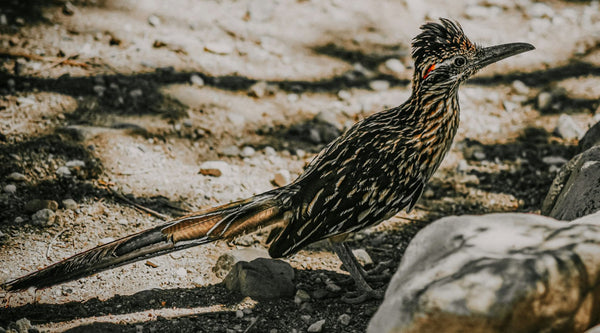
Here's the biggest surprise in this entire guide: the large hawks people worry about most, like Red-tailed Hawks and Cooper's Hawks, are essentially not a threat — they're too big and slow to make chasing a hummingbird worth the effort, and one landmark study even found hummingbirds nest more successfully near hawk territories, since the hawks suppress the jays that actually raid nests. The real, documented adult-hummingbird predators are smaller and faster: the Sharp-shinned Hawk (the smallest hawk in North America, with a directly witnessed and published capture), the Merlin, the "butcherbird" Loggerhead Shrike, and in the Southwest, the surprisingly sneaky Greater Roadrunner. Our full guide to birds that prey on hummingbirds breaks down exactly why size matters more than most people assume.

Not a Predator, But Worth Knowing: Window Strikes
Not every threat to a hummingbird has claws or fangs. Window collisions are one of the leading human-related causes of bird deaths, and hummingbirds are especially vulnerable to them — in the same large rehab study referenced above, window collisions were the #2 identifiable admission cause, right behind cats, and birds admitted for window strikes had some of the lowest odds of survival of any cause. It isn't predation, but it belongs in any honest conversation about keeping hummingbirds safe. Our full Window Strikes guide covers what actually helps.

Beyond Predators: What Actually Causes the Most Hummingbird Deaths
Here's something worth sitting with before you worry too much about any single predator: in the largest published study of hummingbird rehabilitation intake, predators weren't even the leading reason birds needed help at all. Simply being found on the ground — weak from exhaustion, bad weather, illness, or orphaned as a nestling — was by far the single most common admission reason, well ahead of every predator and even ahead of window strikes. Nest destruction or abandonment outranked every individual predator category too. Birds found in a torpor-like state (a deep, energy-saving rest that can look alarmingly like death) had the lowest survival odds of any admission category, largely because people mistake a resting bird for one in real trouble, or vice versa.
Disease is real too, and it's one we take seriously as a nectar company. Spoiled or moldy nectar can cause a genuine, veterinarian-documented fungal infection called candidiasis, which swells a hummingbird's tongue until it can't feed properly. It isn't something the major rehab studies have broken out as its own quantified statistic the way cat predation or window strikes are, but wildlife rehabilitators and avian veterinary references confirm it's a real risk tied directly to feeder hygiene — which is exactly why we're particular about fresh nectar and regular cleaning in every guide we write.
None of this is meant to minimize predators — the categories above are genuinely real and worth understanding. It's meant to give you the full, honest picture: for most backyard hosts, the biggest risks to a hummingbird's life are more often exhaustion, weather, window glass, and feeder hygiene than any animal with teeth or claws.
How We Built This Guide
Pop's Birding has been helping hummingbird lovers for three generations, and questions about predators are some of the most common ones we hear — often from customers who just watched something happen in their own yard and want to know if it's normal. We wanted a real, sourced answer for every single one of these categories, not the same recycled list of "usual suspects" that circulates across most hummingbird sites.
So we built each deep-dive guide the same way: every claim checked against peer-reviewed research, and state and federal wildlife agencies, with popular but unsupported claims corrected rather than repeated. Where the evidence was strong, we said so clearly. Where it was thin or contested — squirrels catching adult hummingbirds, the Joro spider "killing" hummingbirds, big hawks being a threat at all — we said that plainly too. This hub is simply all six categories brought together in one honest, complete picture.
About Pop's Birding
Pop's Birding has been a family-owned, three-generation hummingbird company since the very beginning — the same family that invented the original hummingbird swing. Based in Idaho, with a second home in Atlanta, we've spent decades learning what actually helps backyard hummingbirds thrive, and we bring that same care to every guide we write.
What You Can Do to Help
You can't eliminate every risk a hummingbird faces, and you shouldn't try to — predation is a normal, healthy part of the ecosystem your hummingbirds live in. But a handful of genuinely effective habits address nearly everything on this page:
- Keep cats indoors or supervised outside. This single habit addresses the single biggest documented threat on this entire list.
- Think carefully about feeder placement. Open sightlines help hummingbirds spot approaching predators, while a nearby perch gives them somewhere safe to retreat. Our complete feeder placement guide covers exactly how to balance the two.
- Use a properly sized baffle on a smooth, isolated pole to keep climbing snakes away from feeders.
- Check for large spiders or mantises near your feeders occasionally, and relocate them gently if you find one staked out too close.
- Don't panic over a passing hawk. Most hawks aren't a threat, and some may even be quietly helping.
- Let nests be. Predation of eggs and nestlings is a natural, if hard-to-watch, part of a healthy backyard — the best help is usually distance and patience.
Hummingbird Predators, Our Best-Reasoned Order
One more reminder before you read this table: it's our honest best-reasoned inference from the strongest available evidence, not a documented scientific ranking. Adult and nest threats are kept separate on purpose — blending them into one list would misrepresent both.
Threats to Adult Hummingbirds
| Threat | How Well Documented |
|---|---|
| Cats | Best hummingbird-specific evidence of any predator (leading rehab-intake cause; named-species kill records) |
| Window strikes (not a predator) | Co-leading with cats in rehab data; disproportionate species-level vulnerability |
| Praying mantis (invasive Chinese mantis) | Best-documented insect predator (2017 peer-reviewed synthesis); small absolute scale |
| Orb-weaver spiders | Comparable evidence to mantises; small scale |
| Sharp-shinned Hawk | Directly witnessed and published capture; anecdotal, not population-level |
| Merlin | Confirmed via a documented case published in The Auk; anecdotal |
| Loggerhead Shrike | Listed by Cornell and Audubon among documented small-bird prey; anecdotal |
| Greater Roadrunner | Camera-confirmed, though rare and limited to the Southwest |
| Rat snakes | Documented by wildlife agencies, who describe it as genuinely rare |
| Dragonflies & robber flies | Genuinely rare; the thinnest evidence of any adult predator |
| Squirrels & chipmunks "catching adults in flight" | Not supported by any peer-reviewed or agency source |
| Cooper's Hawk, Red-tailed Hawk & other large hawks | Essentially not a threat; may indirectly protect nests |
Threats to Eggs & Nestlings
| Threat | How Well Documented |
|---|---|
| Jays, crows & other corvids | Best-documented nest predator — directly observed and camera-confirmed in a controlled study |
| Squirrels & chipmunks | Documented in peer-reviewed rodent nest-predation research; thinner hummingbird-specific evidence than corvids |
| Rat snakes | Plausible opportunistic nest predator; not separately quantified for hummingbird nests |
Beyond Predators
| Cause | How Well Documented |
|---|---|
| Found on the ground (exhaustion, weather, illness, orphaned) | The single most common rehab admission reason of all — ahead of every predator and window strikes |
| Nest destruction or abandonment | Outranks every individual predator category in rehab data |
| Candidiasis (fungal infection from spoiled nectar) | Real and veterinarian-documented; not separately quantified in rehab studies |
Frequently Asked Questions
What eats hummingbirds?
The best-documented predators are cats, the invasive Chinese praying mantis, jays and crows (mainly eggs and nestlings), orb-weaver spiders, rat snakes at feeders, and a handful of small, fast birds including the Sharp-shinned Hawk, Merlin, Loggerhead Shrike, and Greater Roadrunner.
What is the biggest threat to hummingbirds?
No study has ranked hummingbird threats from most to least common, so there's no precise answer — but cats and window strikes are the two most significant documented threats around homes, based on the best available evidence (mainly wildlife rehabilitation intake data), roughly tied for first. Cats are also the single largest documented source of bird mortality in the United States overall.
What actually causes the most hummingbird deaths?
Predators aren't even the leading cause. In the largest published study of hummingbird rehabilitation admissions, simply being found on the ground — weak from exhaustion, bad weather, illness, or orphaned — was by far the most common reason, ahead of every predator and every other cause. Window strikes and cats were the next most common identifiable causes.
Do hawks eat hummingbirds?
Most hawks don't — large hawks like Red-tailed Hawks and Cooper's Hawks are too big and slow to make chasing a hummingbird worthwhile, and may even indirectly protect nesting hummingbirds. The exception is the Sharp-shinned Hawk, the smallest hawk in North America, which has been directly documented catching hummingbirds.
What eats hummingbird eggs?
Jays, crows, and other corvids are the best-documented egg predators, followed by snakes and opportunistic squirrels and chipmunks. It's the single most-searched hummingbird predator question, and the most thoroughly documented category on this list.
Are hummingbirds really in much danger from predators?
For most backyard hosts, predation is a normal, relatively rare part of a healthy ecosystem rather than a major threat — with the clear exception of cats, which are genuinely worth taking seriously. Thoughtful feeder placement and keeping cats indoors address the large majority of real risk.

Bethany Sloan has served as General Manager of Pop's Birding since 2010, continuing the legacy of her grandfather, William "Pops" Sloan, inventor of the Original Hummingbird Swing. A lifelong hummingbird enthusiast, educator, and independent researcher, she leads the company's educational content, including its 50-State Hummingbird Guide series, Regional Guide, Species Guide and Hummingbird Learning Center. Bethany combines scientific research, regional migration data, and more than 16 years of hands-on experience to create trusted educational resources for bird enthusiasts across North America.