Aug 02, 2026
Allen's Hummingbird: The Coastal Rebel with the Wrong Scientific Name
Allen's Hummingbird has one of the more ironic backstories of any North American bird: the man it's named after did everything right, sending careful specimens and notes that proved this coastal California hummingbird was a genuinely distinct species from its near-identical cousin, the Rufous Hummingbird. An ornithologist honored him by naming the species Selasphorus alleni. Then, decades later, everyone discovered a French naturalist had already described the exact same bird back in 1829, under a completely different name — meaning Charles Allen's own name never actually made it into the species' permanent scientific title, even though it's still the bird everyone calls "Allen's" to this day. Beyond that naming quirk, this is also one of the most range-restricted hummingbirds in North America, confined to a narrow strip of the Pacific Coast, and often the earliest hummingbird species to begin its spring migration north.
Quick Facts
- Scientific name: Selasphorus sasin (Lesson, 1829)
- Length: 3–3.5 inches (76–89 mm)
- Weight: approximately 2–4 grams
- Lifespan: oldest banded record at least 5 years, 11 months — notably the lowest maximum recorded age of any North American hummingbird species
- Conservation status: Least Concern (IUCN), though Partners in Flight and the 2025 State of the Birds report both flag it as a species of serious concern
- Claim to fame: one of the most range-restricted hummingbirds in North America, confined to a narrow strip of the Pacific Coast, and often the earliest hummingbird species to begin its spring migration north
The Origin Story: A Naming Mix-Up for the Ages
Charles Andrew Allen was a Civil War veteran, former Boston chocolate-mill worker, and self-taught taxidermist who moved to Nicasio, in Marin County, California, in 1873 for his health, and it was there, living as a caretaker and handyman, that he began seriously studying birds. In 1877 he sent specimens and field notes to William Brewster in Massachusetts, according to Cornell's Birds of the World, who passed them along to ornithologist Henry Henshaw. Henshaw described the species that same year and named it Selasphorus alleni, in Allen's honor. (A few secondary sources give Allen's own recognition of the species as 1879 rather than 1877; the more fully documented account, from Birds of the World, ties the actual naming to the 1877 specimens and correspondence.)
There was just one problem: French naturalist René Lesson had already described this exact species back in 1829, under the name Ornismya sasin, with a type specimen collected in San Francisco. The story behind that name is a case of mistaken identity of its own. According to a 1931 note in The Condor by ornithologist Joseph Grinnell, the word "sasin" (sometimes spelled "sasinne") was a vernacular Indigenous name — recorded in the French edition of Captain Cook's third-voyage account — used at Nootka Sound for the Rufous Hummingbird, then commonly called the "Nootka Hummingbird." Lesson believed he was simply giving that already-known bird a more fitting scientific name. But the one actual specimen he examined and illustrated hadn't come from Nootka Sound at all — it had come from California, and it belonged to the very different species that Henshaw would describe nearly fifty years later. Under the taxonomic rule of priority, which requires using the earliest validly published name for a species, Lesson's accidental 1829 description outranked Henshaw's, and the bird was reclassified under Lesson's name. Charles Allen kept the common name that honors him to this day, even though the species he helped distinguish carries someone else's word in Latin. (The genus itself, Selasphorus, was established separately in 1832 by English naturalist William Swainson, per ITIS.)
Where Allen's Hummingbird Lives: One of the Narrowest Ranges of Any North American Hummingbird
Allen's Hummingbird breeds along a genuinely narrow coastal strip that extends farther into Oregon than many casual accounts suggest. According to the Oregon Department of Fish and Wildlife, it's a common breeder in the coastal fog belt from California into southern Oregon, and a fairly common spring and summer resident along the Oregon coast as far north as Bandon — roughly 100 miles north of the California border, not just a marginal handful of miles across the state line. North of that zone, Rufous Hummingbirds take over as the breeding species all the way to Alaska; the two species actually interbreed in a documented hybrid zone centered between Bandon and Port Orford, Oregon, according to a 2019 study published in the journal Ornithology.
Two subspecies split the range in an interesting way. The nominate subspecies, Selasphorus sasin sasin, is fully migratory, breeding along the mainland coast and wintering in a comparatively small area of south-central Mexico. A second subspecies, Selasphorus sasin sedentarius, is non-migratory and resident year-round on California's Channel Islands, with the National Park Service specifically documenting this population at Channel Islands National Park. In recent decades this resident subspecies has also expanded onto the adjacent Southern California mainland, now found regularly from the Los Angeles area south toward the Mexican border — a genuine range expansion tied largely to introduced ornamental plants like eucalyptus, which bloom in fall and winter when little else is flowering.
Beyond that core Pacific range, Allen's Hummingbird also turns up as a genuine, regular winter presence far to the east — not just a one-off vagrant. The Texas Bird Records Committee formally removed Allen's Hummingbird from its official review list in 2004, stating plainly that "we now know that Allen's Hummingbird is a regular winter resident on the Texas coast," particularly the upper coast, thanks to sustained hummingbird-banding work there. That same committee documentation cites 42 Allen's Hummingbirds banded in Louisiana since the fall of 2001 alone, with at least 64 individuals recorded between the two states over a roughly two-and-a-half-year span and typical occurrence dates running from mid-August through late February. Beyond Texas and Louisiana, individual Allen's Hummingbirds are also documented as rare, one-off vagrants farther afield across the eastern and central United States and into western Canada — genuine evidence of how far individual wanderers are willing to travel outside the species' otherwise tiny core footprint.
How to Identify Allen's Hummingbird: Males vs. Females
Adult Males
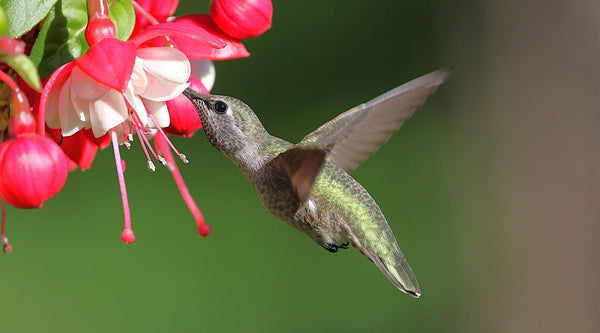
A green back and crown, paired with rust-colored (rufous) flanks, rump, and tail, and an iridescent orange-red throat that can appear anywhere from bright orangish-scarlet to a deep, coppery green depending on the light. Back color is a helpful first clue for separating an adult male Allen's from a Rufous Hummingbird — a mostly green back leans Allen's, since male Rufous typically show orange across the entire back — but this rule has real exceptions: up to about 30 percent of male Rufous Hummingbirds show some green on the back as well, so color alone isn't decisive.

Adult Females
Rufous-washed sides and back, a white breast, and a white throat marked with a cluster of red spots, with a tail that's dark with rufous at the base and white tips on the outer three feathers. The Audubon Field Guide is blunt about the real difficulty here: female and immature Allen's Hummingbirds are almost impossible to reliably separate from female Rufous Hummingbirds without close, in-hand examination — which is exactly why the species' true migratory status and range boundaries are still actively being refined by dedicated hummingbird banders today.

The Definitive Test (For Banders)
For birds in the hand, the reliable field mark is the shape of the second tail feather from the center, known as R2: in Allen's it's narrow with a smoothly tapered, unnotched tip, while in Rufous it shows a distinct notch or "pinch" at the tip, a difference documented by longtime hummingbird bander Sheri Williamson and consistent with the identification standard used in Pyle's banding guide. Because this notch is subtle and only visible when the tail is fanned or examined closely, it's genuinely a bander's field mark rather than something reliably seen through binoculars.
Behavior: Small, Territorial, and Fearless
Male Allen's Hummingbirds are notably aggressive and territorial, chasing off other males and other hummingbird species from their territory without hesitation. According to the National Park Service and Cornell's Birds of the World, they've even been documented attacking and driving off Red-tailed Hawks and American Kestrels — predatory birds many times their own size — a level of nerve common across the genus Selasphorus but still striking to witness from a bird weighing only a few grams. In one San Francisco Bay-area feeder study cited by Birds of the World, Allen's actually came out dominant over the larger Anna's Hummingbird, winning 79 percent of aggressive encounters recorded. During the breeding season a male spends roughly two-thirds of his daylight hours simply sitting on a territorial perch, watching for both intruders and opportunities to display.
Feeding and Diet
Allen's Hummingbirds have a notably high metabolic rate and feed frequently on both nectar and small insects — flies, ants, beetles, spiders, and wasps are all documented prey, taken in midair or gleaned directly off vegetation. The species plays a genuinely important ecological role as a pollinator: according to the Western Hummingbird Partnership, Allen's Hummingbird is the single most important pollinator of the federally endangered Western Lily (Lilium occidentale), a rare wildflower found only along a roughly 200-mile stretch of coast between southern Oregon and northern California, as well as other rare coastal lilies and monkeyflower.
Courtship and Mating
The male Allen's Hummingbird's courtship display has two distinct parts. It typically begins with a frantic back-and-forth flight arc of about 25 feet, similar to a swinging pendulum, followed by a high-speed dive from as high as 100 feet, during which the tail feathers produce a sharp, characteristic flutter meant to draw the female's attention. Contrary to a claim that circulates in some secondary sources, both Allen's and its close relative Rufous Hummingbird perform what ornithologists actually describe as a "J-shaped" dive — climbing, diving steeply with a metallic whine, then curving back up — so the shape of the dive itself isn't the reliable way to tell the two species apart. The more genuine distinction is in the overall pattern: Rufous performs a rapid series of J-dives that start from different points progressing around a circle, while Allen's more typically leads with its pendulum shuttle display before a single J-shaped dive. As with virtually all hummingbirds, the male provides no parental care after mating, and one male may court and mate with several different females across a season.
Nesting and Family Life
Females build the nest alone, and nest height is far more variable than many accounts suggest — the Audubon Field Guide notes sites are usually low but occasionally documented as high as 90 feet, typically on a horizontal or diagonal branch, occasionally on a low weed stalk or in a vine or blackberry bramble. The nest itself is a neatly constructed cup built from green mosses, plant fibers, and plant down, held together with spider silk and camouflaged on the outside with bits of lichen — a build process that takes roughly a week to complete.
Clutch size is typically one to two white eggs, incubated by the female alone for about 15 to 17 days. Chicks fledge at around three weeks old but continue to be fed by the female, often with a distinctive high-pitched begging call, for roughly ten additional days before becoming fully independent. Some females raise one or two broods per season.

Migration: Often the Earliest Hummingbird on the Move
One of the more distinctive facts about this species comes straight from Cornell's own overview: Allen's Hummingbirds are remarkably early migrants compared with most North American birds, and northbound birds may depart their wintering grounds as early as December, arriving on their breeding grounds as early as January, timed to take advantage of the flowers that follow California's winter rains. This is quite different from the closely related Rufous Hummingbird, which breeds farther north and generally doesn't arrive at nesting areas until April or early May. Males and females also don't travel together: males head north first to claim and defend breeding territory, with females following somewhat later, a staggered pattern that likely reduces competition for the same nectar sources along the way. Fall migration for the mainland subspecies can begin as early as mid-May and peaks in July, with most birds in southwestern Oregon and northwestern California having departed well before autumn. The Channel Islands and southernmost coastal California population, by contrast, remains resident year-round rather than migrating at all.
Habitat
Allen's Hummingbird favors shrubby canyons and slopes, coastal chaparral, and open woodland and forest edges. The Audubon Field Guide adds forests and woodlands, high mountains, shrublands, savannas, thickets, and urban and suburban habitats to the list — and notably, this is one of only two hummingbird species that commonly nest in Northern California gardens, alongside Anna's Hummingbird. The species has adapted well to human-altered landscapes, readily feeding from introduced ornamental plants like eucalyptus alongside backyard feeders, adjustments that have genuinely helped it expand into new areas despite its otherwise narrow natural range.
A Real Population Decline Worth Knowing About — With a Scientific Dispute
Despite its Least Concern IUCN rating, this is a species with a documented conservation concern worth taking seriously, though the exact numbers are more contested than most single-source summaries let on. Partners in Flight has widely reported a population decline of roughly 83 percent between 1970 and 2014, a figure repeated across the American Bird Conservancy, Kern Audubon Society, and numerous other outlets. But UC Riverside ornithologist Christopher Clark — arguably the leading researcher on this exact species — has publicly disputed that figure as implausible, arguing in a peer-reviewed 2017 paper in the journal Ornithological Applications that it would require an unrealistic 1970 population of roughly 10 million birds within the species' small range, that there's no evidence the migratory subspecies has actually disappeared from any part of its historic range, and that it ignores the fact that the resident subspecies' occupied range has grown by roughly 700 percent over the same period, based on eBird records from urban Southern California.
Cornell's own current life-history page takes a more moderate position: North American Breeding Bird Survey data suggest a 2.6 percent annual decline between 1968 and 2023, a cumulative decline of about 77 percent over that period, and the 2025 State of the Birds report lists Allen's Hummingbird as a Red Alert Tipping Point species — meaning it has lost more than half its population over the past 50 years and shows a steep, ongoing downward trend, primarily attributed to coastal habitat loss. The honest summary: there's real disagreement about the precise scale of the decline, but broad agreement that the migratory mainland population is shrinking, even as the non-migratory Channel Islands and Southern California population is expanding.
Allen's Hummingbird by Region: Where and When to Find Them
| Region | Status | Best Time to See Them |
|---|---|---|
| Southernmost coastal California (LA south to Mexican border) & Channel Islands | Year-round resident (non-migratory subspecies) | All year |
| Coastal California (broader range) | Common breeder | December/January through midsummer |
| Southern Oregon coast (to Bandon) | Common breeder and fairly common spring/summer resident | Late February through midsummer |
| Southern Oregon / Northern California hybrid zone (Bandon–Port Orford, OR) | Overlap and interbreeding with Rufous Hummingbird | Spring through summer |
| South-central Mexico | Primary wintering range for the migratory subspecies | Winter |
| Texas & Louisiana Gulf Coast (esp. upper Texas coast) | Regular winter resident, not just a vagrant — confirmed by banding data and official state records review | Mid-August through late February |
| Scattered other eastern and central states, western Canada | Rare, one-off documented vagrant | Any season |
Build an Allen's Hummingbird Sanctuary in Your Own Yard
Because Allen's Hummingbird has such a narrow natural range but has adapted unusually well to gardens and ornamental landscaping, a thoughtfully built backyard sanctuary can genuinely matter for this species' long-term outlook.
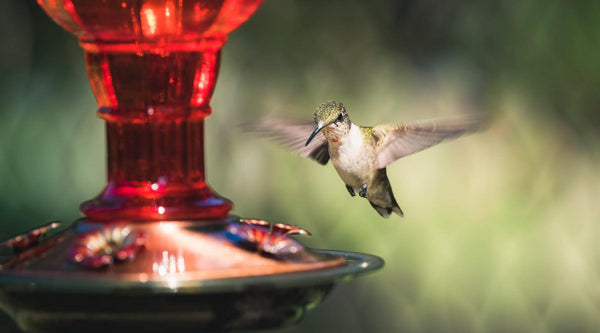
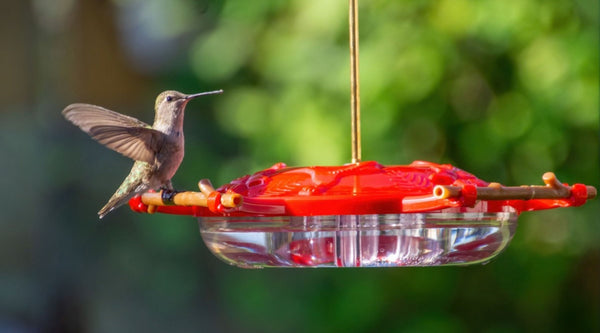
- Use a leak-proof, easy-to-clean feeder like the AspenPerch® Hummingbird Feeder, with a comfort perch so this species can rest between its frequent feeding visits.
- Keep nectar available year-round if you're in southernmost coastal California or the Channel Islands, where the resident subspecies doesn't migrate at all. Elsewhere along the coast, have your feeder ready as early as December or January, since this is often the earliest-arriving hummingbird species in the country. Pop's Nectar, with added electrolytes and calcium, supports the demands of this species' unusually early nesting season.
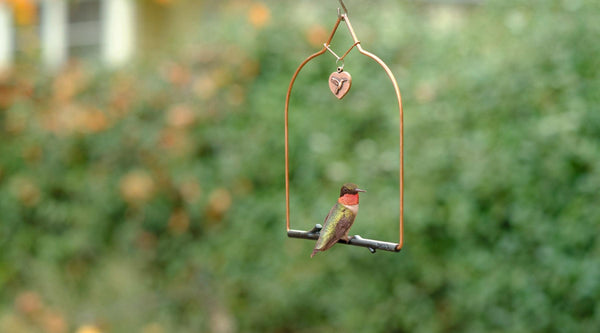
- Add a swing near your feeder — a Pop's Original Hummingbird Swing gives an Allen's Hummingbird a place to rest and defend its territory between visits.
- Plant coastal chaparral and woodland natives suited to this species' preferred habitat, and don't overlook ornamental flowering trees like eucalyptus — while non-native, they've become a genuinely important food source for this species in developed areas.
- Skip the insecticide. Since insects and spiders make up a real part of this species' diet, pesticide use removes food it depends on. Use HummGuard™ nectar tips instead to manage bees and wasps without harming anything else.
For state-specific feeder timing, native plant lists, and wildflower planting guidance, see our companion guides for California, Texas, and Louisiana — yes, Louisiana and the upper Texas coast are genuine winter destinations for this species, not just California — or find your own state in our full hummingbird guide by state series.
Frequently Asked Questions
Why is Allen's Hummingbird called Selasphorus sasin instead of Selasphorus alleni?
Henry Henshaw described and named the species Selasphorus alleni in 1877 based on specimens Charles Allen had sent to William Brewster. But French naturalist René Lesson had already described the same bird in 1829 as Ornismya sasin. Under the rule of taxonomic priority, the earlier valid name wins, so the species kept Allen's name in common usage but carries Lesson's name, sasin, as its scientific epithet.
How can you tell an Allen's Hummingbird from a Rufous Hummingbird?
It's genuinely difficult, especially for females and immatures. For adult males, back color is a decent first clue — mostly green in Allen's versus mostly orange in Rufous — but up to about 30 percent of male Rufous also show some green, so it isn't foolproof. The reliable field mark is tail feather shape: Allen's has narrower tail feathers with a smooth-edged second rectrix (R2), while Rufous has a distinct notch at the tip of that same feather, visible when the tail is fanned.
Do all Allen's Hummingbirds migrate?
No. The mainland subspecies, Selasphorus sasin sasin, migrates to central Mexico for winter, while a separate subspecies, Selasphorus sasin sedentarius, living on California's Channel Islands and the adjacent Southern California mainland, stays put year-round.
Is the Allen's Hummingbird endangered?
It's rated Least Concern by the IUCN. Partners in Flight has cited a population decline of roughly 83 percent since 1970, though the species' leading researcher has publicly disputed that figure as methodologically implausible. Cornell's own current estimate, based on Breeding Bird Survey data, is a 77 percent cumulative decline between 1968 and 2023, and the 2025 State of the Birds report lists it as a Red Alert Tipping Point species.
Where does Allen's Hummingbird live?
Along a narrow coastal strip from southern Oregon (as far north as Bandon) through California, with a year-round resident population on the Channel Islands and adjacent mainland from the Los Angeles area south toward the Mexican border. It's also a regular winter visitor to the Texas and Louisiana Gulf Coast — not just a rare vagrant there.
Is Allen's Hummingbird really found in Texas and Louisiana?
Yes, genuinely — not just as an occasional stray. The Texas Bird Records Committee formally recognizes it as a regular winter resident on the Texas coast, and hummingbird banders have documented dozens of individuals in Louisiana alone, with typical occurrence dates from mid-August through late February.
How can I attract Allen's Hummingbirds to my yard?
If you're along the California coast or the very southern Oregon coast, keep a feeder up — year-round in southernmost coastal California, seasonally farther north starting as early as December or January — and plant native coastal chaparral and woodland flowers, since this species has adapted unusually well to backyard gardens and ornamental plantings. If you're on the Texas or Louisiana Gulf Coast, keep a feeder up through the winter months, since this is one of several western hummingbird species that regularly overwinters there instead of continuing on to Mexico.
What's the difference between an Allen's Hummingbird and an Anna's Hummingbird?
Anna's Hummingbirds are larger and less hunched, with a rose-red crown and gorget in males, versus the smaller, compact Allen's with its orange-red throat and rufous tail. Anna's is also largely non-migratory across a much broader West Coast range, while Allen's has a far narrower breeding range and, in its mainland form, migrates to Mexico each winter. The two species increasingly compete directly for habitat, with Anna's expanding into areas Allen's once held almost exclusively.
How long do Allen's Hummingbirds live?
The oldest banded Allen's Hummingbird on record was at least 5 years, 11 months old when recaptured in California — notably the lowest maximum recorded age of any North American hummingbird species, according to Cornell.
Do male and female Allen's Hummingbirds migrate at the same time?
No. Males head north first to stake out breeding territory before the females arrive, and males also tend to begin the southbound fall migration earlier than females and juveniles — a staggered pattern that helps reduce competition for nectar along the way.
At Pop's Birding, we believe every backyard — big or small — has room for a little more wonder. Explore our feeders, nectars, swings, and wildflower seed blends to start building your own hummingbird sanctuary today.

Bethany Sloan has served as General Manager of Pop's Birding since 2010, continuing the legacy of her grandfather, William "Pops" Sloan, inventor of the Original Hummingbird Swing. A lifelong hummingbird enthusiast, educator, and independent researcher, she leads the company's educational content, including its 50-State Hummingbird Guide series, Regional Guide, Species Guide and Hummingbird Learning Center. Bethany combines scientific research, regional migration data, and more than 16 years of hands-on experience to create trusted educational resources for bird enthusiasts across North America.