Jul 26, 2026
Hummingbird Migration in the Mountain West: Why July Changes Everything
Quick overview: In the Mountain West, elevation runs the calendar. Valley floors in Colorado, Utah, and Idaho green up weeks before the high meadows do, and the birds follow that schedule rather than the calendar. But the region's real story is what happens in those meadows in midsummer: Broad-tailed Hummingbirds hold territory there all breeding season, and then in July the Rufous arrive on their way south and take the best of it. Keep your feeder up through mid-September — the southbound traffic here runs later than most people expect.
🗓️ Feeder Timing at a Glance
Put your feeder up: Late April at valley elevations; early-to-mid June at high alpine sites
Take it down: Late August at high elevations; mid-September in valleys — the Rufous keep coming
Which Hummingbirds You'll See in the Mountain West
Five species turn up here with any regularity, and the interesting part is that they don't all want the same elevation — or the same month. Meet everyone first.
Broad-tailed Hummingbird
The defining bird of this region's high country, common in mountain meadows and aspen groves across Colorado, Utah, and Wyoming. Males are green above with a rose-magenta throat, but you'll usually hear one before you see it: their outer wing feathers produce a loud, metallic cricket-like trill in flight. That sound isn't incidental — Miller and Inouye (1983, Animal Behaviour) showed the wing whistle plays a real role in how males defend territory. Broad-tailed nests at altitude where midsummer nights still drop near freezing.

Black-chinned Hummingbird
The valley and lower-elevation bird, common through Nevada, Utah, and the lower country of Idaho. Males show a velvety black throat edged with a violet band that only flashes at the right angle. Worth knowing where its range actually ends: Black-chinned breeds east only to extreme western Montana and southwest Wyoming, so in those two states it's a peripheral bird rather than a widespread one.

Calliope Hummingbird
North America's smallest bird, breeding in mountain meadows across Idaho, Montana, and parts of Wyoming. Males have a magenta gorget that splits into separate rays rather than forming a solid patch — when they display, it flares out like whiskers. It is also, per Cornell Lab, "the smallest long-distance migrant in the world" — a bird weighing about as much as a penny that travels roughly 5,000 miles a year.

Rufous Hummingbird
The visitor, and the one that changes everything while it's here. Bright coppery-orange males, unmistakable. Rufous doesn't breed in most of this region — it passes through southbound from July onward, having flown north up the Pacific Coast in spring. Measured against body size, its journey is one of the longest of any bird in the world. It is also the most aggressive hummingbird most people here will ever host, and it arrives into meadows other birds have been holding since May.

Anna's Hummingbird
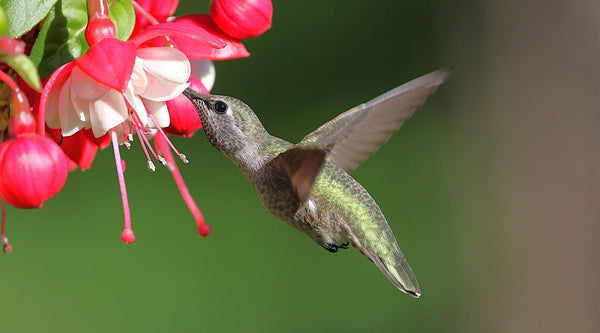
The newcomer, and a genuine recent addition to this region. Males wear an iridescent rose-red crown and throat. Anna's was first recorded in Idaho in 1976 and stayed rare until the early 2000s; Boise State's Intermountain Bird Observatory now collects as many as 200 observations every winter, and has documented nesting in Boise as early as February. Montana holds only about 160 records statewide, nearly all in the west. Southern Nevada and southeastern Utah catch the edge of the range. If you see a hummingbird here in January, this is what it is.

What's Actually Happening in This Region
Most guides describe the Mountain West as a place where elevation delays arrival. True, and useful. But it undersells what's going on.
A high mountain meadow is a short-lived, extremely rich food source. It comes online late, peaks hard, and shuts down fast. Broad-tailed Hummingbirds build their whole breeding season around that window. And then, right at the peak, a different species shows up — one that isn't nesting, isn't staying, and is measurably better at fighting.
What follows is a genuine seasonal occupation, and researchers have measured it.
The July Takeover
Amy Camfield tested this directly in Colorado, publishing in the Journal of Field Ornithology in 2006. She set up feeders at three sugar concentrations — 10%, 20%, and 30% — and watched who defended what.
The finding is blunt: "Migrating Rufous Hummingbirds displaced Broad-tailed Hummingbirds from territories they had defended during the breeding season; Broad-tailed Hummingbirds then defended only lower quality sites."
Read that again with the timing in mind. The Broad-tailed didn't lose a fight at the start of the season — they held those territories through courtship and nesting, and were pushed off them in midsummer by birds just passing through. The Rufous take the richest patches, refuel, and leave for Mexico. The residents finish the season on second-best ground.
Camfield also found both species escalate as the resource gets richer: longer chases, more often supplemented with chip calls and hovering. They're not fighting harder over the 10% feeder. They're fighting harder over the 30% one — which is exactly what a peak-bloom meadow is.
This is why your feeder traffic changes character in July, and why it can feel like your hummingbirds got meaner overnight. Different birds. Same feeder.
⛰ What You Can Do: Put Out a Second Feeder in July
This is the one action tied directly to the research above. When migrating Rufous arrive in July, they displace Broad-tailed from territories those birds have held since May, pushing the residents onto lower-quality sites.
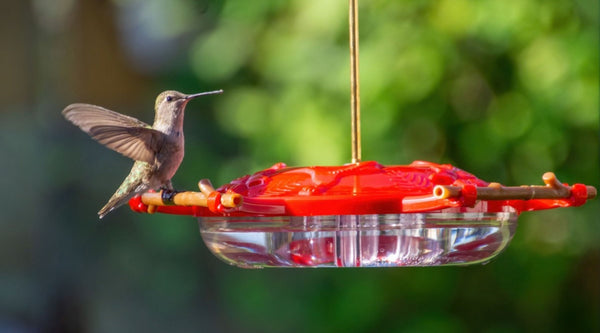
One feeder in July means one Rufous and a lot of chasing. Two or three, spaced well apart and out of sight of each other, can’t all be guarded at once. That won’t stop the arguing, but it means your Broad-tailed still get fed while the travellers are passing through.
Plant for the late-summer gap, too. High-meadow bloom fades just as southbound birds are moving. Scarlet gilia (Ipomopsis aggregata) is the workhorse — Oregon State Extension puts its bloom at August into October, and the Forest Service notes its red-flowered races are “pollinated mostly by hummingbirds.” Add hummingbird trumpet (Epilobium canum) for the same window, with firecracker or Rocky Mountain penstemon covering late spring.
For plant lists by elevation, see our state guides: Colorado, Idaho, Utah, and Montana.
The Window That Keeps Closing
There's a second pressure on Broad-tailed, and this one comes from the flowers.
The Rocky Mountain Biological Laboratory at Gothic, Colorado, holds one of the longest-running wildflower phenology records in North America. McKinney and colleagues (2012, Ecology) used it to compare Broad-tailed Hummingbird arrival dates against the flowering of the plants they depend on — especially glacier lily, which blooms about a week after snowmelt and finishes roughly two weeks later. A narrow window to begin with.
Their finding is more careful than the headline version you'll sometimes read. Near the southern limit of the breeding range, neither hummingbird arrival nor first flowering had shifted much. At a migration stopover site, first flowering advanced but peak flowering didn't. It's near the northern limit of the range — high, cold country like Gothic — where early-season flowering has moved earlier while the birds' arrival hasn't kept pace.
In other words: the mismatch isn't happening everywhere. It's happening at altitude and latitude, which is precisely where Broad-tailed does its best breeding. Co-author Amy McKinney has framed the risk plainly — hummingbirds arriving to raise chicks after the early nectar has already peaked.
Put the two stories together and Broad-tailed looks squeezed from both ends: the flowers arrive earlier than they used to, and the Rufous arrive on schedule to take what's left. Worth saying plainly, though — the mismatch is well documented, but nobody has yet shown it is causing the population decline. Cornell hedges it the same way, noting the shift "could decrease nesting success." It's a strong hypothesis, not a settled fact.
Why Rufous Comes Back a Different Way
Rufous runs a clockwise loop rather than a straight there-and-back. Cornell Lab describes it precisely: the birds "move up the Pacific Coast in late winter and spring, reaching Washington and British Columbia by May. As early as July they may start south again, traveling down the chain of the Rocky Mountains."
The reason is food, not wind. Coastal California blooms early, which fuels the northbound trip. High-elevation meadows in the Rockies bloom late, which fuels the southbound one. A bird that went north through the mountains in March would find snow; a bird that came south along the coast in August would find flowers already finished. The loop tracks the bloom.
You may see this attributed to a wind pattern called the "Great Basin High." That explanation circulates widely on hobbyist sites, but we could not find it in any peer-reviewed source or in Cornell's own account, so we've left it out. The bloom-tracking explanation is the one the science supports.
This is also why the Mountain West gets the interesting half of the journey. The Pacific Northwest sees Rufous arriving hungry in February. You see them at peak strength in July, fat and ready to fight.
The Uphill Detour
One more wrinkle. Rufous and Calliope don’t simply turn south when breeding ends — they move upslope first, following the bloom into high meadows through late summer before heading for Mexico. Cornell notes Rufous turning up in mountain meadows as high as 12,600 feet on migration.
So the bird leaving your foothill yard in August may be heading up before it heads out. Black-chinned is the exception — it stays a lower-elevation, streamside bird throughout.
How Timing Works Here
Most regional guides hand you arrival dates. In the Mountain West that's harder than it looks, and we'd rather tell you why than give you numbers that don't hold.
Arrival here tracks snowmelt, and the bloom that follows it. Snow leaves a Denver-area foothill weeks before it leaves a meadow at 10,000 feet, and the flowers — and the birds — follow in the same order. Cornell Lab puts Broad-tailed breeding habitat between roughly 5,000 and 10,500 feet, moving "through highland meadows to lowlands with abundant flowers" during migration.
But the picture is messier than a tidy elevation ladder. At the Rocky Mountain Biological Laboratory near Gothic, Colorado — about 9,500 feet — male Broad-tailed arrive well before June, and the National Park Service reports Broad-tailed reaching Rocky Mountain National Park "in April to early May." Early males may also be commuting uphill daily from lower ground where flowers open sooner, rather than settling in on arrival. So a single "high elevation means June" rule would steer you wrong.
What to do instead: watch your own snowline. When the snow goes off your south-facing slopes and the first currants and manzanita open, put the feeder out. In practice that's late April into May at valley and foothill elevations across Colorado, Utah, and Idaho, and later — but not predictably so — as you climb. Then leave it up: southbound Rufous move through this region into September, later than most people expect.
Pop's tip: Don't assume a neighbour a few miles away and a few thousand feet higher is on your schedule. And when July arrives, put out a second feeder well away from the first — the Rufous coming through will monopolise one, and your Broad-tailed will need somewhere else to go.
Conservation: What's at Stake Here
- Rufous Hummingbird — declining about 2.2% per year between 1968 and 2023, a cumulative loss of 72%. An Orange Alert Tipping Point species, 14 of 20 on the Continental Concern Score, and Near Threatened on the IUCN Red List. The birds passing through your yard in July are that population.
- Broad-tailed Hummingbird — down over 1% per year, roughly 45% cumulatively between 1966 and 2019, with a global breeding population near 9.8 million and 13 of 20 on the Continental Concern Score. It sits on the Partners in Flight Yellow Watch List. This is the species this region is most responsible for.
- Calliope Hummingbird — relatively stable, with a global population around 4.5 million and 14 of 20 on the Continental Concern Score. A Partners in Flight Watch List species, largely because its range is small.
- Black-chinned Hummingbird — the healthiest of the group, broadly stable over the long term.
- Anna's Hummingbird — increasing, and expanding into this region as it goes.
The pattern worth noticing: the species doing well here are the ones that adapt to human landscapes. The ones in trouble are the specialists tied to mountain meadows and long migrations.
Should I Take My Feeder Down in Fall?
Not early. Rufous move through this region later than most people expect, and a feeder in mid-September is still doing work at valley elevations. At high elevations you can generally stop by late August, when both the birds and the flowers are done.
Leaving a feeder up won't keep a migrant from leaving. Departure runs on day length and the hormonal cascade that follows, not on whether your feeder is full.
One regional exception: if you're in the Treasure Valley or another Idaho lowland where Anna's now overwinters, there may not be a take-it-down season at all. Plan for freezing nights instead.
How to Help Hummingbirds Through This Region
- Time your feeder to your elevation, not to a regional date — a few thousand feet is worth several weeks
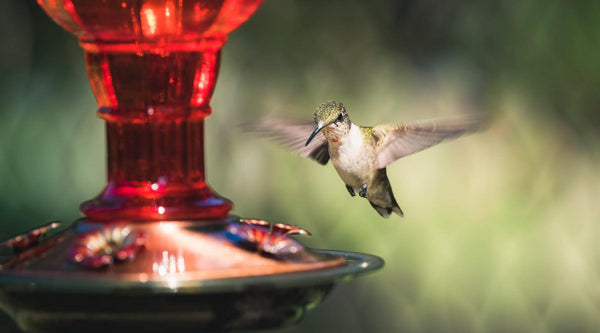
- Add a second feeder in July, well out of sight of the first. Given what the research shows about Rufous displacing Broad-tailed from the richest sites, a single feeder in midsummer means one bird eats and everyone else gets chased
- Plant for the bloom gap. Scarlet gilia and penstemon are the workhorses here; aim for something flowering in late summer, when meadow bloom is fading but southbound birds are still coming through
- Keep nectar fresh — every 3–4 days in typical mountain conditions, more often in hot valley summers
- Leave sapsucker trees alone. Cornell Lab notes that Rufous, Calliope, and Broad-tailed Hummingbirds all follow Red-naped Sapsuckers around to drink from their wells — a real food source early in the season, before flowers open
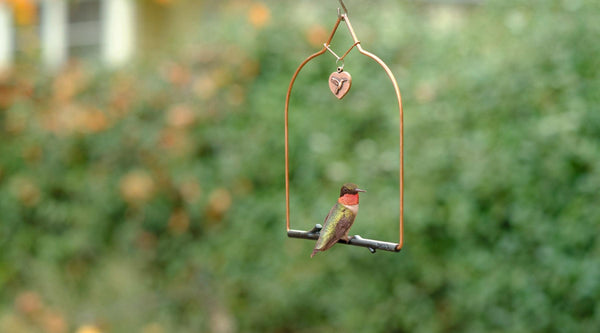
- Add a perch or swing near the feeder — Broad-tailed in particular favour open meadow-edge habitat with a lookout nearby
- In Idaho lowlands, plan for winter. A heated feeder or a pre-dawn swap keeps nectar liquid for overwintering Anna's
Timing shifts by state: attracting hummingbirds in Colorado means planning around elevation bands, while hummingbird feeding in Idaho now includes a winter season it didn't have twenty-five years ago.
Frequently Asked Questions
Why is hummingbird timing so variable across the Mountain West?
Because snowmelt drives bloom, and bloom drives arrival. Snow leaves a foothill weeks before it leaves a high meadow, so two yards a few miles apart can be on genuinely different schedules. It’s a stronger local signal than latitude — though not a tidy rule, since early males may commute uphill from lower ground where flowers open sooner.
Why do my hummingbirds seem to get more aggressive in July?
Because they're different birds. Rufous Hummingbirds start moving south through the Rockies in July, and research in Colorado found that migrating Rufous displace Broad-tailed Hummingbirds from the territories they'd held all breeding season, pushing them onto lower-quality sites. Your feeder didn't change. Its occupant did.
What is the Rufous Hummingbird's loop migration?
Cornell Lab describes it as a clockwise circuit: north up the Pacific Coast in late winter and spring, reaching Washington and British Columbia by May, then south down the Rocky Mountains starting as early as July. It follows the bloom — coastal flowers open early, high-elevation meadows open late.
When should I put my feeder out in the Mountain West?
Watch your snowline rather than the calendar. Late April into May is typical at valley and foothill elevations across Colorado, Utah, and Idaho; higher country runs later, but not on a reliable schedule — Broad-tailed reach Rocky Mountain National Park as early as April. Put your feeder out a week or two before you expect the first bird. Being early costs nothing.
Are hummingbirds in this region declining?
Some. Rufous is down about 72% between 1968 and 2023 and rated Near Threatened. Broad-tailed has declined roughly 45% since 1966 and sits on the Partners in Flight Yellow Watch List. It may face an additional pressure too: at high, cold sites, early-season flowers now bloom earlier while the birds’ arrival hasn’t kept pace — though that link to the decline is a hypothesis rather than a demonstrated cause. Anna’s, by contrast, is increasing and moving into the region.
Can I see hummingbirds here in winter?
In parts of Idaho, increasingly yes. Anna's Hummingbird now overwinters in the Treasure Valley, where the Intermountain Bird Observatory collects as many as 200 observations each winter and has documented nesting in Boise as early as February.
Why do I see hummingbirds moving uphill in late summer?
Because the flowers are up there. Rufous and Calliope move upslope after breeding, following the bloom into high meadows before turning south — Cornell records Rufous in mountain meadows as high as 12,600 feet on migration. So the bird leaving your yard may be heading up before it heads out.
How We Know This
Species range and timing draw on the Cornell Lab of Ornithology's All About Birds species accounts. The Rufous displacement finding comes from Camfield (2006, Journal of Field Ornithology), and the foundational work on migrant Rufous territoriality from Kodric-Brown & Brown (1978, Ecology). The phenology findings come from McKinney, CaraDonna, Inouye, Barr, Bertelsen & Waser (2012, Ecology), based on long-term records at the Rocky Mountain Biological Laboratory. The Broad-tailed wing whistle comes from Miller & Inouye (1983, Animal Behaviour). Idaho status comes from Boise State's Intermountain Bird Observatory and Montana records from the Montana Natural Heritage Program.
Key Takeaways
- Snowmelt sets the calendar — it drives bloom, and bloom drives arrival, so watch your own snowline rather than a regional date
- Broad-tailed Hummingbird is the region's defining high-country breeder, identifiable by the metallic wing trill males produce in flight
- In July, migrating Rufous displace Broad-tailed from the territories they've held all season, pushing the residents onto lower-quality sites — measured experimentally in Colorado
- Broad-tailed — down roughly 45% since 1966 and on the Yellow Watch List — may face a second squeeze: at high, cold sites, early-season flowers now bloom earlier while arrival hasn't kept pace
- The Rufous loop follows the bloom, not the wind — coastal flowers north in spring, alpine meadows south in late summer
- Anna's Hummingbird is a genuine new arrival, now overwintering and nesting in Idaho's Treasure Valley
- Two feeders spaced well apart do far more good here in July than one good feeder ever will
At Pop's Birding, we believe every backyard — big or small — has room for a little more wonder. Explore our feeders, nectars, swings, and wildflower seed blends to start building your own hummingbird sanctuary today.

Bethany Sloan has served as General Manager of Pop's Birding since 2010, continuing the legacy of her grandfather, William "Pops" Sloan, inventor of the Original Hummingbird Swing. A lifelong hummingbird enthusiast, educator, and independent researcher, she leads the company's educational content, including its 50-State Hummingbird Guide series, Regional Guide, Species Guide and Hummingbird Learning Center. Bethany combines scientific research, regional migration data, and more than 16 years of hands-on experience to create trusted educational resources for bird enthusiasts across North America.