Jul 26, 2026
Florida Hummingbird Season: A Month-by-Month Calendar
Timing derived from eBird data, 2016–2025
There is no single Florida hummingbird season. There's a wave that arrives in the Panhandle in September and works its way down the state — reaching Orlando in October and settling into South Florida for the winter. Then in spring it runs back the other way.
Which means the honest answer to "when do hummingbirds come to Florida?" depends entirely on where in Florida you're standing. Gainesville and Miami are at their busiest six months apart.
Free download
The whole year on one page
Arrival and departure windows for all six regions, the Panhandle's winter rarity season, and when the north-south handover happens — printed small enough to tape inside the shed door.
Download the Florida cheat sheetOne page · PDF · free to print and share
Florida's Hummingbird Season at a Glance

How often Ruby-throated turns up on eBird checklists, week by week — statewide, 2016–2025. The region-by-region breakdown below tells a very different story in each part of the state.
Regions used below
Western Panhandle — Pensacola
Central Panhandle — Tallahassee
North Peninsula — Gainesville, Jacksonville, Ocala
Central — Orlando, Tampa
South — Miami, Naples, Fort Myers
The Keys — Key West, Marathon
These six behave differently enough that a single statewide calendar would mislead most readers. The Panhandle and South Florida are at their busiest in opposite halves of the year.
How Each Region Compares to the State
The statewide chart above is almost entirely Ruby-throated — Florida's real winter rarities don't show up at that scale, because averaging them across the whole state crushes real, regionally-concentrated populations down to statistical noise. The charts below show four of Florida's six regions at their true, undiluted magnitude: first the region's dominant breeder, then its winter visitors on their own scale.
Western Panhandle (Pensacola)


Buff-bellied is the standout here, peaking at 4.28% of checklists in late November — by far the largest of any rarity anywhere in the state, and well ahead of the next-highest at 2.61%. Rufous and Black-chinned both show genuine winter presence too, peaking at 2.61% and 1.72%. This is unambiguously Florida's best region for winter rarities generally.
North Peninsula (Gainesville)


Gainesville has the strongest eBird signal for Broad-billed and Calliope of any Florida location, with Broad-billed peaking in mid-December at more than four times the Tallahassee figure. Calliope peaks here in mid-January, about three weeks later than around Tallahassee. Rufous is a real winter presence here too, peaking in the last week of January.
South Florida (Miami-Dade)


A clear view of Florida's opposite-season split: Ruby-throated is essentially absent here through the Panhandle's busiest stretch (May–August), then climbs through fall to its own peak in October, months after the Panhandle has emptied out. Rufous and Buff-bellied both hold a real, if modest, winter presence — genuine populations, not statistical noise.
The Keys (Monroe County)

The only region in Florida with a genuinely different-shaped season. Everywhere else peaks somewhere between July and February; the Keys peak in April and nowhere else — a pure spring stopover, with no real fall movement and no winter rarities recorded at all. There is no second chart here because there are no winter visitors to show.
January
South Florida is at the height of its winter season right now, with Ruby-throated turning up on nearly every checklist around Miami. If you're north of Orlando it feels like the off-season — and in terms of Ruby-throated, it is — but the Panhandle and Gainesville are quietly in the middle of their best window for Rufous, Calliope, and the rest of the western rarities that overwinter here.
| South | Busy. Around Miami this is among the strongest months of the year. |
| Panhandle | Rarity season. Broad-tailed has turned up around Tallahassee in January, though only a handful of times in ten years. Around Gainesville, it's a different set: Rufous peaks in the last week of January, Calliope two weeks earlier. All one or two birds at a time, at backyard feeders. |
| North Peninsula | Very quiet. The breeders are in Central America. |
| Keys | A modest but steady winter presence. |
Why the Panhandle is where the rare birds are
Every hummingbird species on Florida's rarity list is a western bird that took a wrong turn — or, more accurately, took a route that ends in the Southeast instead of Mexico. Those birds arrive along the Gulf, which is why Tallahassee has recorded seven species and the Florida Keys have recorded one.
A maintained feeder in a north Florida garden in January is genuinely how most of them get found.
February
There's a brief moment in February where two seasons overlap in the Panhandle — Rufous and Black-chinned reports are peaking at backyard feeders around Pensacola while the first spring Ruby-throated scouts are only weeks away. South Florida is still going strong but beginning to ease, as the birds that wintered there start drifting north.
| Panhandle | Hang your feeders. Rufous and Black-chinned reports peak now, and the first spring Ruby-throated are only weeks away. |
| South | Still strong, but beginning to ease. |
| North Peninsula | Still quiet. Feeders up by month's end. |
March
Spring arrivals sweep through the Panhandle and north peninsula, with Ruby-throated reports rising steeply across the month. Meanwhile the wintering population around Miami is thinning and heading north — the two halves of the state are essentially trading places, with each doing the opposite of what it was doing two months ago.
| Panhandle & North | Reports climb steeply — around Tallahassee and Pensacola they rise more than fivefold across the month. |
| Keys | Building toward their April high — birds moving north through the islands. |
| South | Falling away as the wintering birds head north. |
April
The Keys get their one real month — this is the only time all year when the islands are genuinely busy, as northbound birds funnel through on their way up the peninsula. Up in the north, nesting season is already underway, and South Florida is rapidly emptying out after a long, active winter.
| The Keys | Peak. The islands are a spring stopover, not an autumn one — this is the busiest the Keys get all year. |
| Panhandle | A strong spring peak around Pensacola — the northbound wave passing through. |
| North Peninsula | Nesting season begins. |
| South | Emptying fast. By month's end there's almost nothing left. |
Why nesting season is the demanding one
The female does all of it alone — building a walnut-sized nest of plant down bound with spider silk, often over water, then incubating two eggs for about two weeks and feeding the young for three more. In Florida's long warm season she may do it twice, occasionally three times.
There's a wrinkle specific to hummingbirds. Most female birds build up a temporary calcium store in their bones, called medullary bone, and draw on it to make eggshell. Hummingbirds have very little of it, so a laying female has less in reserve. Researchers have seen nesting females eating wood ash and other mineral-rich materials, which they think helps replace the calcium that goes into eggs. In one 1994 study, every bird seen eating ash was a female tending a nest.

It's part of why Pop's Nectar includes calcium and electrolytes rather than sugar alone. Nesting females need extra calcium during egg-laying, and plain sugar water has essentially none. Read more on the research behind it.
Shop Nectarlyte® 8 oz →May
South Florida and the Keys go quiet — not slow, genuinely empty, with whole weeks showing no hummingbird reports at all around Miami. If your south Florida feeder has been untouched for weeks, nothing is wrong; the birds that were there all winter have left, and the next wave won't arrive until September. Up in the Panhandle and north peninsula, breeding is underway and numbers hold steady, though heat is becoming the main feeder management issue.
| South & Keys | Effectively empty. By the end of May there are weeks with no hummingbird reports at all. |
| Panhandle & North | Breeding underway, though numbers dip as females settle onto nests. |
| Central | Its quietest stretch of the year. |
What to do: Heat is the issue now. Above 90°F change nectar daily, and keep the feeder in shade.
June
The gap. Miami-Dade and the Keys record essentially zero hummingbirds this month, and that's completely normal — if you're in South Florida and your feeder has been untouched since spring, there's nothing wrong with your setup. Your season just starts in September. Up in the Panhandle and north peninsula, the first fledglings are starting to appear and numbers are picking back up after May's nesting lull.
| South & Keys | Nothing. Miami-Dade and the Keys both record essentially zero hummingbirds this month. |
| Panhandle & North | Climbing again as the first young birds fledge. |
July
The north peninsula hits its peak — around Gainesville this is the busiest stretch of the whole year, with local breeders plus the summer's fledglings all competing at the feeder at once. If you're watching your feeder and seeing a lot of chasing, that's not a problem to solve; that's just what July looks like here. The Panhandle is climbing hard toward its own September high, and South Florida is still completely quiet.
| North Peninsula | Peak. Around Gainesville this is the busiest stretch of the year — local breeders plus this summer's young. |
| Panhandle | Climbing hard toward September. |
| South & Keys | Still empty. |
What to do: In the north, add a second feeder if you're seeing chasing. Place two out of sight of each other and you'll host far more birds.

Seeing one bird chase everyone else off?
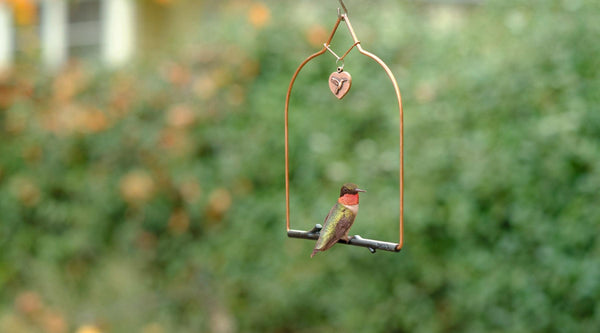
That's usually a resident claiming both the feeder and a nearby swing as its own guarded territory. A second feeder and a second swing, spaced out of sight of each other, gives another bird its own station to guard instead of fighting over one.
Shop a second swing →August
The Panhandle is holding at a high plateau after July's big jump, and the first birds of South Florida's new season are starting to trickle in late in the month. The north peninsula is still at its summer high, and this is also when pest pressure — ants, bees, wasps — tends to be at its worst across the state, with feeders getting hit harder in the heat than at any other time of year.
| Panhandle | Still climbing, but the big jump already happened in July — Pensacola is up about 70% from where it started that month, and holding at a high plateau into September. |
| North Peninsula | Holding at its summer high. |
| South | The first birds of the new season appear late in the month. |
Keep pests off without pesticides — hummingbirds rely on small insects for protein, so spraying near a feeder can cost them a food source, not just protect one.
AspenPerch®'s built-in ant moat blocks ants with a water barrier, and HummGuard® Nectar Tips keep bees and wasps out without changing anything for the birds.


September
The Panhandle's biggest month — around Pensacola nearly half of all bird checklists include a hummingbird, the highest figure of any region in any month in the whole state. A lot of these birds aren't local; they're staging on the Gulf coast to fuel up for a nonstop crossing of open water to the Yucatan. South Florida is filling fast as its own winter season kicks off from the opposite direction.
| Panhandle | Peak, and it's dramatic. Around Pensacola nearly half of all bird lists record a hummingbird — the highest figure anywhere in the state, in any month. |
| Why here? | These birds are staging for a nonstop crossing of the Gulf of Mexico, the same way they do on the Alabama coast just west. They're eating for a 500-mile flight over open water. |
| South | Filling fast — the winter season is starting. |
What to do: In the Panhandle this is the month to be generous. Fill often, add feeders, expect crowds.
This is the month to be generous, not economical.
Birds fueling for a 500-mile Gulf crossing need feeders topped up more often — the large 2lb Nectarlyte® powder or the Nectarade® liquid concentrate keeps you from running out mid-surge.


October
The wave that crested in the Panhandle in September reaches the peninsula and keeps going south — Orlando and Miami both hit their annual peaks this month, three months after the north peninsula hit its own. Meanwhile in the Panhandle, Ruby-throated collapses fast through the month while the first Buff-bellied arrivals fill in quietly behind them, beginning a rarity season that will run through February.
| Central | Peak. Around Orlando this is comfortably the busiest month of the year. |
| South | Peak. Miami reaches its yearly high — three months after the north peninsula reached theirs. |
| Panhandle | Ruby-throated collapsing — from near-peak in the first week to almost nothing by the last. Buff-bellied are already arriving behind them, building toward a late-November peak. |
| Planting | Prime wildflower sowing window in north and central Florida. |
What to do: Sow the Perfect Little Sanctuary® blend now, ahead of the cooler dry season. And if you're in South Florida, this is the month to have the feeder out and clean.

This is the planting month.
Sow now and native wildflowers get the cold, moist period most varieties need to bloom reliably next spring.
Shop the Perfect Little Sanctuary® blend →November
The north clears out while the south settles in for a long winter — and the Panhandle quietly becomes one of the more interesting places in the eastern US to watch a feeder. Ruby-throated are essentially gone from the Panhandle by mid-month, but Buff-bellied are building to their peak, and Rufous and Black-chinned are starting to show up at backyard feeders around Pensacola and Gainesville in the kinds of numbers that make November worth paying attention to.
| South & Keys | Settled into the winter season, and staying that way until spring. |
| Panhandle | Ruby-throated are gone — but Buff-bellied Hummingbirds build to their peak this month, and the western rarities begin turning up. |
| North Peninsula | Quiet until spring. |
What to do: In the Panhandle, don't put the feeder away. November through February is when north Florida's most interesting hummingbirds show up, and a maintained feeder is how nearly all of them are found. Our winter hummingbird feeder care guide covers heated feeders and the two-feeder swap.
December
Florida splits into two very different places in December. Around Miami it's a better hummingbird month than June by an enormous margin, with Ruby-throated steady through the winter and no sign of the gap that empties out the north. Up in the Panhandle and north peninsula it's rarity season in earnest — Calliope peaks around Tallahassee this month, and Gainesville sees its strongest Broad-billed signal of the year, both of them showing up one or two at a time at feeders in north Florida gardens.
| South | Busy and steady. Around Miami, December is a better hummingbird month than June by an enormous margin. |
| Panhandle | Rarity season opens properly. Calliope reports peak this month around Tallahassee. Around Gainesville, Broad-billed shows its own real peak — the strongest Broad-billed signal anywhere in the state. |
| Everywhere else | Quiet. |
The Year at a Glance
| When | What |
|---|---|
| December – February | Panhandle rarity season; South Florida at its busiest |
| February | Feeders up in the Panhandle and north peninsula |
| March | Spring arrivals sweep north; South Florida empties |
| April | The Keys peak; nesting begins in north Florida |
| May – August | South Florida and the Keys are empty |
| July – August | North peninsula peak |
| September | Panhandle peak — the biggest month anywhere in Florida |
| October | Central and South Florida peak; sow wildflower seed |
| November | Buff-bellied and western rarities arrive in the Panhandle |
Frequently Asked Questions
When do hummingbirds come to Florida?
It depends entirely on where you are. The Panhandle sees its spring wave in March and April. The north peninsula follows through spring into its own July–August peak. South Florida and the Keys are the exception — their Ruby-throated population is already resident through winter and simply builds through fall, peaking in October.
When do hummingbirds leave Florida?
The Panhandle empties fast after its September peak, down to almost nothing by November. The north peninsula follows a similar pattern through fall. South Florida and the Keys don't really "leave" in the way the rest of the state does — Ruby-throated just thins out gradually through spring as the wintering population heads north.
Are there hummingbirds in Florida in winter?
Yes, especially in South Florida, where winter is actually the busiest season. The Panhandle also holds real winter interest — this is when Rufous, Black-chinned, and Buff-bellied are most likely to turn up at a backyard feeder, especially around Pensacola and Gainesville.
Why is my Florida feeder empty in summer?
If you're south of Orlando, that's completely normal — Ruby-throated is essentially absent from South Florida and the Keys from May through August. If you're in the Panhandle or north peninsula, summer is actually your busiest stretch, so an empty summer feeder there is worth a closer look at placement and nectar freshness.
When is the best time to see a rare hummingbird in Florida?
Winter, and specifically the Panhandle and north peninsula. Pensacola is the strongest region overall for winter rarities — Rufous, Black-chinned, and especially Buff-bellied, which peaks there at more than three times its next-best location. Gainesville has the strongest eBird signal for Broad-billed and Calliope specifically, both of which peak there in December and January.
Why We Built This Calendar
Florida stumped us longer than most states. The statewide eBird chart looks reasonable enough — a September peak, a winter dip — but it hides a story that's almost the opposite of what it suggests. South Florida isn't slow in winter; it's at its busiest. The Panhandle doesn't just peak in September and go quiet; it turns into one of the best places in the eastern United States to find a rare western hummingbird for the next four months. A single statewide chart would have led anyone reading it to keep their South Florida feeder down all winter and miss the whole thing. So we built six regional charts instead, and wrote the calendar around what those actually show.
How We Built This Calendar
The month-by-month pattern comes from eBird bar chart data, 2016–2025, for Florida statewide and six counties chosen to represent each part of the state: Escambia (western Panhandle), Leon (Tallahassee), Alachua (north peninsula), Orange (central Florida), Miami-Dade (south), and Monroe (the Keys). We cross-checked it against the Florida Ornithological Society Records Committee's official state list, the University of Florida IFAS Extension, the Florida Fish and Wildlife Conservation Commission, and published banding research on hummingbirds wintering in Florida and southern Alabama. Percentages show how often a species is reported on submitted checklists, not how many birds there are.
Sources
- eBird bar chart data, Cornell Lab of Ornithology — Florida statewide plus Escambia, Leon, Alachua, Orange, Miami-Dade and Monroe counties, 2016–2025.
- University of Florida IFAS Extension — Hummingbirds of Florida. Source for breeding range, nesting, and feeder guidance.
- Florida Fish and Wildlife Conservation Commission — Hummingbirds.
- Florida Ornithological Society Records Committee — Official Florida State List. Source for species classification.
- Bassett, F., & Cubie, D. (2009). Wintering hummingbirds in Alabama and Florida. Journal of Field Ornithology, 80(2), 154–162.
- des Lauriers, J. R. (1994). Hummingbirds eating ashes. The Auk, 111(3), 755–756. Documents five nesting female hummingbirds eating wood ash; no males were seen doing so in that study.
- Adam, M. D., & des Lauriers, J. R. (1998). Observations of hummingbirds ingesting mineral-rich compounds. Journal of Field Ornithology, 69, 257–261. Source for hummingbirds' greatly reduced medullary bone and for the mineral-rich materials they eat.
- Werning, S. (2018). Medullary bone is phylogenetically widespread and its skeletal distribution varies by taxon. Journal of Ornithology, 159, 527–543. Source for medullary bone being confirmed in hummingbirds.
Know before they arrive
You don't have to keep this calendar taped to the fridge. Insider Birding Access members get seasonal notes timed to your region — when to have feeders out, what the birds are doing right now, and what's worth doing in your yard this season. We take the guesswork out of the calendar. Joining takes about thirty seconds, and there's 10% off your first order in it.
Join Insider Birding Access →Free to join. 10% off your first order.
Shop Florida's Hummingbird Favorites


Bethany Sloan has served as General Manager of Pop's Birding since 2010, continuing the legacy of her grandfather, William "Pops" Sloan, inventor of the Original Hummingbird Swing. A lifelong hummingbird enthusiast, educator, and independent researcher, she leads the company's educational content, including its 50-State Hummingbird Guide series, Regional Guide, Species Guide and Hummingbird Learning Center. Bethany combines scientific research, regional migration data, and more than 16 years of hands-on experience to create trusted educational resources for bird enthusiasts across North America.