Sep 01, 2026
Hummingbirds in Alaska: The Complete Guide to All 5 Species
No hummingbird breeds farther north than the one that nests in Alaska every summer — Rufous Hummingbird holds that record worldwide, and it's the only species that nests here. For decades that was almost the entire Alaska hummingbird story. It isn't anymore: Anna's Hummingbird has gone from a handful of scattered winter sightings in the 1970s to a real, recurring cold-season presence in Southeast Alaska, with growing Christmas Bird Count numbers year over year. Round out the list with three genuine rarities, each with its own real, documented record.
This guide sorts out which hummingbird you're actually looking at, and what Alaska's own primary sources — not eBird alone — actually say about each one. For feeder setup and timing, see our how-to-attract guide. For exact arrival and departure windows, see the Alaska hummingbird calendar.
Free download
Take Alaska with you
This page covers all 5 documented Alaska species — the one you'll actually see, the winter newcomer, and the rarities worth knowing about. The printable guide is the practical companion.
Download the Alaska species guideOne page · PDF · free to print and share

All five documented Alaska hummingbird species, grouped by tier — cross-checked directly against the Checklist of Alaska Birds (University of Alaska Museum / Alaska Bird Records Committee), 32nd edition, 2026.
The Hummingbird You'll Actually See
Rufous Hummingbird Breeds Here
Alaska's only breeding hummingbird — and the record-holder for the northernmost breeding range of any hummingbird species on Earth. Cornell Lab is direct about it: Rufous "breeds as far north as southeastern Alaska." The Alaska Department of Fish and Game confirms this is genuine nesting, not just vagrancy — birds arrive in April and nest from Southeast into Southcentral Alaska, making Rufous "the only hummingbird commonly found" in those regions. It winters in Mexico and clears out completely by fall.
Adult males are unmistakable: fiery, coppery-orange overall with an iridescent orange-red throat, and famously aggressive at feeders regardless of what else shows up. Females and immatures are green-backed above with cinnamon-washed flanks and a rufous patch at the base of the tail.

Quick ID: Adult male is a vivid, unmistakable orange-red overall. Female and immature show cinnamon-washed flanks and a rufous tail patch — the flank color is the key tell against a female Anna's, which shows grayish-green flanks instead.

A Little Throne for Your Rufous
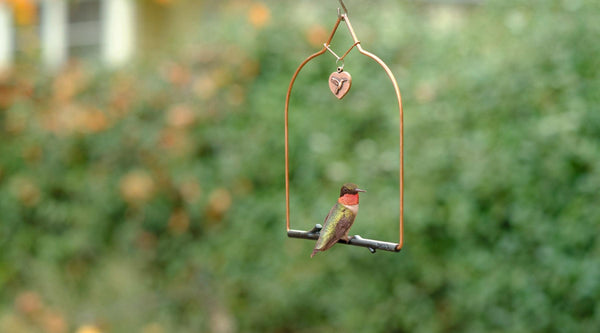
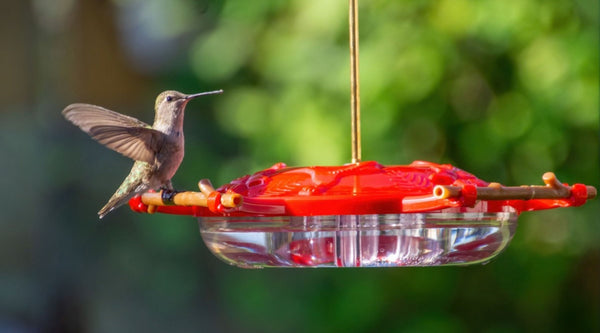
Rufous holds Alaska's summer all on its own — a redwood perch nearby gives your breeder a favorite spot to rest and defend its territory before the long trip back to Mexico.
Shop Charm Redwood Swing →Alaska's Winter Newcomer
Anna's Hummingbird Migrant/Winter
A genuine, still-developing Alaska story. The state's first Anna's sighting was in 1971, with the first structured winter-count detection following in 1974 — for decades after that, occurrences stayed scattered enough that Alaska Fish and Game classified the species simply "casual." That's changed. Real, recurring presence since roughly 2005 shows up in growing Christmas Bird Count totals — a new state-high count of 31 birds at Ketchikan has since surpassed an earlier record of 21 — plus banded individuals returning to the same Southeast Alaska feeders across multiple winters. The Checklist of Alaska Birds (32nd ed., 2026) no longer carries a vagrancy symbol next to Anna's at all, in a document whose entire purpose is flagging exactly that kind of status. There's no confirmed Alaska breeding record for this species — this is a wintering-presence story, not a nesting one.
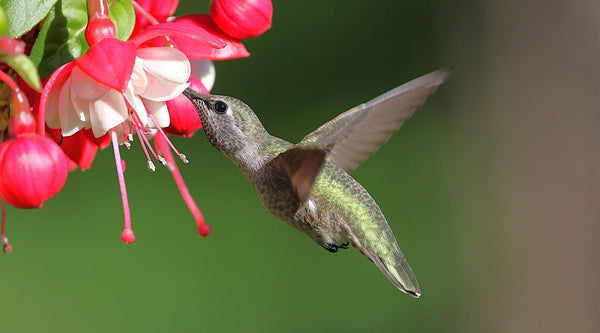
Adult males show an iridescent rose-red crown and throat together — the only North American hummingbird with color on the crown itself, not just the throat. Females and immatures are green above with a paler throat, sometimes showing a few red throat flecks.

Quick ID: Adult male's rose-red crown-plus-throat combination is unique among Alaska's hummingbirds. Female and immature are stockier and grayer-flanked than a female Rufous, which shows cinnamon-washed sides instead.

An Extra Feeder for Your Anna's Visitor
Southeast Alaska's wintering Anna's are a genuinely new pattern — a second feeder, kept from freezing, gives a cold-season visitor its own reliable station.
Shop AspenPerch® Feeder →If You're Lucky: Alaska's Rarities
Three more species have real, documented Alaska records — each one genuinely rare, and each with its own honest record history rather than a vague "sometimes seen here."
Costa's Hummingbird Rare / Casual Visitor
Nearly a dozen accepted Alaska records — Fish and Game's own phrase groups it with Anna's as "casual" in Southeast and Southcentral Alaska, and the Checklist of Alaska Birds marks it the same way. The pattern goes back to an adult male at an Anchorage feeder in 1989, with further records at Anchorage, Cordova, and a pair of birds at Juneau and Valdez in fall 2018. Real and recurring, but not annual — genuinely rarer than Anna's.

Quick ID: Adult male's flared, mustache-like purple crown and gorget are unmistakable. Female and immature are smaller and paler-bellied than a female Anna's, with a droopy-looking bill and a pale eyebrow wrapping a dark cheek.
Calliope Hummingbird Rare / Casual Visitor
Alaska's first substantiated Calliope record didn't come until September 2016, at Auke Bay near Juneau — a hatching-year male, photographed. That single documented bird followed at least six unsubstantiated sight reports stretching back to the late 1960s, all from Southeast Alaska. The University of Alaska Museum's own checklist addendum is direct about why it's marked Casual: "because of its long, enigmatic, unsubstantiated past in se Alaska."

Quick ID: North America's smallest hummingbird — a compact, hunched shape even smaller than Costa's. Adult male's magenta throat streaks radiate outward individually rather than forming a solid gorget, a pattern no other Alaska species shows.
Ruby-throated Hummingbird Rare / Casual Visitor
The Lower 48's most familiar backyard hummingbird is Alaska's genuine rarity. At least five scattered records span decades — Nome, St. Michael, Palmer, Wiseman, Elfin Cove, and a bird near Homer in summer 2018 described at the time as "probably Alaska's fifth." The Checklist of Alaska Birds marks it Casual — recurring at irregular intervals, not a one-time accident, but nothing close to expected.

Quick ID: Adult male's brilliant ruby-red throat can look flat black without direct light, over a green back and forked tail. Female and immature have a plain whitish throat and a rounded, white-tipped tail — the general shape resembles a female Anna's, but Ruby-throated is stockier-billed and the two species' ranges essentially don't overlap outside vagrancy.
Give Every Visitor a Reason to Stay
Whether it's a common Rufous, a wintering Anna's, or one of Alaska's genuine rarities, real nectar and a reliable feeder are what convince any hummingbird to linger. Nectarlyte® Powder adds electrolytes beyond plain sugar water, and Perfect Little Sanctuary® Wildflower Seed keeps natural nectar sources blooming through Alaska's short season.


Alaska Hummingbirds at a Glance
| Species | Status | Alaska Record |
|---|---|---|
| Rufous Hummingbird | Breeding | Alaska's only breeder; world's northernmost-nesting hummingbird |
| Anna's Hummingbird | Migrant/Winter Visitor | Growing recurring winter presence since ~2005; no confirmed breeding |
| Costa's Hummingbird | Rare/Casual | ~12 accepted records since 1989, mostly Southcoastal Alaska |
| Calliope Hummingbird | Rare/Casual | 1 substantiated record (2016), after decades of unconfirmed reports |
| Ruby-throated Hummingbird | Rare/Casual | 5+ scattered records across decades |
Frequently Asked Questions
How many species of hummingbirds are in Alaska?
Five, all documented by Alaska's own bird records authority. Rufous is the only regular breeder. Anna's is a growing recurring winter presence. Costa's, Calliope, and Ruby-throated are each genuine rarities with real, if sparse, record histories.
Is it true a hummingbird breeds in Alaska?
Yes — Rufous Hummingbird. It holds the record for the northernmost breeding range of any hummingbird in the world, nesting from Southeast into Southcentral Alaska every summer before wintering in Mexico.
Are hummingbirds actually staying in Alaska through winter now?
Anna's Hummingbird is the real story here. Alaska's first sighting was in 1971, and for decades it stayed rare enough that state wildlife officials called it simply "casual." Since about 2005, recurring winter records — including growing Christmas Bird Count totals and banded birds returning to the same Southeast Alaska feeders year after year — point to a genuine, established winter presence, even though no Alaska breeding record exists yet.
What's the rarest hummingbird ever recorded in Alaska?
By record count, Calliope Hummingbird — just one substantiated record, a photographed bird near Juneau in September 2016, after decades of unconfirmed sight reports. Ruby-throated (5+ scattered records) and Costa's (~12 records) are also genuine rarities, just with a longer documented history.
For feeder setup, nectar ratios, and timing that matches Alaska's short season, head back to our how-to-attract-hummingbirds-in-Alaska guide. For exact arrival and departure windows, see the Alaska hummingbird calendar.
Sources
- Checklist of Alaska Birds, 32nd edition (2026), University of Alaska Museum / Alaska Bird Records Committee. Source for official species status (breeding, casual, accidental) for every hummingbird on Alaska's state list.
- Alaska Department of Fish and Game, Alaska's Backyard Birds. Source for Rufous breeding confirmation and the Anna's/Costa's "casual" designation.
Why We Created This Guide
Pop's Birding has been helping hummingbird lovers for three generations. Alaska gets left out of most hummingbird content entirely, or gets a single throwaway line about Rufous — which misses a genuinely interesting, still-developing story: Anna's Hummingbird's real shift from a handful of scattered 1970s sightings to an established recurring winter presence. We built this guide to give Alaska's birders a direct, sourced answer using the state's own primary records — not a generic "hummingbirds of the Pacific Northwest" list stretched to cover a place with its own real patterns.
How We Created This Guide
We built this page around the Checklist of Alaska Birds (32nd edition, 2026), published by the University of Alaska Museum and the Alaska Bird Records Committee, cross-checked against the Alaska Department of Fish and Game's own species accounts and statewide eBird frequency data, 2016–2025. One judgment call is worth being upfront about: the 32nd edition no longer marks Anna's Hummingbird with the vagrancy symbol it carried in earlier editions, and since this page is built around flagging vagrancy status, we read that unflagged entry as a real signal — but it's an inference from the absence of a symbol, not a committee statement in so many words, and we're not overstating it as more. What tips that read from "maybe" to a confident call is everything else on file alongside it: a peer-reviewed finding (Battey 2019, American Naturalist) that the species has been regularly reported in the region since 2005, banded individuals returning to the same feeders across multiple winters, and Christmas Bird Count totals that have grown rather than stayed flat.
Sources
Know before they arrive
You don't have to keep this calendar taped to the fridge. Insider Birding Access members get seasonal notes timed to your region — when to have feeders out, what the birds are doing right now, and what's worth doing in your yard this season. We take the guesswork out of the calendar. Joining takes about thirty seconds, and there's 10% off your first order in it.
Join Insider Birding Access →Free to join. 10% off your first order.
Shop Alaska's Hummingbird Favorites


Bethany Sloan has served as General Manager of Pop's Birding since 2010, continuing the legacy of her grandfather, William "Pops" Sloan, inventor of the Original Hummingbird Swing. A lifelong hummingbird enthusiast, educator, and independent researcher, she leads the company's educational content, including its 50-State Hummingbird Guide series, Regional Guide, Species Guide and Hummingbird Learning Center. Bethany combines scientific research, regional migration data, and more than 16 years of hands-on experience to create trusted educational resources for bird enthusiasts across North America.