Jul 27, 2026
Kentucky Hummingbird Season: A Month-by-Month Calendar
Timing derived from eBird data, 2016–2025 (sourced July 2026)
Kentucky runs a simple calendar with one real twist: a single breeding species that sweeps across the state over about a month, and a quiet winter stretch that occasionally produces a genuine, photograph-worthy rarity. Here’s how the year actually unfolds, county by county.
The short answer: mid-April in far western Kentucky, mid-May in the Bluegrass, and most have left again by late October.
| Question | Answer |
|---|---|
| When do they arrive? | Mid-April in the far west, mid-May in the Bluegrass |
| When should feeders go up? | Mid-April statewide; late March in the far west |
| When do they nest? | Late May through late July |
| When do they leave? | From late July; most gone by late October |
| Any in winter? | Rufous, most years — and occasionally something rarer |
Free download
The whole year on one page
Arrival windows county by county, when to hang feeders in your part of the state, and when to watch for the winter rarities — printed small enough to tape inside the shed door.
Download the Kentucky cheat sheetOne page · PDF · free to print and share
Kentucky’s Hummingbird Season at a Glance
Before the county-by-county detail below, here’s the whole season in two pictures — Ruby-throated’s full-season curve, and the one winter visitor worth watching for, shown at its own scale since it’s a small fraction of Ruby-throated’s numbers.


How often each species turns up on eBird checklists, week by week — statewide, 2016–2025. The regional and month-by-month breakdown below shows exactly when that wave reaches your part of the state.
That statewide curve is really a single wave sweeping west to east over about a month — where you land inside it depends on how far west or east in Kentucky you are. Here’s the region-by-region detail, so you can see exactly where you fall.
Counties used below
McCracken — Paducah, the far west, earliest in the state
Pulaski — south-central Kentucky
Jefferson — Louisville
Fayette — Lexington and the Bluegrass, typically last
Harlan — far southeast, Appalachian; checked specifically for an elevation effect, data too thin to use
Regional Arrival Snapshot
| County | Ruby-throated Reliably Common By |
|---|---|
| McCracken (Paducah, far west) | Mid-April |
| Pulaski (south-central) | Late April |
| Jefferson (Louisville) | Early May |
| Fayette (Lexington) | Mid-May |
| Harlan (far southeast, Appalachian) | Data too thin to measure reliably |
Windows derived from eBird bar chart data (Cornell Lab of Ornithology), 2016–2025, for McCracken, Pulaski, Jefferson, Fayette, and Harlan counties. “Reliably common” is defined as the first week each county’s Ruby-throated reports reach 25% of that county’s seasonal peak. We specifically checked Harlan County to see whether higher Appalachian elevation delays arrival there, the way it does in some western mountain states — the data was too sparse to use (well under 100 checklists most weeks), and the one relevant peer-reviewed study we found showed no meaningful elevation effect on Appalachian songbird arrival. University of Kentucky Cooperative Extension recommends feeders out statewide by mid-April; that guidance is calibrated to the earliest part of the state.
January, February & March: The Quiet Season
| Statewide | No breeding population present. Any hummingbird seen is a genuine winter record, usually Rufous, and worth documenting. |
| Late March | The first scouts. UK Extension has documented arrivals in the far west as early as March 29. |
These late-March arrivals are scattered early individuals, not yet a reliable population — but it’s worth having a feeder up in McCracken County and similar far-western spots by this point.
Stock up before the first wave hits.
The busiest feeder days arrive all at once — having the 2lb Nectarlyte® powder or Nectarade® liquid concentrate on hand means you’re mixing fresh nectar every few days, not scrambling for supplies mid-surge.


April: The Wave Begins
| Mid-April | McCracken (Paducah) — reliably common |
| Late April | Pulaski (south-central) — reliably common |
Ruby-throated becomes reliably common in the far west first, then spreads east through the month. If you’re further east and your feeder is still quiet in April, that’s completely normal — the wave hasn’t reached you yet.
May: The Wave Reaches the Bluegrass
| Early May | Jefferson (Louisville) — reliably common |
| Mid-May | Fayette (Lexington) — reliably common, typically the last county to fill |
| Late May | Nesting season opens statewide. |
This is Kentucky’s real spring story: Ruby-throated becomes reliably common in a rolling wave that starts in the far west in mid-April and takes about a month to reach the Bluegrass in mid-May.
Keep pests off without pesticides — hummingbirds rely on small insects for protein, so spraying near a feeder can cost them a food source, not just protect one.
AspenPerch®’s built-in ant moat blocks ants with a water barrier, and HummGuard® Nectar Tips keep bees and wasps out without changing anything for the birds.


June & July: Nesting Season
Kentucky’s breeding Ruby-throateds settle in and nest statewide. Feeder activity can taper off somewhat as females become secretive around the nest, though it never goes fully silent. Southbound movement begins in the last week of July, right as nesting season winds down.
Why nesting season is the demanding one
There's a wrinkle specific to hummingbirds. Most female birds build up a temporary calcium store in their bones, called medullary bone, and draw on it to make eggshell. Hummingbirds have very little of it, so a laying female has less in reserve. Researchers have seen nesting females eating wood ash and other mineral-rich materials, which they think helps replace the calcium that goes into eggs. In one 1994 study, every bird seen eating ash was a female tending a nest.

It's part of why Pop's Nectar includes calcium and electrolytes rather than sugar alone. Nesting females need extra calcium during egg-laying, and plain sugar water has essentially none. Read more on the research behind it.
Shop Nectarlyte® 8 oz →August, September & October: Southbound Migration
| Early August | Hummingbird Festival at Woodlands Nature Station — as many as 200 birds staging in a single day. |
| August–September | Peak southbound movement, statewide. |
| By late October | Nearly all breeding Ruby-throateds have left the state for the year. |

Seeing one bird chase everyone else off?
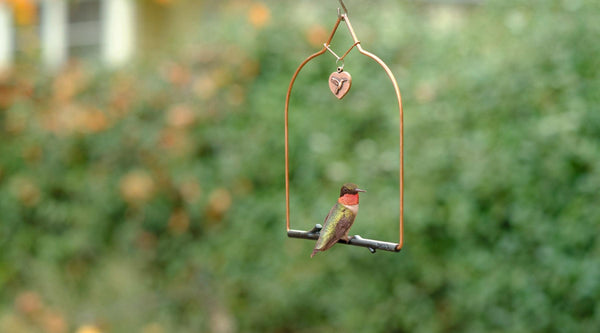
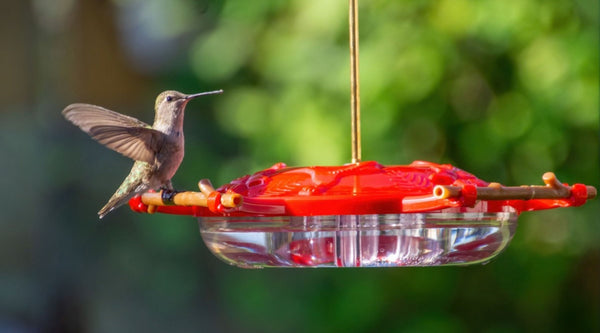
That’s usually a resident claiming both the feeder and a nearby swing as its own guarded territory — Rufous is especially known for this. A second feeder and a second swing, spaced out of sight of each other, gives another bird — the incoming migrant or a displaced resident — its own station to guard instead of fighting over one.
Shop a second swing →Southbound movement actually starts in the last week of July, but the real volume — and Kentucky’s biggest hummingbird event of the year — lands in August: the Woodlands Nature Station Hummingbird Festival at Land Between the Lakes, held annually in early August with live banding demonstrations by the Southeastern Avian Research team.

This is the planting month.
Sow now and native wildflowers get the cold, moist period most varieties need to bloom reliably next spring, from late September into early November.
Shop the Perfect Little Sanctuary® blend →November & December: Winter Watch
By Kentucky convention, any hummingbird seen after November 1 is treated as a possible rarity worth documenting. Most years bring somewhere between one and a dozen or so reported winter hummingbirds statewide, and Rufous Hummingbird accounts for the large majority of them. Genuine oddities do turn up: Black-chinned Hummingbird has been recorded at a McCracken County feeder (December 1998 and again in winter 2015–16), Anna’s Hummingbird in Jefferson County (winter 2021–22), and — most remarkably — Kentucky’s first-ever Allen’s Hummingbird spent October 2023 through mid-January 2024 at a single Pulaski County feeder, banded in the hand to confirm its identity. If you host an unusual hummingbird this time of year, photograph it and report it to the Kentucky Ornithological Society.
Pop’s tip: Kentucky doesn’t reward keeping a feeder up in winter with regular hummingbird traffic the way the Gulf Coast does — but it does occasionally reward patience with a genuine, once-in-a-lifetime rarity. Keep at least one feeder up through the cold months if you like a bit of birding lottery with your coffee. Our winter hummingbird feeder care guide covers heated feeders and the two-feeder swap.
The Year at a Glance
| When | What |
|---|---|
| Late March | First scouts reach far-western Kentucky |
| Mid-April | Reliably common in McCracken County (Paducah); feeders up statewide |
| Mid-May | The wave reaches Fayette County (Lexington), typically last |
| Late May – Late July | Nesting season, statewide |
| Early August | Peak southbound migration; Hummingbird Festival at Woodlands Nature Station |
| Late October | Nearly all breeding Ruby-throateds have left the state |
| November – March | Winter watch — mostly Rufous, occasionally something rarer |
Frequently Asked Questions
When do hummingbirds come back to Kentucky?
Mid-April in the far west, and about a month later in the Bluegrass. McCracken County sees reliable activity by mid-April, Pulaski by late April, Jefferson by early May, and Fayette typically last in mid-May.
When do hummingbirds leave Kentucky?
Southbound movement starts in late July, and most breeding Ruby-throateds have left the state by late October. A handful of winter visitors — mostly Rufous — arrive as the breeders leave.
How long do hummingbirds stay in Kentucky?
Roughly six months for the breeding population, from mid-April arrival in the west through late October departure. The season runs a few weeks shorter in the Bluegrass, where they arrive later.
Why is my Louisville or Lexington feeder quiet in April?
Because the wave hasn’t reached you yet. Ruby-throated becomes reliably common in Jefferson County in early May and Fayette County in mid-May — about three weeks behind Paducah. A quiet feeder in April is normal in the Bluegrass.
Should I keep a feeder up through a Kentucky winter?
It won’t bring regular traffic the way the Gulf Coast does. But most years produce somewhere between one and a dozen reported winter hummingbirds statewide, mostly Rufous — and occasionally something genuinely rare, like the Allen’s that spent October 2023 through mid-January 2024 at a Pulaski County feeder.
Why We Built This Calendar
Pop’s Birding has been helping hummingbird lovers for three generations. One of the questions our customers ask most often is “When do hummingbirds arrive and leave my state?” — we built this calendar to give a direct, sourced answer, not a generic one. Kentucky’s real timing story is genuinely simple compared to most states — one breeding species, one real wave — but “simple” isn’t the same as “uniform”: that wave takes a full month to cross the state, so a single statewide date would be wrong by weeks depending on where you live, and generic advice never accounts for that. We also wanted a calendar honest about Kentucky’s winter: it isn’t a season with regular hummingbird traffic, but it isn’t nothing either, and the difference between “expect this every year” and “documented once” matters for anyone deciding whether to keep a feeder up through the cold months.
How We Built This Calendar
Every arrival, departure, and peak date on this page comes from eBird bar chart data for Kentucky statewide and for five counties — McCracken (Paducah), Pulaski, Jefferson (Louisville), Fayette (Lexington), and Harlan (far southeast, Appalachian) — covering 2016 through 2025, with the seasonal shape and regional pattern read directly off the reporting rates. Only Ruby-throated and Rufous appear in the charts, and that’s deliberate: both show a genuine, recurring pattern across multiple years of data, while Black-chinned, Anna’s, and Allen’s are all real, documented Kentucky records that each reflect a single bird’s stay in a single season rather than a repeating pattern — so we name them directly rather than charting them at a scale that would imply a reliability the data doesn’t support. Percentages describe how often a species appears on submitted checklists, not a population count.
Sources
- eBird bar chart data, Cornell Lab of Ornithology — Kentucky statewide and county-level (McCracken, Pulaski, Jefferson, Fayette, Harlan), 2016–2025. Source for all month-by-month seasonal figures and the west-to-east regional arrival pattern.
- University of Kentucky Cooperative Extension, FOR-97, “Hummingbirds: An Attractive Asset to Your Garden” (Dr. Thomas G. Barnes). Source for statewide feeder timing corroboration.
- Kentucky Ornithological Society / Kentucky Bird Records Committee. Source for the official state species list and rarity records, including the Allen’s Hummingbird first state record.
- American Birding Association regional reports (Tennessee & Kentucky, Fall 2023 and Winter 2023–2024). Source for the Allen’s Hummingbird timeline.
- Petrauski, Owen, Constantz & Anderson (2023), “Changes in Avian Spring Arrival Dates of 115 Species in the Central Appalachians over 127 Years,” American Journal of Climate Change 12(4). Source for the elevation-and-arrival note on Harlan County.
- des Lauriers, J. R. (1994). Hummingbirds eating ashes. The Auk, 111(3), 755–756. Documents five nesting female hummingbirds eating wood ash; no males were seen doing so in that study.
- Adam, M. D., & des Lauriers, J. R. (1998). Observations of hummingbirds ingesting mineral-rich compounds. Journal of Field Ornithology, 69, 257–261. Source for hummingbirds' greatly reduced medullary bone and for the mineral-rich materials they eat.
- Werning, S. (2018). Medullary bone is phylogenetically widespread and its skeletal distribution varies by taxon. Journal of Ornithology, 159, 527–543. Source for medullary bone being confirmed in hummingbirds.
Event dates and formats change from year to year. Check organizer websites before making plans.
Know before they arrive
You don't have to keep this calendar taped to the fridge. Insider Birding Access members get seasonal notes timed to your region — when to have feeders out, what the birds are doing right now, and what's worth doing in your yard this season. We take the guesswork out of the calendar. Joining takes about thirty seconds, and there's 10% off your first order in it.
Join Insider Birding Access →Free to join. 10% off your first order.
Shop Kentucky's Hummingbird Favorites


Bethany Sloan has served as General Manager of Pop's Birding since 2010, continuing the legacy of her grandfather, William "Pops" Sloan, inventor of the Original Hummingbird Swing. A lifelong hummingbird enthusiast, educator, and independent researcher, she leads the company's educational content, including its 50-State Hummingbird Guide series, Regional Guide, Species Guide and Hummingbird Learning Center. Bethany combines scientific research, regional migration data, and more than 16 years of hands-on experience to create trusted educational resources for bird enthusiasts across North America.