Jul 13, 2026
What Hummingbird Products Work Best on a Small Patio or Balcony?
Quick answer: For a small patio or balcony, use a compact feeder (around 8 oz is plenty), hang it from a clamp-on railing bracket or deck-mount pole instead of drilling, keep only a small amount of nectar on hand so nothing sits around spoiling, and add a perch nearby so hummingbirds have somewhere to rest close to the food. If the feeder is near a sliding door or window, keep it within about 3 feet of the glass. Balconies come with two challenges yards don't, wind and limited, often rental-restricted mounting, and both are solved with the right gear rather than more space.
Hummingbirds do visit balconies and patios, including ones well above the ground. University of Illinois Extension notes that hummingbirds often favor open habitat with scattered trees, urban areas included, and that a container of their preferred plants will invite them to a patio or balcony. The setup just looks a little different than a yard. Below is what matters, which products solve it, and where our advice comes from. Some of it rests on wildlife agencies and published research. Some is our own practical experience from years of making feeders and swings, and we say so when that's the case.
The Two Challenges That Are Unique to Small Spaces
Wind. An exposed balcony, especially on an upper floor, often catches more wind than a sheltered spot in a yard. A hanging feeder that swings hard in the wind spills nectar, makes it harder for a hovering bird to feed, and can put hummingbirds off the spot. A compact, lighter feeder handles this better than a large one, and a short stabilizing line or a small weight on the base can keep things steady. That's our practical advice, not an agency rule. We looked and didn't find a wildlife agency or study that addresses wind at feeders directly.
Mounting without damage. Many rental agreements and HOA rules restrict drilling into railings, walls, or ceilings, and a balcony has no ground to push a shepherd's hook into. Clamp-on railing brackets, deck-mount poles, and tension rods solve this without any permanent modification. Check your lease or HOA rules before installing anything, since some buildings restrict what can hang over a railing.
Do Hummingbirds Visit High-Rise and Apartment Balconies?
Yes, and higher up than most people expect. In a short paper in the natural history journal Banisteria, Smithsonian ornithologist Gary Graves reported Ruby-throated Hummingbirds using sugar-water feeders on the balconies of two 16-story apartment buildings in College Park, Maryland. Feeders hung on the 12th through 15th floors, he watched hummingbirds on the 14th and 15th, and the highest feeder was about 43 meters (roughly 140 feet) above the ground. Hummingbirds used the feeders from May through September. It's one site and one species, so it doesn't promise every tower will get traffic, but it shows that height alone doesn't rule a balcony out. What helps an upper-floor feeder most is being easy to spot from outside the building, which is where the plant and placement tips below come in.
Feeder: Go Compact
A smaller feeder, around 8 oz, is the better choice for a small space, not just a compromise. It's lighter, which is easier on wind-exposed mounting hardware. It empties and gets refreshed sooner, which matters because nectar in a sunny spot spoils faster. And it's sized for the traffic a single balcony setup usually gets. The AspenPerch® is built to that size: an 8 oz feeder that comes apart in two pieces for cleaning and refills without fuss in a tight space.
Why a Leak-Proof Feeder Matters More on a Balcony
In a yard, a dripping feeder mostly bothers you. On a balcony, the drips land on your deck, on your railing, and sometimes on the neighbor's balcony below. Sticky spills also draw ants and bees. A feeder that holds its nectar in, and hangs level instead of tilting, keeps a small space clean and keeps the neighbors happy.
Shop the feeder
AspenPerch® Hummingbird Feeder, 8 oz

The AspenPerch® was made for exactly the setup this guide describes. It holds 8 oz, the right size for one balcony feeder, and its leak-proof design means no drips on your deck or the balcony below. The threaded brass hanger has a 1.25" opening that fits a standard railing-bracket hook, and the built-in ant moat helps when ants find their way up a railing. Up close, where balcony feeders usually hang, its Grandview™ perch placement puts the Polyperch® perches above an open bowl, so you watch a hummingbird's face as it drinks instead of its back. It comes apart in two pieces, is top-rack dishwasher safe, and is made in the USA with a lifetime warranty.
Shop AspenPerch® →Mounting: Hooks Built for Railings, Not Trees
Since a balcony rarely offers a tree branch, the mounting hardware matters more here than almost anywhere else. Look for:
- A railing bracket or clamp-on hook that attaches without drilling
- A tension rod for recessed balconies that have a ceiling above them
- A deck-mount shepherd's hook that clamps onto a railing or deck board. Double-arm versions give you two hanging points from one base, so a feeder and a swing can hang side by side without separate hardware for each
- Enough weight capacity for a full feeder. Eight ounces of nectar alone weighs about half a pound, so pick hardware rated comfortably above the feeder plus its nectar
Pop's doesn't make railing brackets or deck mounts, but our hooks are the piece that connects everything to them. A Perfect Little Stainless 'S' Hook hangs from a bracket arm, and its counterbalanced shape keeps a feeder or swing hanging level instead of tilting and dripping. If you have a wooden pergola beam or porch ceiling and you're allowed to drill, Perfect Little Screw Hooks thread into any wooden surface. One thing not to use for a feeder: our suction hooks. They're rated for up to ½ pound and made for light window décor, not a full feeder.
How to Hang a Hummingbird Feeder on a Balcony Railing
Here's the routine we use on a railing setup. These are practical steps from our own experience, not agency guidance.
- Pick the corner, not the middle. A spot where the railing meets a wall often has less wind and some afternoon shade from the building.
- Clamp the bracket so the arm extends outward. That gives hummingbirds an open flight path in and out and keeps drips off your deck. Check where drips would land if you have neighbors below.
- Hang the feeder from an 'S' hook on the bracket arm so it hangs level.
- Check the height from the balcony floor. On a ground-floor patio, University of Illinois Extension suggests hanging feeders at least 4 feet up to keep them away from cats and snakes. On any floor, you want it low enough to reach for cleaning without a step stool.
- Make sure you can reach it. If you can't lift the feeder off without leaning over the railing, move the bracket. A feeder that's awkward to take down is a feeder that doesn't get cleaned.
- Give it a windy-day test. If it swings hard, add a short tether from the base to the railing or move it closer to the wall.
A railing can also work against you on a ground-floor patio: it's an easy launch point for a cat. We learned how quickly cats find those spots in our own yard, and we share what worked in Cats and Hummingbirds: What We've Learned Keeping Both Safe in Our Own Yard.
Balcony Feeder Stands and Deck-Mount Poles
If your railing is too thick for a clamp, or you'd rather not hang anything over it, a freestanding option works too. A deck-mount pole clamps to the railing or deck and rises above it, which puts the feeder at a comfortable height and in the open. A weighted freestanding stand, the kind with a heavy base, can work on a patio with a solid floor. On an upper-floor balcony, make sure it's heavy enough that wind can't tip it. Either way, choose one that lets you hang a perch beside the feeder, since that's what hummingbirds use between visits. This is our practical advice; we didn't find agency guidance on stand types.
Nectar: Skip the Big Batches
A small feeder doesn't need a gallon of nectar sitting in your fridge. The Georgia Department of Natural Resources puts it simply: if the hummingbirds visiting your feeder don't finish the food in it each day, reduce the amount you offer. That's especially true early on, while a new balcony feeder is still being discovered. This is where format matters:
- Nectarade® Ready to Use (8.5 oz) is the simplest option for a single small feeder. There's no mixing and no measuring. Just pour and go. Ideal if your balcony setup is one feeder and you don't want the extra step.
- Nectarlyte® Powder (8 oz) is a good fit if you'd rather mix small batches yourself. One bag makes about 34 oz of nectar, a little over a quart, and you mix only what the feeder holds.
Either keeps you from over-preparing nectar that sits too long before a single small feeder can use it up. If you're weighing the two, Liquid Nectar vs. Powder Concentrate compares them side by side.
How Much Nectar Does a Balcony Feeder Need?
Less than most people make. If you mix your own, an 8 oz feeder takes 1 cup of water and ¼ cup of sugar at the standard 1:4 ratio. Our nectar ratio guide scales that to any feeder size. While traffic is light, fill the feeder only partway, and top it up as visits pick up. Any extra homemade nectar can go in the fridge in a sealed container for no more than one week, according to Smithsonian's National Zoo & Conservation Biology Institute.

One bag of Nectarade® Ready to Use holds 8.5 oz, enough to fill an 8 oz balcony feeder with almost nothing left over to store. There's no sugar to measure on a small kitchen counter and no half-used jug waiting in the fridge. Made with pure cane sugar, with added electrolytes and calcium, and no dyes.
Shop Nectarade® Ready to Use →How often you change it depends on the weather, and a sunny balcony can run hotter than you'd think. How Long Does Hummingbird Nectar Last? has the full schedule by temperature.
Not sure when to change it? Our Nectar Change Calculator works out a schedule from your own temperatures, so a hot west-facing balcony and a shaded patio each get the right answer.
Add a Small Perch Nearby
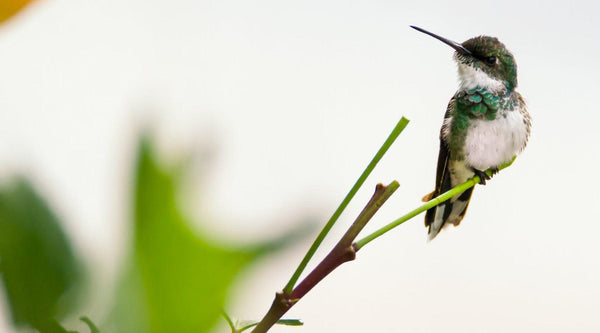
Hummingbirds spend a large share of the day perched rather than flying, and that matters on a balcony as much as in a yard, arguably more, since a small space has few natural resting spots like branches or shrubs. Clemson Cooperative Extension notes that hummingbirds guard their feeders and like to perch nearby to watch for intruders, and Purdue Extension recommends placing feeders near perching areas so the birds don't have to travel far between feeding and resting. On a balcony, you supply that perch. A compact perch about a foot from the feeder, at the same height, gives a hummingbird somewhere to rest and keep watch. That spacing is our own recommendation, and Where to Hang a Hummingbird Swing covers it in detail.
We want to be precise about what the research does and doesn't show. It's well established that hummingbirds rest and guard from perches near their food. We haven't found research showing that a perch by itself brings more visits or longer ones. Do Hummingbirds Really Prefer to Perch? walks through the studies behind the numbers.
Shop the swing
Original Hummingbird Swing™, Onyx

A balcony has no branches, so the Original Hummingbird Swing™ brings the perch to the railing. It hangs from the second arm of a deck mount or its own bracket, a foot or so from the feeder, and it comes with an 'S' hook for hanging, so it's ready for the railing right out of the box. The perch is our patented Polyperch®, shaped to mimic the natural perches hummingbirds seek out, and the Onyx finish is a deep matte black that makes a hummingbird's colors pop against a city backdrop. Made in the USA with a lifetime guarantee.
Shop the Original Swing →Wondering whether a swing is worth it compared with any other perch? We lay out the evidence honestly in Do Hummingbird Swings Really Work? What the Research Actually Shows.
Placement Basics That Still Apply
The core placement rules from a full-yard setup still hold on a balcony, just adapted:
- Height: At least 4 feet above the floor on a ground-level patio, where cats and snakes can reach, and low enough on any floor that you can reach it to clean. Our sweet spot is 4–6 feet, which is our own practical range rather than an agency number.
- Sun and shade: Nectar doesn't spoil as quickly in the shade as it does in the sun, as Georgia's Department of Natural Resources points out. On a balcony that faces west or south, the afternoon sun can be intense, so a corner shaded by the building is a good choice. An east-facing balcony, which gets its sun in the cooler morning hours, tends to be easier on nectar. That compass advice is our own reasoning, not a published rule.
- Window and door distance: Keep the feeder within about 3 feet of the glass, and treat the glass too (more below).
- Visibility: An open flight path in and out of the feeder, and a few flowering plants in pots nearby, help passing hummingbirds notice a new balcony setup.
For the full reasoning behind each of these, see our complete placement guide.
How to Attract Hummingbirds to Your Balcony with Container Plants
Flowers don't need a garden bed. University of Wisconsin–Madison Extension notes that hummingbirds readily visit flowers in containers, and University of Illinois Extension says a container of their preferred plants will invite them to a patio or balcony. Illinois Extension's list of preferred annuals includes canna, red hot poker, cigar plant, cardinal climber, and tall red zinnias, and it points out that growing vines vertically makes the most of a small space. A cardinal climber trained up a trellis beside the railing, or a pot of cigar plant under the feeder, adds color a passing hummingbird can see from a distance. Check your local nursery for what does well in your region and in the amount of sun your balcony gets.
Keep Balcony Feeders Close to Sliding Doors and Windows
Most balconies sit right outside a sliding glass door, so window safety comes up fast. The U.S. Fish and Wildlife Service recommends placing bird feeders 3 feet or less from windows, "the closer, the better." The reasoning is that a bird leaving a feeder that close hasn't built up much speed if it does hit the glass. The same guide says patterns on glass need to be spaced as tightly as 2 inches by 2 inches to protect hummingbirds, since they're so small. On a narrow balcony, the 3-foot rule is often easy to meet. Treating the glass is what actually prevents strikes, and Why Hummingbirds Are Especially Vulnerable to Window Strikes covers which treatments hold up.
Ants and Bees on a Balcony Feeder
In our experience, height doesn't keep insects away. Ants follow railings and walls up from the ground, and bees and wasps find sweet spots on any floor. Purdue Extension recommends water-filled ant guards if ants become a problem, and Missouri's Department of Conservation suggests feeders with bee or wasp guards that keep insects from reaching the nectar. For step-by-step fixes, see How to Keep Ants Out of a Hummingbird Feeder and How to Keep Bees Away From a Hummingbird Feeder.

On a balcony, a wasp at the feeder is a wasp a few feet from your door. Hummguard® Nectar Tips slide onto the feeding ports of the AspenPerch®, and each tip's flexible center opens for a hummingbird's bill and closes tight when it pulls away, leaving bees and wasps no way in. A ring of 12 tips, made for the AspenPerch® feeder.
Shop Hummguard® Tips →Patience Matters More Here
A new balcony feeder, especially one on an upper floor, can take a while to be discovered. None of the wildlife agencies we checked puts a number on it. The South Carolina Department of Natural Resources says only that it may take a while for hummingbirds to find a feeder and settle into a routine, and Missouri's Missouri Conservationist magazine notes that if hummingbirds are in your area they'll use it, though you may have to give them time to find it. Keep the nectar fresh in the meantime and resist the urge to move everything around. Consistency helps. Timing matters too: a feeder that's up before hummingbirds arrive in your area in spring is ready when they come through, and When to Put Up (and Take Down) Your Hummingbird Feeder covers when that is.
Still no visitors after a few weeks? Hummingbirds Not Using Your New Feeder? Here's Why walks through the usual reasons, from nectar that's past its freshness window to a feeder that's hard to see.
Quick Reference: What to Choose
| Need | Best Fit |
|---|---|
| Compact, lightweight feeder | AspenPerch® (8 oz) |
| No-drill mounting | Clamp-on railing bracket, deck-mount pole, or tension rod |
| Hanging feeder + swing together | Double-arm deck-mount shepherd's hook |
| Level hanging from a bracket arm | Perfect Little Stainless 'S' Hooks |
| No-mixing nectar for one feeder | Nectarade® Ready to Use (8.5 oz) |
| Small-batch mixing option | Nectarlyte® Powder (8 oz) |
| Keeping bees and wasps out | Hummguard® Nectar Tips (for AspenPerch®) |
| Compact resting perch | Original Hummingbird Swing™ |
| Color that helps them find you | Container flowers such as canna, cigar plant, or red zinnias |
Key Takeaways
- Balconies face two challenges yards don't: wind exposure and restricted, often no-drill mounting.
- Hummingbirds do use balcony feeders, including ones on the 14th and 15th floors of an apartment building in a published observation from Maryland.
- A compact 8 oz feeder is a better fit for small spaces, not just a smaller compromise, and a leak-proof one keeps drips off your deck and your neighbor's.
- Clamp-on railing brackets, deck-mount poles, and tension rods solve the no-drilling problem most rental balconies present.
- Keep only as much nectar as the birds will use. Refrigerate extra homemade nectar for no more than a week.
- A compact perch about a foot from the feeder matters in small spaces, since balconies lack natural resting spots.
- Keep the feeder within about 3 feet of a sliding door or window, and treat the glass.
- Container flowers help hummingbirds notice a new balcony setup, and patience covers the rest.
Frequently Asked Questions
Can hummingbirds actually find a feeder on an apartment balcony?
Yes, including on upper floors. A published observation from Maryland documented Ruby-throated Hummingbirds using balcony feeders on the 14th and 15th floors of an apartment building, about 140 feet up. It can take a while for them to find a new feeder, and wildlife agencies don't give a specific timeframe, so keep the nectar fresh and be patient.
What size feeder is best for a small balcony?
A compact feeder, around 8 oz, is ideal. It's lighter for wind-exposed mounting, it empties and gets refreshed sooner, and it's sized for typical balcony hummingbird traffic.
How do I hang a feeder on a balcony without drilling?
Clamp-on railing brackets, deck-mount poles, and tension rods (for recessed balconies with a ceiling above) all work without permanent damage. Hang the feeder from an 'S' hook on the bracket arm so it hangs level, and check your lease or HOA rules for any restrictions first.
Does wind affect hummingbird feeders on balconies?
It can, especially on exposed upper floors. A lighter, compact feeder handles wind better, and a short tether or small weight on the base can reduce swinging. That's our practical advice; we didn't find agency research on wind at feeders.
Do I need a perch in addition to a feeder on a small balcony?
It helps. Hummingbirds spend a large share of the day perched and like to rest and guard their food from nearby perches, and a balcony usually lacks the branches or shrubs that provide this in a yard. A perch or swing about a foot from the feeder gives them that spot.
How close to a sliding glass door should a balcony feeder be?
Within about 3 feet of the glass. The U.S. Fish and Wildlife Service recommends placing feeders 3 feet or less from windows, the closer the better, and treating the glass with markings spaced as tightly as 2 inches apart to protect hummingbirds.
What flowers attract hummingbirds to a balcony?
Hummingbirds readily visit flowers in containers. University of Illinois Extension lists canna, red hot poker, cigar plant, cardinal climber, and tall red zinnias among their preferred annuals, and a vine like cardinal climber can grow up a trellis to save space.
Can I use a suction-cup hook to hang a hummingbird feeder?
Only if it's rated for the full weight of the feeder plus its nectar, and 8 oz of nectar alone weighs about half a pound. Pop's own suction hooks are rated for up to ½ pound and made for light window décor, so we don't recommend them for a filled feeder.
How much nectar should I put in a balcony feeder?
Only as much as the birds will drink. If they don't finish the feeder each day, reduce the amount you offer. An 8 oz feeder takes 1 cup of water and ¼ cup of sugar at the standard 1:4 ratio, and extra homemade nectar keeps in the fridge in a sealed container for no more than a week.
Will a balcony feeder attract bees and ants?
It can, on any floor. Water-filled ant guards stop ants, and bee or wasp guards keep insects from reaching the nectar. On the AspenPerch®, that's the built-in ant moat plus Hummguard® Nectar Tips on the feeding ports.
Can I put a hummingbird feeder stand on a balcony?
Yes. A deck-mount pole clamps to the railing or deck and raises the feeder into the open, and a weighted freestanding stand can work on a patio with a solid floor. On an upper-floor balcony, make sure a freestanding stand is heavy enough that wind can't tip it.
Summary
A small patio or balcony isn't a limitation for attracting hummingbirds. It just calls for different gear than a full yard. A compact, leak-proof feeder, a no-drill railing mount, a small amount of fresh nectar, and a nearby perch address the two real challenges balconies present: wind and restricted mounting. Add a few container flowers, keep the feeder close to the glass, and give the birds time to find it. Hummingbirds have been documented using feeders 14 and 15 floors up, so a balcony setup done right has a real shot.
Ready to build your setup? Shop the AspenPerch® Hummingbird Feeder, Nectarade® Ready to Use, and the Original Hummingbird Swing™, or get all three together in the Sanctuary Bundle, which lets you pick your swing and nectar.
Shop the Balcony Setup
Everything this guide recommends for a small-space feeding station: a compact, leak-proof feeder, nectar sized for one fill, a perch for the railing, and tips that keep wasps away from your door.


Pete Stankovich is the Director of Business Development for Pop's Birding, where he has helped grow the company's mission of connecting people with hummingbirds and the natural world since 2020. A lifelong outdoorsman, outdoor educator, and conservation advocate, Pete brings decades of field experience to his work. For 12 years, he served as a Boy Scout leader and merit badge instructor, teaching Bird Study, Nature, Fish and Wildlife Management, and other outdoor-focused programs. He also spent 5 years on a search and rescue team, developing expertise in outdoor safety, wilderness awareness, and Leave No Trace principles. Pete holds a B.A. in Business Communication from Chapman University and a Strategic Marketing Management certification from the University of Chicago Booth School of Business.