Mar 31, 2022
Where to Hang a Hummingbird Swing: Placement Guide
Quick answer: Hang a hummingbird swing about 1 foot from your feeder, at eye level or wherever your feeder is already positioned, in a visible but not overly enclosed spot. Avoid hanging it deep inside a dense, heavily-branched tree — hummingbirds may not notice it, and dense cover can hide predators. Follow the same window-safety rule as feeders: within about 3 feet of a window, or more than 10 feet away, to reduce collision risk.
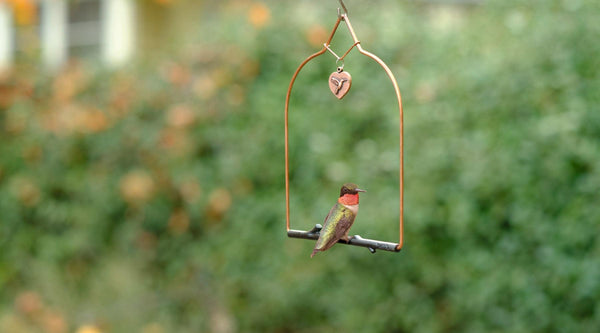
A hummingbird swing (really just a dedicated hanging perch) only works if it's placed where hummingbirds will actually notice and use it - near a food source. Here's what matters.
Why Placement Matters
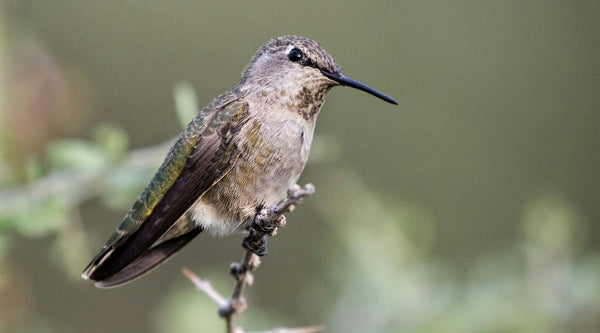
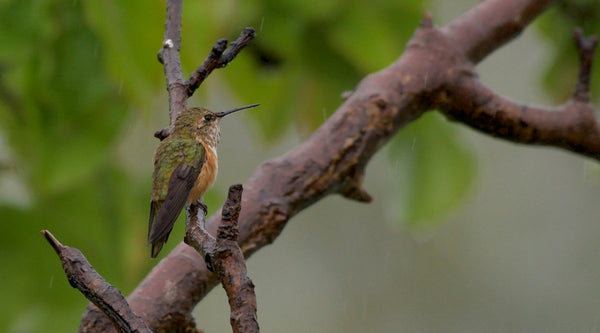
Hummingbirds spend a real share of their day perched rather than in flight — research puts it anywhere from 20% to 70% of daylight hours, depending on how much food is nearby, since perching lets them conserve energy, digest, preen, and watch for danger. The National Audubon Society makes the same point about feeder yards generally: hummingbirds need safe, comfortable places to rest and survey their territory, not just food. Pop's Birding built the original Hummingbird Swing® around that exact finding — a dedicated, comfortable perch positioned right where hummingbirds are already feeding. Placement is what makes that work; get it wrong, and even the most comfortable perch in the world goes unused.

Distance From the Feeder: About 1 Foot
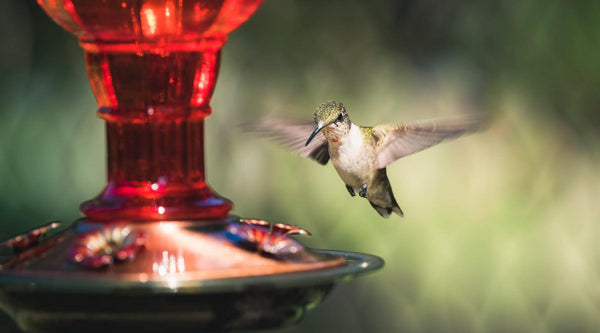
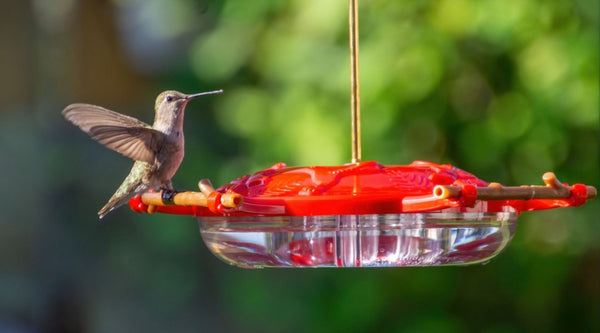
Hummingbirds use nearby perches to rest between sips and to keep watch over a feeding territory, so the perch needs to be close enough to feel connected to the food source — roughly a foot away is the commonly recommended distance. Too far, and hummingbirds may not associate the perch with the feeder at all.
Height: Match Your Feeder
There's no special height requirement beyond what already applies to your feeder — generally 4 to 6 feet, at a height that's easy for you to see and enjoy. Keeping the swing at a similar height to the feeder keeps the whole setup feeling like one connected feeding station rather than two disconnected objects.

Sun or Shade? A Little of Both
Hummingbirds will use a swing in full sun or full shade, but a spot with a few hours of morning sun and afternoon shade tends to see the most consistent use — the same balance that works well for feeder placement generally. If your yard naturally has a sunnier spot and a shadier one near the feeding area, hanging a second swing in the other kind of light gives hummingbirds a choice of where to rest, and gives you more chances to watch them no matter the time of day.

Avoid Burying It in Dense Branches
It might seem natural to hang a perch deep inside a leafy tree, but that can actually work against you. A swing placed among a lot of competing branches is easy for hummingbirds to overlook — and dense cover close to a feeding area can also give predators a place to hide. Praying mantises in particular are documented, if uncommon, hummingbird predators: they sit motionless on a branch or feeder waiting for something to come close, and large mantises are capable of catching a hummingbird. A clearer, more open spot near the feeder — but with some general cover nearby for retreat — tends to work better, and it's worth a quick visual check for mantises if you keep dense plantings near your feeding area.
Window Safety Applies Here Too
The same window-collision guidance for feeders applies to swings: hang it either close to a window (within about 3 feet, so birds can't build up dangerous speed) or well beyond one (more than 10 feet), avoiding the in-between distances where a bird could gain enough speed to be seriously hurt in a collision.
If Hummingbirds Aren't Using It Right Away
Give it time — the same way a new feeder can take days to be discovered, a new perch may take a little while too. If it's been a couple of weeks with no use, try moving it slightly closer to the feeder or to a more open, visible spot nearby.
A clever trick if they still haven't noticed: Swap the positions of the feeder and the swing. Hummingbirds have strong location memory and will return to the exact spot where the feeder used to be — since the swing is now there instead, they'll notice it directly rather than continuing to overlook it. Once they've found it, you can move things back to your preferred layout if needed or keep as is.
Timing helps too: putting a swing out early in the season, before hummingbirds have settled into a fixed routine around your feeder, tends to get it noticed faster than adding one mid-season once regulars already have an established pattern. Late-season additions still work — it may just take a bit longer.

Key Takeaways
- Hang a swing about 1 foot from your feeder so hummingbirds associate it with the food source.
- Match the height of your feeder, generally 4–6 feet, for a connected feeding station.
- A few hours of morning sun with afternoon shade tends to get the most consistent use.
- Avoid dense, heavily-branched spots — they're easy to overlook and can hide predators, including the occasional praying mantis.
- Apply the same window-distance safety rule as feeders: within 3 feet or beyond 10 feet.
- Early-season placement tends to get noticed faster, though it's never too late to add one.
- Give a new perch time to be discovered, and adjust placement if it goes unused after a couple of weeks.
Frequently Asked Questions
How close should a hummingbird swing be to the feeder?
About 1 foot away is the commonly recommended distance, close enough that hummingbirds associate the perch with the nearby food source.
What height should I hang a hummingbird swing?
Match the height of your feeder, typically 4 to 6 feet, so the perch and feeder function as one connected feeding station.
Should I hang a swing in sun or shade?
Either works, but a spot with morning sun and afternoon shade tends to get the most consistent use. If you have both types of spots near your feeder, a second swing in the other light lets hummingbirds choose.
Should I hang a swing inside a tree for cover?
Not directly inside dense branches. A more open, visible spot near the feeder works better — dense cover close by can hide predators, including the occasional praying mantis, and make the perch harder for hummingbirds to notice.
Can a hummingbird swing cause window strikes?
The same safety rule for feeders applies: hang it within about 3 feet of a window, or more than 10 feet away, to reduce the risk of birds building up dangerous speed before a potential collision.
What if hummingbirds aren't using the swing?
Give it a couple of weeks, since discovery can take time. If it's still unused, try moving it slightly closer to the feeder, or temporarily swap the positions of the feeder and swing — hummingbirds will return to where the feeder used to be and notice the swing there instead.
When's the best time of year to put out a hummingbird swing?
Early in the season, before hummingbirds settle into a fixed routine around your feeder. A swing added later in the season still works — regulars may just take a bit longer to notice it.
Do I really need a swing if my feeder already has branches nearby?
Not strictly — hummingbirds will use a nearby twig or branch as a perch on their own. A dedicated swing gives them a smoother, more consistent perch than a random branch, and lets you position it exactly where you want the best view.
Do hummingbird swings actually work?
Yes — see the full research breakdown in Do Hummingbird Swings Really Work? What the Research Actually Shows.
Summary
Placement for a hummingbird swing follows largely the same logic as feeder placement: keep it close to the food source (about a foot away), match your feeder's height, favor a spot with some morning sun and afternoon shade, avoid burying it in dense cover, and apply the same window-distance safety rule. Get those basics right, and the perch does what the research actually supports — giving hummingbirds a comfortable, natural-feeling place to rest right where they're already feeding.
Ready to add one to your setup? Shop the Original Hummingbird Swing®.

Pete Stankovich is the Director of Business Development for Pop's Birding, where he has helped grow the company's mission of connecting people with hummingbirds and the natural world since 2020. A lifelong outdoorsman, outdoor educator, and conservation advocate, Pete brings decades of field experience to his work. For 12 years, he served as a Boy Scout leader and merit badge instructor, teaching Bird Study, Nature, Fish and Wildlife Management, and other outdoor-focused programs. He also spent 5 years on a search and rescue team, developing expertise in outdoor safety, wilderness awareness, and Leave No Trace principles. Pete holds a B.A. in Business Communication from Chapman University and a Strategic Marketing Management certification from the University of Chicago Booth School of Business.