Jul 12, 2026
Where to Hang a Hummingbird Feeder: The Complete Placement Guide
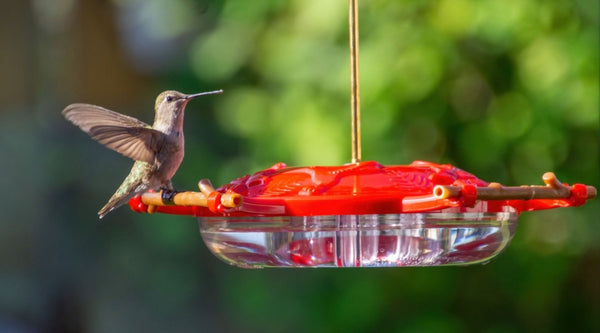
Quick answer: Hang your hummingbird feeder 4–6 feet above the ground, in a spot with morning sun and afternoon shade, within 10–15 feet of a tree or shrub for cover (but not buried inside dense foliage), and if it's near a window, keep it within about 3 feet — there's no reliably safe "far" distance, so treating the window itself matters more than chasing a number. Just as important as any of that: give hummingbirds a comfortable place to perch near the feeder — they spend the vast majority of their time resting, not flying, and a nearby perch encourages longer, more frequent visits.
You could have the best hummingbird feeder on the market, but if it's hanging in the wrong spot, you'll be staring at an empty perch all summer. Placement affects everything: how quickly hummingbirds find your feeder, how safe they feel visiting it, how long your nectar stays fresh, and how good a view you actually get. Here's what matters, and why.
Height: 4–6 Feet Is the Sweet Spot
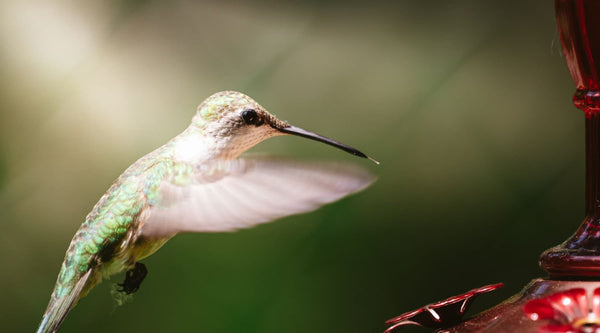
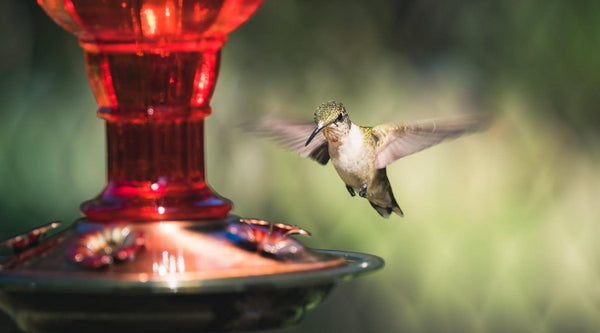
Most experts recommend hanging a feeder about 4 to 6 feet off the ground. Go much lower, and ground predators like cats can leap up and catch a feeding hummingbird off guard. Go much higher, and you'll make refilling and cleaning a hassle — which, in practice, means you'll do it less often than you should. This height range also keeps the feeder low enough to feel natural to a bird used to feeding at flower height, not treetop height. Height alone isn't the whole story, though — what's near the feeder matters just as much, since a cat can use a nearby tree branch, table, or railing to close the gap. We learned that one firsthand; see our guide to cats and hummingbirds for the full picture — photo evidence included.

Sun and Shade: Morning Sun, Afternoon Shade
Direct, all-day sun heats nectar and speeds up fermentation, meaning more frequent cleaning and a higher risk of mold. The ideal spot gets some morning sun (which helps hummingbirds warm up and get moving) but shifts into shade during the hottest part of the afternoon. Look for a spot under a tree canopy, along an east-facing wall, or beneath a porch overhang or awning.

Distance from Cover: 10–15 Feet, Not Buried in It
Hummingbirds want a nearby retreat — a tree, shrub, or other perch — where they can rest, watch for predators, and escape quickly if needed. Aim for roughly 10 to 15 feet from a tree or shrub. But don't tuck the feeder directly into dense foliage: hummingbirds need a clear, open flight path to approach and depart, and thick cover close to the feeder can hide predators rather than protect against them — everything from cats to praying mantises hunts from concealment, so removing the hiding spot removes the ambush. For more on that second one specifically — including why it happens and how to spot it — see our guide to praying mantises and hummingbirds.

Distance from Windows: If a Feeder Sits Near Glass, Keep It Close
Window strikes are a real risk once you're successfully attracting more hummingbirds to your yard — glass is one of the biggest threats they face. The best fix isn't about feeder distance at all: treating the window itself, so a hummingbird can actually see it's there, is what prevents strikes in the first place. Our complete guide to hummingbird window strikes covers exactly how to do that.
If a feeder is already near a window, or moving it isn't an option, keep it within about 3 feet of the glass rather than a middle distance. A bird that close hasn't had room to build up dangerous flight speed, so a strike is far less likely to be serious. Skip the popular advice that placing a feeder farther away — 10, 20, even 30 feet — makes it safe. That's not something current research actually supports, and a feeder at that middle distance can put a bird in more danger, not less, since it's far enough to build real speed but not far enough to register the window as a solid surface.

Visibility: Give Them a Clear Line of Sight
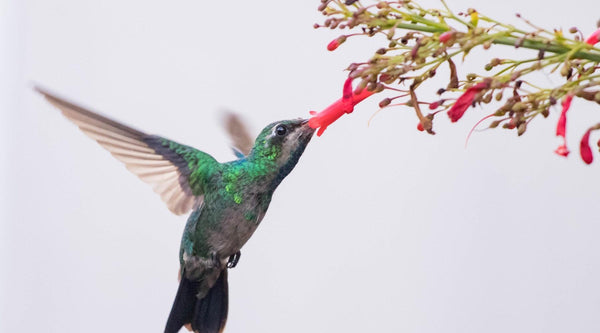
Hummingbirds find feeders by sight, not smell, and they can spot bright colors from surprisingly far away — but only along a clear flight path. A feeder hidden behind a wall, tucked into deep shade, or blocked by branches is functionally invisible to a passing hummingbird, no matter how good the feeder itself is.
Multiple Feeders: Reduce the Territorial Drama
Hummingbirds are famously territorial, and a single dominant bird will often guard one feeder against all comers. If you're not seeing much traffic despite good placement, try adding a second feeder 20+ feet away and out of sight of the first. This often increases total hummingbird visits within days, since it gives less dominant birds somewhere to feed in peace.
Add a Perch Nearby: What the Research Says
Here's what a lot of placement advice leaves out entirely: hummingbirds spend the vast majority of their time perching, not flying — research puts it anywhere from 20% to as high as 70–80% of daylight hours, depending on how abundant nearby food is. Perching lets them conserve energy, digest rapidly, preen, and keep watch for competitors and predators. It's core behavior, not downtime. We go deeper into the actual research behind this in Do Hummingbirds Prefer to Perch? What the Research Shows, if you want the full picture.
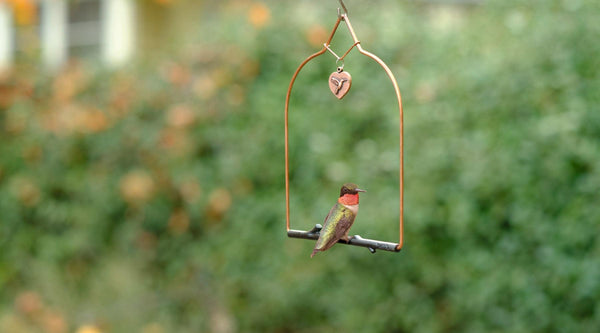
What that means at the feeder level: birds tend to perch more readily when there's a comfortable surface nearby — a swing, a branch, or a small bar — rather than relying solely on hovering or a feeder's built-in perch ring. Worth being precise here, since it's easy to overstate: research (including direct comments from a National Audubon Society avian biologist) indicates it's the presence of a comfortable perch that matters, not anything special about a perch that swings versus one that stays still. We break this down more fully in Do Hummingbird Swings Really Work? if you're curious about that distinction.

Placement basics for a nearby swing or perch:
- Hang it roughly 1 foot from the feeder — close enough that hummingbirds associate it with the food source
- Match it to the same height as your feeder so the two function as one connected feeding station
- Avoid burying it in dense branches — an open, visible spot works better, for the same reasons outlined above for feeders
- If it's near a window, apply the same approach as the feeder — keep it within about 3 feet, since there's no verified "far" distance that's actually safer
Full details are in our swing placement guide. That's precisely the idea behind Pop's original Hummingbird Swing®: placed within a foot or so of a feeder, it gives hummingbirds a dedicated resting and territorial-watch spot, which tends to encourage them to stick around rather than feed and immediately dart off. If you're setting up a new feeder station, pairing it with a nearby swing is one of the simplest placement upgrades you can make.
Quick Placement Checklist
| Factor | Recommendation |
|---|---|
| Height | 4–6 feet above ground |
| Sun/Shade | Morning sun, afternoon shade |
| Distance from cover | 10–15 feet from a tree/shrub, not buried in foliage |
| Distance from windows | Within 3 feet if near glass — no verified "safe" far distance exists |
| Visibility | Clear, unobstructed flight path |
| Multiple feeders | Space 20+ feet apart, out of sight of each other |
| Nearby perch | A swing or perch within a foot of the feeder encourages longer visits |
Key Takeaways
- Hang feeders 4–6 feet high — safe from ground predators, easy for you to maintain.
- Morning sun and afternoon shade keeps nectar fresher longer and reduces cleaning frequency.
- Stay 10–15 feet from cover for safety, but don't hide the feeder inside dense foliage — that's true whether the concern is a cat or a praying mantis.
- If a feeder sits near a window, keep it within 3 feet rather than a middle distance — there's no verified "safe" far distance, so treating the window itself matters most.
- Multiple, well-spaced feeders reduce territorial guarding and can increase total visits.
- A nearby perch or swing gives hummingbirds a place to rest close to the feeder, encouraging longer and more frequent visits.
Frequently Asked Questions
How high should I hang a hummingbird feeder?
Most experts recommend 4 to 6 feet above the ground — high enough to deter ground predators like cats, but low enough for easy refilling and cleaning.
Should a hummingbird feeder be in sun or shade?
Partial shade is ideal, especially morning sun with afternoon shade. Full, all-day sun heats nectar and speeds spoilage.
How close can a hummingbird feeder be to a window?
Ideally, treat the window itself so hummingbirds can actually see it's there — that's what prevents strikes in the first place. If a feeder is already near a window, keep it within about 3 feet rather than a middle distance; a bird that close can't build up dangerous speed before a potential collision. Skip the idea that a specific "far" distance is automatically safe, though — research doesn't support that, and a feeder farther out can land in a more dangerous range, not a safer one. See our complete guide to hummingbird window strikes for the full picture.
Do hummingbirds need a perch near their feeder?
While hummingbirds can feed while hovering, they spend the large majority of their time perching to rest, digest, and watch for predators. A nearby perch or swing gives them somewhere comfortable to do that close to the feeder, which tends to encourage longer, more frequent visits.
How many hummingbird feeders should I have?
If one dominant hummingbird is guarding your feeder, adding a second feeder at least 20 feet away and out of sight of the first can reduce territorial conflict and increase total visits.
Will hummingbirds find a new feeder?
Yes, though it can take anywhere from a few days to a couple of weeks. Clear visibility, bright color, and a nearby food or perch reference point all help hummingbirds discover a new feeder faster.
Summary
Feeder placement often matters more than the feeder itself. Aim for 4–6 feet high, morning sun with afternoon shade, roughly 10–15 feet from cover without being hidden in it, and a window distance that stays close rather than chasing a "safe" far number that doesn't hold up. Just as important — and often overlooked — is giving hummingbirds a comfortable place to perch and rest near the feeder, since they spend the majority of their time doing exactly that. Pairing a feeder with a nearby swing is a simple way to make your setup more inviting.
Ready to set up your station? Shop the AspenPerch® Hummingbird Feeder and pair it with an Original Hummingbird Swing® for the ideal resting spot nearby.

Bethany Sloan has served as General Manager of Pop's Birding since 2010, continuing the legacy of her grandfather, William "Pops" Sloan, inventor of the Original Hummingbird Swing. A lifelong hummingbird enthusiast, educator, and independent researcher, she leads the company's educational content, including its 50-State Hummingbird Guide series, Regional Guide, Species Guide and Hummingbird Learning Center. Bethany combines scientific research, regional migration data, and more than 16 years of hands-on experience to create trusted educational resources for bird enthusiasts across North America.