Jul 12, 2026
Do Hummingbirds Really Prefer to Perch? What the Research Shows
Quick answer: Yes. Hummingbirds perch far more than most people realize. Classic field studies found they spend about three-quarters of their waking hours perched and only about a fifth feeding. Newer research shows that share isn't fixed: when flowers are scarce and scattered, it can drop to around 20% as birds spend the day searching for food. The pattern underneath is simple. The richer and closer their food, the more they sit. Perching lets them digest, preen, guard their food, and save energy, and at night it's where they go into torpor. What the research doesn't show is that a perch next to a feeder brings in more hummingbirds on its own. Giving them a comfortable place to sit beside a reliable food source is Pop's reasoning behind the Original Hummingbird Swing™, and we'll show you exactly where the science ends and our reasoning begins.

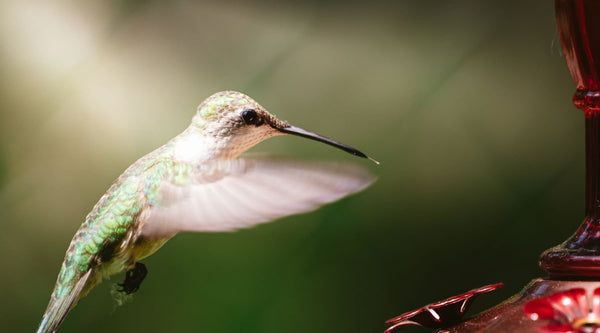
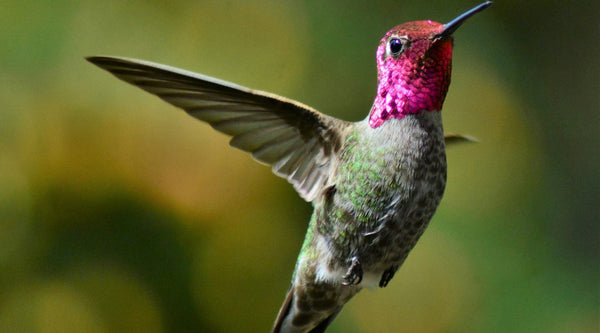
Ask most people to picture a hummingbird, and they'll picture motion: a blur of wings, hovering in front of a flower. It's an accurate image, but an incomplete one. Hummingbirds spend much of their lives sitting still, and understanding why matters both for the birds and for anyone trying to attract more of them to a backyard feeder. If you're new to these birds, All About Hummingbirds: An Introductory Guide is a good place to start.
The Energy Math Behind Perching
Hummingbirds run hot. A review in Experientia describes hummingbird flight as sustaining the highest mass-specific metabolic rates of any vertebrate, meaning more energy burned per gram of body weight than any other animal with a backbone. Hovering is the most expensive thing they do. Research comparing hummingbirds with Australian honeyeaters, published in Animal Behaviour, weighed hovering's big advantage, speed between flowers, against its higher energy cost compared with perching. No bird that small can afford to hover all day. Perching isn't a break from being a hummingbird. It's how they balance the books.
Do Hummingbirds Ever Land?
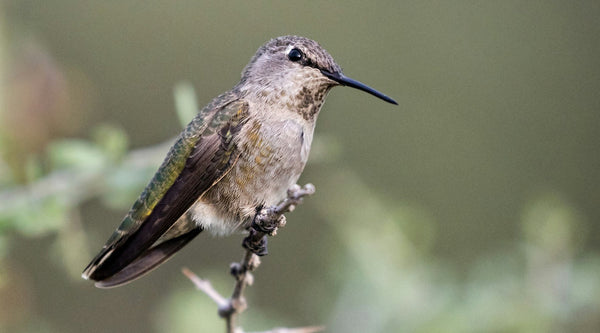
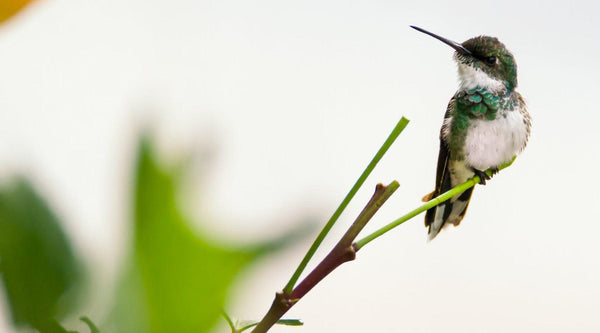
All the time. Researchers have puzzled over this for decades. A 1986 paper in Nature summed up the earlier field observations this way: despite their huge energy needs, hummingbirds spend only about 20% of their waking hours feeding and about 75% perched, apparently doing nothing. The paper's explanation for all that sitting is digestion, which we cover below. So when you see a hummingbird parked on a twig for minutes at a time, you aren't seeing something unusual. You're seeing what they do most of the day.
Can Hummingbirds Walk or Land on the Ground?
Not really. They land on perches, not on the ground. The National Park Service notes that the Ruby-throated Hummingbird's legs are so short it can't walk or hop, and the best it can manage is a shuffle along a perch. That's the trade a hummingbird makes for being a superb flier: tiny, light feet that grip a thin twig well and do little else. It's also why the shape of a perch matters, which we come back to later.

What Field Research Actually Found
The most detailed modern look at how hummingbirds budget their day comes from Anusha Shankar and colleagues, who studied wild Broad-billed Hummingbirds at two sites in southern Arizona and published their results in Functional Ecology in 2019. They measured how much energy each bird burned over 24 hours, measured the cost of each activity, and then worked out how the birds must have split their time between perching, flying, and hovering.
The result depended on the food. According to the authors' plain-language summary of the paper, before the summer monsoon, when flowers were abundant and clustered together, the hummingbirds covered their needs largely by perching. Once the monsoon arrived and flowers became scarcer and more spread out, the birds burned far more energy and spent most of their time flying and hovering in search of food. At one site, a budget of about 70% perching fit the birds well. At the other, during the early monsoon, the only budget that fit had them perching just 20% of the time, a level of daytime activity the authors say had never been recorded in hummingbirds before.
One honest caveat, because it matters: the team couldn't watch individual birds all day, so those time splits were calculated from measured energy use rather than counted directly. The direction of the finding is clear, though. How much a hummingbird perches is a reflection of how easy or hard it is to find food right now.
How Much of the Day Do Hummingbirds Spend Perching?
Somewhere between about a fifth and about four-fifths of the day, depending on conditions. If you've read that hummingbirds perch 80% of the time, that number isn't made up. The Shankar paper notes that earlier studies put perching at roughly 60–80% of daytime hours. But those studies watched captive birds or territorial birds guarding good food, which is exactly when hummingbirds sit the most. Here's how the evidence lines up:
| Conditions | Share of the day perched | Where it comes from |
|---|---|---|
| Captive birds and territorial birds with good food | About 60–80% (about 75% is the figure most often quoted) | Earlier field and lab studies, summarized in Nature (1986) and Functional Ecology (2019) |
| Wild birds, flowers abundant and clustered | About 70% | Shankar et al., Functional Ecology (2019), calculated from energy use |
| Wild birds, flowers scarce and scattered | About 20% | Shankar et al., Functional Ecology (2019), calculated from energy use |
A separate study of territorial hummingbirds, published in the journal Ibis, found the birds' behavior fit the idea that they defend just enough flowers to maximize their time spent sitting. Put simply, when a hummingbird has food it can count on nearby, sitting is the default.

Why Perching Matters Beyond Energy Conservation
Perching does more than save calories. It's when hummingbirds digest. Their gut is built for speed: a study in The Auk on Rufous and Anna's Hummingbirds found a sugar-water meal starts passing through in under 15 minutes, with an average retention time of about 48 minutes. The 1986 Nature paper argued that this digestive timing is what sets how often a hummingbird goes out to feed. In other words, a lot of that "doing nothing" is waiting for the last meal to clear so there's room for the next one.
It's also when they preen, keeping their feathers in the condition they need for both insulation and flight. And it's how they defend food. Hummingbirds are famously territorial, and Clemson Cooperative Extension notes that because they guard feeders, they like to perch in nearby trees to keep watch for intruders. A favorite perch near a feeder is often a lookout post.
At night, perching becomes essential. Many hummingbirds go into torpor after dark, a deep energy-saving state where body temperature and metabolism drop sharply. In a 2022 study published in the Journal of Experimental Biology, Shankar and colleagues used thermal cameras on Blue-throated Mountain-gems, Rivoli's, and Black-chinned Hummingbirds in Arizona. They note that hummingbirds in deep torpor can drop their body temperature by 23–37°C (roughly 40–65°F), and that all three species also used a shallower form of torpor, often on the same night. All of that happens with the bird sitting on a perch, not in flight.
Where Do Hummingbirds Sleep at Night?
On a perch. Hummingbirds sleep gripping a twig or branch, and they don't feed after dark. The Shankar team's 2019 paper points out that hummingbirds take in no energy at night, so they have to get through it on whatever they stored during the day. That's where torpor comes in. Torpor isn't the same thing as ordinary sleep, and a bird doesn't necessarily spend the whole night in it. In the 2022 thermal-camera study, all three species moved between deep and shallow torpor, often on the same night, with shallow torpor taking up anywhere from about 5% to 35% of the night depending on the species. Either way, the bird spends the night sitting still on its perch.
Why Does a Hummingbird Sit Near My Feeder?
Most likely, it's guarding it. As Clemson Cooperative Extension puts it, hummingbirds guard feeders and like to perch nearby to keep watch for intruders. If you notice one bird sitting on the same branch, wire, or swing near your feeder and chasing off every newcomer, that's a territory owner at work. Other times, a bird sitting near the feeder is simply resting and digesting between visits, which fits everything above. If one bird is bullying the rest, the Oklahoma Department of Wildlife Conservation recommends setting up a second feeder out of sight of the first, which gives the others a place to eat.
Is It Normal for a Hummingbird to Sit Still for a Long Time?
Yes. A hummingbird sitting quietly on a branch or feeder for several minutes is usually doing exactly what the research describes: digesting a meal, preening, or keeping an eye on its food. Given that classic studies put perching at around three-quarters of the day when food is good, a bird that sits a lot at your feeder is a bird that has found a food source it trusts. A hummingbird that looks unusually still on a cold morning may simply still be warming up after a night in torpor.
Want to see more of that perching at your feeder? A feeder only works as a reliable food source when the nectar is fresh. How Long Does Hummingbird Nectar Last? covers how often to change it, and our Nectar Change Calculator works out a schedule for your own temperatures.
The Detail That Changes Feeder Design
Here's where the research becomes useful at home, and where we want to be careful about what it does and doesn't say.
What it does say: hummingbirds sit most when they have rich food they can count on nearby, and they like to rest and guard that food from perches close to it. A well-kept feeder is exactly that kind of food source. What we haven't found is a study showing that putting a perch next to a feeder draws in more hummingbirds or makes them stay longer. So the step from "hummingbirds perch near good food" to "give them a comfortable perch by your feeder" is our reasoning, built on the research rather than proven by it.
It's the reasoning Pops started from when he created the Original Hummingbird Swing™ decades ago: a dedicated place to rest, digest, and keep watch right beside the food. The same thinking went into the patented Polyperch® used on our swings and our AspenPerch® feeder, which is shaped to mimic the thin, natural perches hummingbirds grip in the wild. That's our design approach, not a research finding.
Do Hummingbirds Need a Perch to Feed?
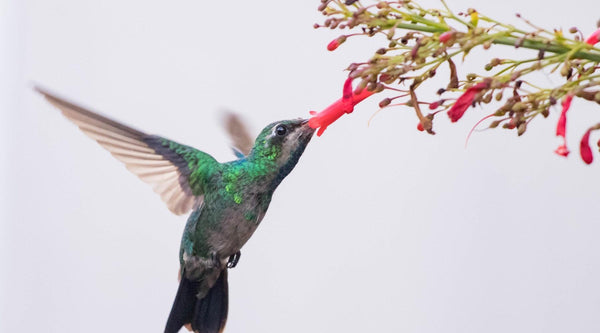
No. Hummingbirds are built to hover, and they feed perfectly well from flowers and feeders with nothing to stand on. But they don't always choose to hover. In a small study published in The Auk, researcher Richard Miller found that hovering isn't necessarily the preferred way for hummingbirds to feed, and that the shape of the flower, not energy cost, decided whether a bird hovered or perched. The study was small, two female Ruby-throated Hummingbirds in Ontario and one Antillean Crested Hummingbird in the Virgin Islands, so treat it as a strong hint rather than the final word. The hint is that when a food source gives a hummingbird somewhere to stand, it will often use it.
Do Hummingbirds Prefer Feeders With Perches?
The honest answer is that no one has tested it directly, as far as we've found. We haven't seen a study that offered hummingbirds feeders with and without perches and counted which they chose. What the evidence supports is that hummingbirds will perch to feed when a food source allows it, and that perching costs them less energy than hovering. A feeder with a comfortable perch simply gives them that option. If hummingbirds are skipping your feeder entirely, a missing perch is rarely the reason. Why Aren't Hummingbirds Coming to My Feeder? 7 Common Fixes walks through the usual causes.
Shop the feeder
AspenPerch® Hummingbird Feeder, 8 oz

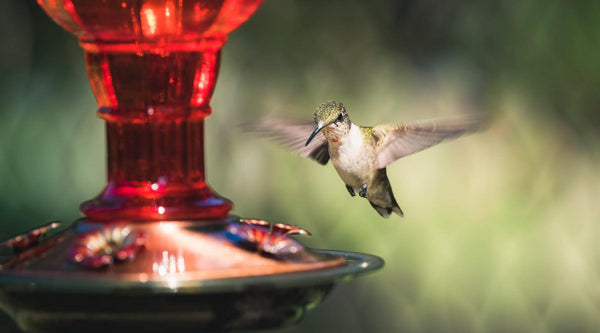
If hummingbirds will perch to feed when a food source lets them, the AspenPerch® is built to let them. Its Grandview™ perch placement sets the Polyperch® perches above an open bowl instead of beside a port, so a hummingbird can sit and lean down to drink, and you get a clear view of its face and tongue instead of its back. A built-in ant moat and a leak-proof design help keep the nectar clean, which is what makes a feeder a food source worth staying near. It comes apart in two pieces for cleaning, is top-rack dishwasher safe, and is made in the USA with a lifetime warranty.
Shop AspenPerch® →How does a perch-style feeder compare with the classic designs? AspenPerch® vs. a Standard Saucer Feeder goes head to head, and How to Choose the Right Hummingbird Feeder covers every other factor worth weighing.
Where to Put a Perch Near Your Feeder
If you want to give your hummingbirds a resting spot, place it where their behavior says they'll use it: close to the food, in the open, and in view of the feeder so a bird can rest and keep watch at the same time. Thin matters too. Those tiny feet are made for gripping a slender twig. Our own rule of thumb, from years of watching swings in use rather than from a study, is to hang a swing about a foot from the feeder at the same height. Where to Hang a Hummingbird Swing has the full details, and Where to Hang a Hummingbird Feeder covers the feeder side. Wondering whether the swinging motion itself matters? We dig into that in Do Hummingbird Swings Really Work?
Shop the swing
Original Hummingbird Swing™, Onyx

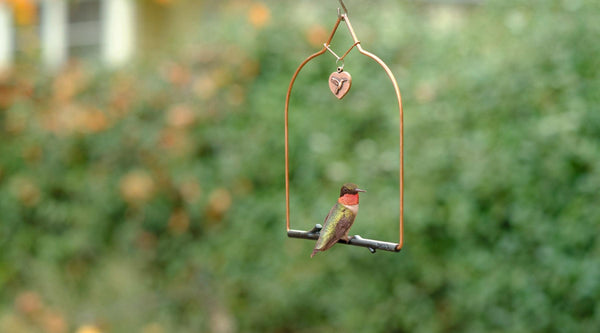
Hummingbirds guard their food from nearby perches, and the Original Hummingbird Swing™ puts one right where that happens: hanging beside your feeder, where a bird can rest, digest, and keep watch over its food. The perch is our patented Polyperch®, made to mimic the look, shape, and feel of the slender perches hummingbirds grip in nature. The Onyx finish is a deep matte black that makes a hummingbird's colors stand out in every photo. It comes with an 'S' hook for hanging and is 100% made in the USA with a lifetime guarantee.
Shop the Original Swing →Key Takeaways
- Hummingbirds perch a lot. Classic studies found about 75% of waking hours perched and about 20% feeding.
- That share changes with food. Newer research on Broad-billed Hummingbirds found it can fall to around 20% perching when flowers are scarce and scattered.
- The richer and closer the food, the more they sit, and they like to guard food from nearby perches.
- Perching is when hummingbirds digest, preen, keep watch, and, at night, go into torpor. It's essential behavior, not idle downtime.
- Hummingbirds don't need a perch to feed, but a small study suggests they'll often perch when a food source lets them.
- No study we've found shows a perch by a feeder brings in more hummingbirds. Giving them a comfortable perch beside good food is Pop's reasoning, built on how they already behave.
Frequently Asked Questions
Do hummingbirds really spend most of their time sitting still?
Often, yes. Classic field studies found hummingbirds spend about three-quarters of their waking hours perched and only about a fifth feeding. It depends on food, though. When flowers are scarce and scattered, research on Broad-billed Hummingbirds found perching can drop to around 20% of the day.
How often do hummingbirds land?
Constantly. They land on twigs, branches, wires, and feeders to rest, digest, and watch over their food. What they can't do is walk. Their legs are so short that the best they can manage is a shuffle along a perch.
Why do hummingbirds need to perch so much?
Hovering is extremely expensive, so hummingbirds rest to save energy. Perching is also when they digest, preen, keep watch over their food, and, at night, go into torpor to survive long hours without eating.
Does the amount of time hummingbirds perch ever change?
Yes. It follows the food. In research on wild Broad-billed Hummingbirds in Arizona, birds perched about 70% of the day when flowers were abundant and clustered, and as little as about 20% when flowers became scarce and scattered.
What do hummingbirds do all day?
Mostly, they sit. Classic studies found hummingbirds spend about 20% of their waking hours feeding and about 75% perched, where they digest, preen, and keep watch over their food. When flowers are scarce, that flips, and they spend much more of the day flying in search of food.
Do hummingbirds eat at night?
No. Hummingbirds take in no energy at night, so they get through it on what they ate during the day. Many go into torpor, lowering their body temperature and metabolism to make that stored energy last until morning.
Can hummingbirds feed without a perch?
Yes. Hummingbirds can hover to feed from any flower or feeder. A small study of Ruby-throated Hummingbirds found that hovering isn't necessarily their preferred way to feed, though, and that the shape of the food source decided whether they hovered or perched.
Are feeders with perches better for hummingbirds?
No study we've found has tested that directly. What the research supports is that hummingbirds will perch to feed when a food source allows it, and that perching uses less energy than hovering.
Does having a perch near a feeder actually help attract hummingbirds?
We haven't found research showing that a perch by itself brings in more hummingbirds or makes visits longer. What's well established is that hummingbirds rest near good food and guard it from nearby perches. A comfortable perch beside a feeder fits that behavior, and that's the reasoning behind Pop's Original Hummingbird Swing™.
Why is a hummingbird sitting on my feeder for so long?
It's almost always normal. A hummingbird sitting quietly for several minutes is usually digesting, preening, or keeping watch over its food. A bird that sits a lot at your feeder has found a food source it trusts.
What is the Polyperch® design based on?
Polyperch® is Pop's patented perch, shaped to mimic the look, shape, and feel of the slender natural perches hummingbirds grip in the wild. It's our design approach, built on how hummingbirds perch, rather than a research finding in itself.
Summary
Hummingbirds are built for motion, but much of their day is spent perched: resting, digesting, preening, and keeping watch, with the exact balance set by how easy food is to find. When food is rich and close, sitting is the default. That's the behavior Pop's has designed around for decades, with the Original Hummingbird Swing™ and the Polyperch® on our AspenPerch® feeder, and we've tried to be clear here about which parts are proven research and which parts are our own reasoning. The best thing you can do for a perching hummingbird is give it a food source worth staying near: fresh nectar, flowers nearby, and a comfortable spot to sit. For the planting side of that, see How to Create a Hummingbird Sanctuary in Your Backyard.
Sources
Diamond, J. M., Karasov, W. H., Phan, D., & Carpenter, F. L. (1986). Digestive physiology is a determinant of foraging bout frequency in hummingbirds. Nature, 320, 62–63. https://doi.org/10.1038/320062a0
Karasov, W. H., Phan, D., Diamond, J. M., & Carpenter, F. L. (1986). Food passage and intestinal nutrient absorption in hummingbirds. The Auk, 103(3), 453–464. https://doi.org/10.1093/auk/103.3.453
Miller, R. S. (1985). Why hummingbirds hover. The Auk, 102(4), 722–726. https://doi.org/10.1093/auk/102.4.722
Pyke, G. H. (1981). Why hummingbirds hover and honeyeaters perch. Animal Behaviour, 29, 861–867. ScienceDirect
Suarez, R. K. (1992). Hummingbird flight: sustaining the highest mass-specific metabolic rates among vertebrates. Experientia, 48, 565–570. https://doi.org/10.1007/BF01920240
Cotton, P. A. (1998). Temporal partitioning of a floral resource by territorial hummingbirds. Ibis. https://doi.org/10.1111/j.1474-919X.1998.tb04710.x
Shankar, A., Graham, C. H., Canepa, J. R., Wethington, S. M., & Powers, D. R. (2019). Hummingbirds budget energy flexibly in response to changing resources. Functional Ecology, 33, 1904–1916. https://doi.org/10.1111/1365-2435.13404
Shankar, A., Cisneros, I. N. H., Thompson, S., Graham, C. H., & Powers, D. R. (2022). A heterothermic spectrum in hummingbirds. Journal of Experimental Biology, 225(2), jeb243208. https://doi.org/10.1242/jeb.243208
Clemson Cooperative Extension, Home & Garden Information Center. "Now Is the Time to Put Out Hummingbird Feeders." hgic.clemson.edu
National Park Service, Harpers Ferry National Historical Park. "Swifts and Hummingbirds." nps.gov
Give Them a Place to Perch
Four of our hummingbird swings, each built on our patented Polyperch® and made to hang beside your feeder, right where hummingbirds rest and keep watch over their food.


Bethany Sloan has served as General Manager of Pop's Birding since 2010, continuing the legacy of her grandfather, William "Pops" Sloan, inventor of the Original Hummingbird Swing. A lifelong hummingbird enthusiast, educator, and independent researcher, she leads the company's educational content, including its 50-State Hummingbird Guide series, Regional Guide, Species Guide and Hummingbird Learning Center. Bethany combines scientific research, regional migration data, and more than 16 years of hands-on experience to create trusted educational resources for bird enthusiasts across North America.