Jul 16, 2026
Why There Are No Hummingbirds in Hawaii (and What to Plant Instead)
If you've moved to Hawaii from anywhere on the mainland and found yourself missing the hummingbirds at your old feeder, you're not imagining the silence. Hawaii is the one state in this entire guide series where the honest answer to "how do I attract hummingbirds" is: you can't, because there aren't any here to attract. But that's not really where the story ends — it's where a much more interesting one begins.
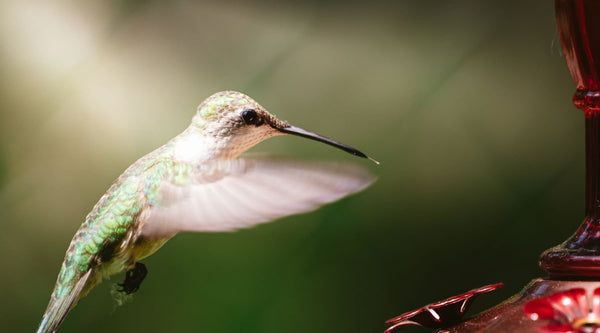
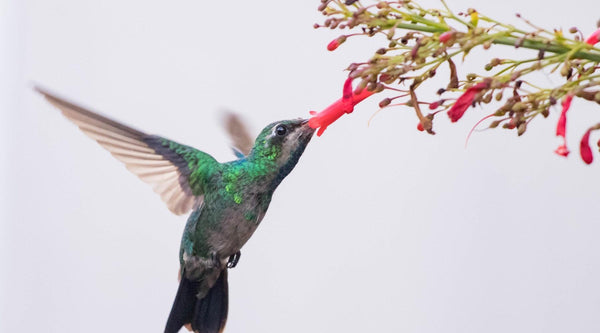
The short version: Hummingbirds are exclusively New World birds, and the nearly 2,500 miles of open Pacific Ocean between the mainland and Hawaii is simply too far for a bird that small to fly. No hummingbird species ever colonized the islands naturally, none have been introduced, and none show up even as rare accidental visitors the way they occasionally do almost everywhere else in North America. Instead, Hawaii's native flowering plants evolved alongside an entirely different group of nectar-feeding birds found nowhere else on Earth: the Hawaiian honeycreepers.
Why Hummingbirds Never Made It to Hawaii
Hummingbirds are a purely Western Hemisphere family, found from southern Alaska down to Tierra del Fuego, and nowhere else in the world. Hawaii, meanwhile, is one of the most isolated island chains on the planet — roughly 2,500 miles from the nearest continent. For a bird that weighs a few grams and typically migrates in short, food-fueled hops rather than long open-ocean crossings, that distance has simply always been an impossible barrier.
It isn't a matter of Hawaii lacking the right habitat, either. The islands have plenty of nectar-rich, tubular native flowers that look every bit as "hummingbird-ready" as anything on the mainland. Hummingbirds just never got the chance to find them.
Meet the Birds That Took the Job Instead
Nature doesn't leave a niche like that empty for long. Long before humans arrived in Hawaii, a single finch-like ancestor species reached the islands and, over millions of years of isolation, diversified into dozens of different forms — a process called adaptive radiation, similar to what happened with Darwin's finches in the Galápagos. Some of these descendants evolved long, curved bills and brush-tipped tongues strikingly similar to a hummingbird's, and took over the job of feeding on — and pollinating — Hawaii's native flowers. Today we call this group the Hawaiian honeycreepers.
'I'iwi (Scarlet Honeycreeper)
One of the most recognizable honeycreepers, with brilliant scarlet plumage and a long, downward-curved bill built for reaching deep into tubular flowers. The 'i'iwi feeds heavily on 'ōhi'a lehua blossoms, along with native lobelias and mints, and is considered one of Hawaii's most important native pollinators. Found on Hawai'i Island, Kaua'i, and Maui, it's currently threatened primarily by avian malaria spread by non-native mosquitoes.

'Apapane
Another 'ōhi'a lehua specialist and one of the more numerous remaining honeycreepers, with deep crimson-red feathers and a shorter, less curved bill than the 'i'iwi. 'Apapane are highly mobile, following 'ōhi'a bloom cycles across the forest canopy in search of nectar.

Hawai'i 'Amakihi
A yellow-green honeycreeper with a gently curved bill, more of a generalist than the 'i'iwi or 'apapane — feeding on nectar, insects, and spiders alike. It's also one of the more adaptable honeycreepers, found across a wider elevation range than many of its more specialized relatives.
Sadly, the honeycreeper story isn't an entirely happy one. Of the roughly 58 known honeycreeper species that once existed, around 40 are now presumed extinct, and most surviving species are considered threatened or endangered — largely due to introduced predators, habitat loss, and avian malaria carried by non-native mosquitoes that historically couldn't survive at Hawaii's higher, cooler elevations. Supporting native plants that these birds depend on is one of the few concrete things a home gardener in Hawaii can do to help.

Hawaii's Other Nectar Specialists
Honeycreepers aren't the only pollinators filling the gap left by hummingbirds. Hummingbird moths — a type of sphinx moth with clear wings and a long proboscis — hover at flowers in a strikingly hummingbird-like way, and are frequently mistaken for the real thing by visitors from the mainland. Native bees, wasps, and other insects round out the picture, each adapted over time to Hawaii's unique native flora.
Plant a Native Hawaiian Pollinator Garden
Since the goal here isn't attracting hummingbirds, it's supporting the honeycreepers, moths, and native insects that actually do this work in Hawaii, the right plant list looks completely different from anywhere else in this series.
Best native Hawaiian nectar plants:
Pop's tip: If you're gardening in Hawaii and miss the hummingbird-feeder ritual from your mainland home, consider redirecting that same energy into native plantings instead. A well-placed 'ōhi'a lehua does for Hawaii's ecosystem roughly what a well-placed cardinal flower or bee balm does on the mainland — except here, it's genuinely irreplaceable, since the honeycreepers evolved nowhere else and depend on it in a way mainland hummingbirds never depend on any single plant.
A Word on Sugar-Water Feeders in Hawaii
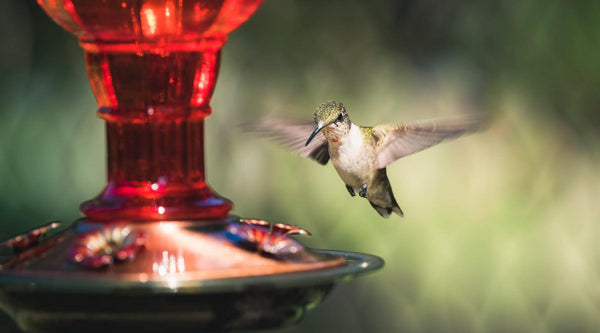
Traditional hummingbird feeders aren't part of the toolkit here, and not just because there's no target species. Introducing any non-native nectar-feeding animal to Hawaii — even accidentally, even temporarily — carries real risk for the islands' already-fragile native bird populations, through competition for limited nectar and the potential spread of disease. Hawaii's strict rules around importing live animals exist precisely to protect ecosystems like this one. If you're building a pollinator garden in Hawaii, the nectar itself should come from real, native flowers, not a feeder.
Summary: Key Takeaways for Hawaii
- Hawaii has no native, established, or regularly occurring hummingbird species — hummingbirds are exclusively a Western Hemisphere family, and roughly 2,500 miles of open Pacific Ocean has always been too far for them to reach the islands naturally
- Hawaii's native flowering plants evolved alongside a different nectar-feeding group entirely: the Hawaiian honeycreepers, descended from a single finch-like ancestor through adaptive radiation
- 'I'iwi, 'apapane, and Hawai'i 'amakihi are three of the more recognizable surviving honeycreeper species, though roughly 40 of the historical 58 species are now presumed extinct
- Hummingbird moths and native insects round out Hawaii's pollinator community
- 'Ōhi'a lehua is the single most important native plant for supporting honeycreepers, alongside native lobelias and māmane
- Sugar-water feeders aren't part of a responsible Hawaii pollinator garden — native flowers do that job here, and introducing non-native nectar-feeders carries real ecological risk
Frequently Asked Questions
Are there really no hummingbirds anywhere in Hawaii? Correct — no hummingbird species is native, established, or even a regular vagrant visitor to Hawaii. This is one of the few US states where that's true; nearly every other state in this guide series hosts at least an occasional rare hummingbird sighting, but Hawaii's extreme isolation in the Pacific has kept it entirely outside hummingbird range.
What bird is closest to a hummingbird in Hawaii? The 'i'iwi, or scarlet honeycreeper, is often described as Hawaii's closest equivalent — it has a long, curved bill adapted for nectar feeding and plays a similar pollinating role for native flowers like 'ōhi'a lehua.
Can I bring a hummingbird feeder to Hawaii or set one up if I already live there? There's no hummingbird species for a feeder to attract in Hawaii, so a traditional sugar-water feeder won't serve its usual purpose here. If you want to support Hawaii's nectar-feeding wildlife, native flowering plants like 'ōhi'a lehua are the more meaningful and ecologically appropriate choice.
What are hummingbird moths, and are they related to hummingbirds? No — hummingbird moths are a type of sphinx moth, unrelated to actual hummingbirds, but they hover at flowers and feed on nectar in a strikingly similar way, which is why they're so often mistaken for hummingbirds by visitors.
Why are Hawaiian honeycreepers endangered? Most surviving honeycreeper species face serious threats from introduced predators, habitat loss, and avian malaria carried by non-native mosquitoes — a disease many honeycreepers have no natural resistance to. Supporting native host plants like 'ōhi'a lehua is one of the more direct ways home gardeners can help.
At Pop's Birding, we believe every backyard — big or small — has room for a little more wonder, wherever you are. While our feeders, nectars, and swings are built for the hummingbirds of the mainland United States, we love that Hawaii has its own remarkable story of nectar-loving birds worth celebrating and protecting. Explore our full 50-state hummingbird guide series for the other 49 states, or check out our wildflower seed blends for inspiration on building a pollinator-friendly garden wherever you call home.

Pete Stankovich is the Director of Business Development for Pop's Birding, where he has helped grow the company's mission of connecting people with hummingbirds and the natural world since 2020. A lifelong outdoorsman, outdoor educator, and conservation advocate, Pete brings decades of field experience to his work. For 12 years, he served as a Boy Scout leader and merit badge instructor, teaching Bird Study, Nature, Fish and Wildlife Management, and other outdoor-focused programs. He also spent 5 years on a search and rescue team, developing expertise in outdoor safety, wilderness awareness, and Leave No Trace principles. Pete holds a B.A. in Business Communication from Chapman University and a Strategic Marketing Management certification from the University of Chicago Booth School of Business.