Jul 13, 2026
How to Attract Hummingbirds in Tennessee: A Backyard Sanctuary Guide
There's a reason Tennessee backyards can feel like hummingbird headquarters by late summer. According to the Tennessee Wildlife Resources Agency, one Nashville yard alone had 353 individual Ruby-throated Hummingbirds banded in a single summer — between early June and late September of 2008. If a single feeding station can draw that kind of traffic, imagine what a well-planned yard could do for you.
Whether you're gardening in Memphis, Nashville, Knoxville, or a cabin near the Smokies, this guide will walk you through everything you need to turn your space into a Tennessee hummingbird destination: who's around and when, how to size your setup to any space, feeder and nectar care, pest-safe cleaning, and the native plants and wildflower seed varieties that thrive in Tennessee's climate.
The short version, if you're in a hurry:
To attract hummingbirds in Tennessee, put up a leak-proof feeder filled with fresh, dye-free nectar by late March in West Tennessee and early April in Middle and East Tennessee, keep it clean and refilled every 1–6 days depending on heat, skip the insecticide so hummingbirds can still hunt insects for protein, and plant native, nectar-rich flowers like coral honeysuckle, cardinal flower, and wild bergamot so your yard offers real food alongside the feeder.
- Species you'll see: Ruby-throated for nearly every sighting; Rufous a regular winter visitor; Black-chinned in smaller numbers most winters too
- Best feeder type: leak-proof design with a comfort perch, like the AspenPerch® Hummingbird Feeder
- Best nectar: plain 4:1 water-to-sugar ratio, no red dye — or Pop's Nectar with added electrolytes and calcium
- Feeder timing: up by late March in West Tennessee, early April in Middle and East Tennessee — our own county-level review of eBird data shows genuinely zero presence anywhere in the state before mid-to-late March
- Nectar change frequency: every 1–2 days above 90°F, every 5–6 days below 70°F
- Pest control: no insecticide — use vinegar-water spray and HummGuard™ nectar tips instead
- Top native plants: coral honeysuckle, cardinal flower, wild bergamot, eastern red columbine, trumpet creeper (varies by region — see below)
- Best wildflower planting window: October through November, for spring bloom timed to spring migration
Free download
Take Tennessee with you
Everything on this page on one page you can print and keep by the back door — the species you'll actually see, arrival dates county by county, nectar change schedules by temperature, and the native plants worth putting in the ground.
Download the Tennessee cheat sheetOne page · PDF · free to print and share
Which Hummingbirds You'll See in Tennessee
Tennessee's hummingbird scene centers on one dependable breeder, with a genuinely regular winter visitor and a rotating cast of rarer western vagrants making it more interesting each year. Here's what you're most likely to see:
Ruby-throated Hummingbird
The only hummingbird that breeds regularly anywhere in Tennessee, and the species behind the vast majority of sightings from spring through fall. Males show off a brilliant iridescent red throat, while females wear soft green and white. They're found in every county in the state, from mixed woodlands and forest edges to suburban gardens.

Rufous Hummingbird
Tennessee's established regular winter visitor, and increasingly common — per Tennessee Wildlife Resources Agency, before the late 1980s there was only a single confirmed record in the state; by the winter of 2007–2008, there had been more than 100. Tennessee's official bird records committee lists Rufous as "Regular" status, the only western hummingbird species to earn that classification here. Males are a fiery orange-red and famously territorial, often chasing off other hummingbirds at a feeder.

Black-chinned Hummingbird turns up most winters too, in smaller numbers than Rufous — Tennessee's records committee classifies it as "Casual," a genuine step above a one-off but below Rufous's regular status. Males have a velvety black throat with a thin, hard-to-see band of violet-purple. Beyond those two, Tennessee's confirmed record list includes Anna's, Calliope, Allen's, Broad-tailed, and Broad-billed Hummingbirds, all classified "Accidental" by the state records committee — genuine rarities, not birds to expect. Calliope is worth a special mention: it's the smallest breeding bird in North America, and an occasional winter surprise at Tennessee feeders alongside other out-of-range western species.
Great Smoky Mountains National Park, Radnor Lake State Park near Nashville, and Reelfoot Lake in the northwest corner of the state are all well-known spots for catching migration in action, especially during the spring and fall peaks.
Want to go deeper on identification? Our full Hummingbirds in Tennessee species guide breaks down Ruby-throated versus Tennessee's winter visitors and true rarities, including exactly how to tell them apart.
When Do Hummingbirds Arrive and Leave Tennessee?
Statewide Picture
Before the regional detail below, here's the whole season in two pictures — Ruby-throated's full-season curve, and the winter visitors worth watching for, shown at their own scale since they're a small fraction of Ruby-throated's numbers.


How often each species turns up on eBird checklists, week by week — statewide, 2016–2025. The regional detail below shows how arrival timing shifts across the state.
Arrival Times by Region
Ruby-throated Hummingbirds move across Tennessee on a real, if modest, west-to-east gradient each spring — though our own county-level review of eBird data shows the whole state stays quiet until mid-to-late March, later than some general guidance suggests:
| Region | First Arrivals | Reliably Common By |
|---|---|---|
| West Tennessee (Shelby/Memphis) | Late March | Mid-April |
| Middle Tennessee (Davidson/Nashville) | Early April | Late April |
| East Tennessee (Knox/Sevier, Smoky Mountains) | Early April | Early May |
Windows derived from our own analysis of eBird bar chart data (Cornell Lab of Ornithology), 2016–2025, for Shelby, Davidson, Hamilton, Knox, and Sevier counties. "First arrivals" is the first week reporting rises clearly above the winter baseline; "reliably common" is the first week each county's reports reach 25% of that county's seasonal peak. East Tennessee's Smoky Mountains counties see scouts on time but take noticeably longer to build to a reliable presence — likely an elevation effect as much as pure west-to-east geography.
Departure
Southbound migration begins in August, with males typically leaving first. Our own statewide checklist data peaks in early-to-mid September as this year's fledglings join the adults at feeders before the wave turns south. Meaningful numbers persist longer than many people expect — every region we checked still shows real activity into early-to-mid October, with numbers dropping close to zero only by the very end of the month.
Pop's tip: Males arrive first and establish territories, with females following about two weeks later — so don't worry if your feeder looks quiet the first week or two. Consider leaving your feeder up through mid-November; western vagrants like Rufous are increasingly being spotted in Tennessee well into the colder months.
Want the full timing picture? Our Tennessee hummingbird season calendar breaks the year down month by month and region by region — including nesting season and when to watch for Rufous.
Attracting Hummingbirds No Matter Your Space
You don't need acres of land to invite wonder into your yard. Hummingbirds are famously adaptable — all they're really looking for is a dependable food source, a safe place to perch, and a little color.

- Small patio or balcony: One feeder hung from a bracket or shepherd's hook, paired with a container of red or orange tubular blooms like scarlet sage, is plenty to get noticed. Hummingbirds are solitary feeders by nature, so a single feeder works great in tight spaces.
- Average backyard: Add a mix of feeders and native blooms along a fence line or garden bed, and give your visitors a swing or two nearby to rest and survey their territory between sips.
- Large yard with trees: Take advantage of the shade. Hummingbirds prefer feeders and plantings tucked out of harsh, direct afternoon sun, with a nearby branch to perch on and watch for rivals. Spread multiple feeders far apart, since hummingbirds are territorial and will happily chase each other off a single feeder.
Feeding: Keep It Full, Fresh, and Leak-Free
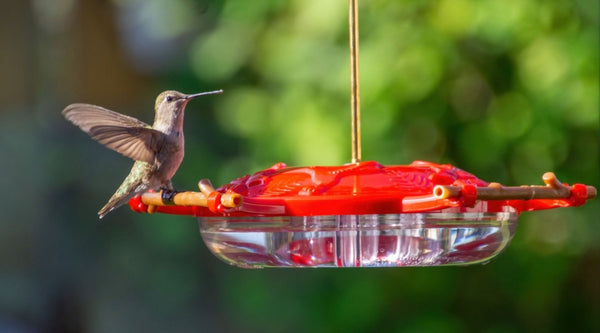
A feeder is only as good as what's in it — and how well it's kept. Pop's AspenPerch® Hummingbird Feeder is leak-proof by design and paired with our patented Polyperch® comfort perch, so your hummingbirds can rest and feed at the same time instead of hovering the whole meal.

A few feeding fundamentals:
- Only fill what they'll drink in a few days. An 8 oz feeder rarely needs to be topped all the way off — overfilling just means more nectar sitting around long enough to spoil, especially in Tennessee's humid summers.
- Skip the red dye. Your feeder's color does the attracting; dyed nectar offers no benefit and isn't necessary.
- Use a real nectar recipe, or save yourself the math with Pop's Nectar, formulated with added electrolytes and calcium to support hummingbirds through the demands of nesting season and migration — no dyes, no preservatives.
How Often to Change Nectar in Tennessee
Sugar water ferments faster the hotter and more humid it gets, and Tennessee summers bring plenty of both. Use this as your rule of thumb:
| Outdoor Temp | Change Nectar Every |
|---|---|
| Below 70°F | 5–6 days |
| 70–80°F | 3–4 days |
| 80–90°F | 2–3 days |
| Above 90°F | 1–2 days |
If the nectar ever looks cloudy before that window is up, change it early — cloudiness means it's already started to ferment.
Keeping Feeders Clean (and Pests Away) Without Insecticide
Hummingbirds don't live on nectar alone — small insects make up a big part of their protein diet, especially for feeding chicks. That means insect spray is off the table around your feeding station; it removes a food source hummingbirds depend on and can be harmful to them directly.
Instead:
- Clean your feeder every time you change the nectar, using warm water and a bottle brush — no soap residue, no bleach. A little vinegar and water solution works great for breaking down sticky buildup or the beginnings of mold.
- Deter ants and bees with a vinegar-water spray around (not on) the feeder ports, or wipe down the hanging hook where ants tend to march down.
- Use HummGuard™ nectar tips if bees and wasps keep crashing the party. They slide right onto the AspenPerch's feeding ports — the flexible membrane opens easily for a hummingbird's beak but closes tight against anything bigger, keeping your nectar exclusively for the birds it's meant for.
Give Them a Place to Rest
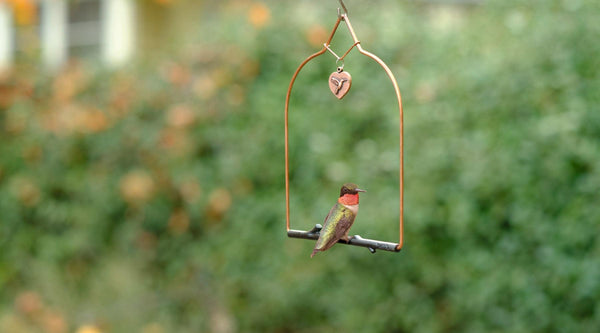
Hummingbirds spend a surprising amount of their day perched, not flying — watching their territory, digesting, and simply resting between feedings. A Pop's Original Hummingbird Swing hung near your feeder gives them exactly that spot, and it turns your feeding station into a front-row seat for watching them up close. Hang it within a foot or two of your feeder, and don't be surprised if a hummingbird claims it as their own personal lookout post.

Plant a Tennessee Native Hummingbird Garden
Feeders are a wonderful supplement, but nothing beats real, native nectar. Native plants evolved right alongside Tennessee's hummingbirds, so they bloom on the right schedule and produce exactly the nectar these birds are looking for.
Best native nectar plants by Tennessee region:
| Region | Best Native Nectar Plants |
|---|---|
| West Tennessee | Trumpet creeper, cardinal flower, wild bergamot |
| Middle Tennessee | Coral honeysuckle, wild bergamot, eastern red columbine, cardinal flower |
| East Tennessee & Smoky Mountains | Fire pink, eastern red columbine, coral honeysuckle, Indian pinks |
Pop's tip: Coral honeysuckle, cardinal flower, and eastern red columbine make an excellent core trio — between the three of them, you get hummingbird-attracting blooms for roughly six months straight, from columbine in April through cardinal flower into September.
If You're Near the Border
Hummingbirds don't check a map before deciding where to feed, so if you're near a state line, your best guide might be a blend of both.
Near Kentucky: Both confirmed native for Perennial Lupine, and both share the Southeast humidity problem with Palmer Penstemon. See our Kentucky guide for more.
Near Virginia: Nearly identical Appalachian and Southeast native plant list. See our Virginia guide for more.
Near North Carolina: Shared Southeast humidity issue and native plant list. See our North Carolina guide for more.
Near Georgia: Nearly identical Piedmont-to-Gulf gradient. See our Georgia guide for more.
Near Alabama: Shared Southeast humidity pattern. See our Alabama guide for more.
Near Mississippi: Nearly identical Gulf-adjacent climate. See our Mississippi guide for more.
Near Arkansas: Both confirmed native for Perennial Lupine — unlike Missouri, which borders both states. See our Arkansas guide for more.
Near Missouri: Missouri falls just outside Lupine's native range, while Tennessee is confirmed — a genuine difference right at this border. See our Missouri guide for more.
To make this easy, our Perfect Little Sanctuary® Wildflower Seed Blend is designed to bring nectar-rich color into your yard with minimal fuss.
When to Plant the Perfect Little Sanctuary® Blend in Tennessee

Fall is the best planting window across Tennessee — aim for October through November, with many University of Tennessee Extension and Master Gardener resources specifically recommending late fall to early winter sowing. This timing is based on the germination needs of the blend's own 12 varieties: 9 of the 12 either need or benefit from a cold, moist stratification period before they'll germinate well — including Lance-Leaved Coreopsis, Purple Coneflower, Black-Eyed Susan, and White Yarrow — and Tennessee's winter cold does that work naturally. Early spring (March–April) is a solid backup window if you miss fall, though germination is less reliable without that natural cold period.
Top Performers in Tennessee
The Perfect Little Sanctuary® blend contains 12 varieties, and Tennessee's humid, four-season climate favors genuine natives over the blend's dry-climate specialists:
- Purple Coneflower (Echinacea purpurea) — a genuine Tennessee native and a long summer bloomer, appearing on official state pollinator plant lists
- Black-Eyed Susan (Rudbeckia hirta) — native to Tennessee, reliable through heat and humidity
- Lance-Leaved Coreopsis (Coreopsis lanceolata) — native to Tennessee, drought tolerant once established
- White Yarrow (Achillea millefolium) — confirmed native by University of Tennessee Extension's Tennessee Smart Yards program, low-maintenance and drought tolerant
- Painted Daisy (Chrysanthemum carinatum) — not a Tennessee native, but a dependable, heat-tolerant annual bloomer that holds up well in Southeastern humidity
Pop's tip: You don't need to do anything special to favor the strong performers — just sow the blend as directed. The rest of the mix still adds seasonal color, but these varieties are the ones that will do the heaviest lifting in a Tennessee yard.
Summary: Key Takeaways for Attracting Hummingbirds in Tennessee
Building a hummingbird-friendly yard doesn't take a green thumb or a big budget — just a little consistency and the right setup. Here's everything from this guide in one place:
- Ruby-throated Hummingbirds are the only species that breeds in Tennessee, and one Nashville yard alone had 353 individuals banded in a single summer, showing just how much traffic a good feeding station can draw
- Rufous Hummingbird is Tennessee's official "Regular" winter visitor and has grown from a single record before the late 1980s to over 100 by 2007–08; Black-chinned turns up in smaller numbers most winters too ("Casual" status); Anna's, Calliope, Allen's, Broad-tailed, and Broad-billed are all genuine one-offs ("Accidental" status)
- Feeder timing: up by late March in West Tennessee, early April in Middle and East Tennessee — the whole state stays genuinely quiet before mid-to-late March
- Any size space works — one feeder is plenty for a balcony; larger yards can support multiple feeders spaced apart, since hummingbirds are territorial
- Use a leak-proof feeder with a comfort perch, like the AspenPerch®, and fill it only as full as it'll be drunk in a few days
- Skip red dye in nectar; a plain 4:1 sugar-water ratio or Pop's Nectar (with electrolytes and calcium) both work
- Change nectar every 1–2 days above 90°F, up to every 5–6 days below 70°F
- Clean the feeder at every nectar change with warm water and vinegar — no soap or bleach
- Never use insecticide near feeders; hummingbirds rely on insects for protein. Use vinegar-water spray and HummGuard™ nectar tips for pest control instead
- Add a swing near the feeder to give hummingbirds a place to rest and be observed up close
- Native, nectar-rich plants (coral honeysuckle, cardinal flower, wild bergamot, eastern red columbine, depending on region) do more for hummingbirds long-term than feeders alone
- Sow wildflower seed in October–November for blooms timed to spring migration; Purple Coneflower, Black-Eyed Susan, Lance-Leaved Coreopsis, White Yarrow, and Painted Daisy are the strongest Tennessee performers in Pop's Perfect Little Sanctuary® blend
Get these basics in place, and the wonder takes care of itself.
This guide covers what's specific to Tennessee — the species, the timing, the plants that belong here. For the fundamentals that apply anywhere, including water sources, shelter, and how the pieces work together, read our guide to building the ultimate hummingbird sanctuary.
Frequently Asked Questions
A few of the questions we hear most from fellow hummingbird lovers across Tennessee:
When should I put my hummingbird feeder out in Tennessee?
Late March is a safe target in West Tennessee, since spring migrants can arrive that soon along the Mississippi River. Middle and East Tennessee, including the Smokies, can wait until early April — our own data shows the whole state stays essentially quiet until mid-to-late March.
Do hummingbirds stay in Tennessee year-round?
Almost never as a rule, but a small number of Ruby-throated and Rufous Hummingbirds do overwinter in the state, including birds too old, unwell, or injured to migrate. Rufous sightings in particular have increased dramatically since the 1980s, and it's now Tennessee's official "Regular" winter visitor.
Is Black-chinned Hummingbird a regular visitor to Tennessee?
Not quite as regular as Rufous, but more than a one-off. Tennessee's bird records committee classifies Black-chinned as "Casual" — it turns up in smaller numbers most winters, a genuine step above the true rarities like Anna's or Calliope.
Is it bad to leave my feeder up in fall?
Not at all — it's a myth that a feeder left up will delay migration. Hummingbirds migrate based on daylight and instinct, not food availability, and a full feeder just helps them refuel for the journey ahead. In Tennessee, it's worth leaving feeders up until at least mid-November, since Rufous and other western vagrants increasingly show up during the colder months.
How often should I clean my hummingbird feeder in Tennessee?
Clean it every time you change the nectar — as often as every 1–2 days when temperatures top 90°F, and at least every 5–6 days in cooler weather. Use warm water and a vinegar rinse rather than soap or bleach, which can leave residue.
What are the best plants to attract hummingbirds in Tennessee?
Coral honeysuckle, cardinal flower, and wild bergamot perform well across the entire state, with eastern red columbine and fire pink especially strong in East Tennessee and the Smokies. Native, tubular, red or orange flowers are the general rule of thumb.
Tennessee Hummingbird Resources
Audubon Chapters
Tennessee is home to numerous local Audubon chapters across the state. Find the one closest to you with Audubon's Find Your Local Audubon tool.
If You Find an Injured or Grounded Hummingbird
Hummingbirds are protected under federal and Tennessee state law, so only a licensed wildlife rehabilitator can legally care for one.
- Tennessee Wildlife Resources Agency — Find a Rehabilitator — the official statewide list by region and species
- Walden's Puddle (Nashville area) — a well-established wildlife rehabilitation hospital; wildlife admissions line 615-559-9453
- Lillie Birds Wildlife Rehabilitation (Nashville) — 615-579-8801
Hummingbird Research & Events in Tennessee
Tennessee is home to Southeastern Avian Research, led by master bander Cyndi Routledge, who bands hummingbirds at multiple public festivals across the state and region each season:
- Ijams Hummingbird Festival (Knoxville) — a well-established festival featuring live hummingbird banding in 25-minute public sessions, plant sales, and educational programming
- Hummingbird Festival at Wilderness Station (Murfreesboro) — a free public event where Cyndi Routledge traps and bands migrating Ruby-throated Hummingbirds as they fuel up for fall migration, paired with conservation education presentations
- Hummingbird Banding with Metro Nashville Parks — free public banding demonstrations held at several Nashville nature centers, including Bells Bend Outdoor Center, Warner Park Nature Center, Shelby Bottoms Nature Center, and Fort Negley. A great option for visitors to see banding up close without needing to travel to Knoxville or Murfreesboro.
Event dates and formats change from year to year. Check organizer websites before making plans.
Sources
We pulled eBird bar chart data for Tennessee statewide and for five counties — Shelby (Memphis), Davidson (Nashville), Hamilton (Chattanooga), Knox (Knoxville), and Sevier (Gatlinburg/Smoky Mountains) — covering 2016 through 2025, and read the seasonal shape and regional pattern directly off the reporting rates ourselves. Percentages describe how often a species appears on birdwatchers' submitted checklists — a measure of how likely you are to encounter one, not a population count.
- eBird bar chart data, Cornell Lab of Ornithology — Tennessee statewide and county-level (Shelby, Davidson, Hamilton, Knox, Sevier), 2016–2025. Source for all species timing and the regional arrival pattern.
- Tennessee Wildlife Resources Agency, Ruby-throated Hummingbird species page. Source for the sole-breeding-species confirmation, the 353-bird Nashville banding record, and historical Rufous record counts.
- Official List of the Birds of Tennessee, Tennessee Bird Records Committee (December 2024). Source for each species' official status (Regular, Casual, Accidental).
- All About Birds, Ruby-throated Hummingbird (Cornell Lab of Ornithology). Source for general species biology.
Haven't grabbed it yet? Download the free Tennessee Quick Reference Guide — one page, print and keep.
At Pop's Birding, we believe every backyard — big or small — has room for a little more wonder. Explore our feeders, nectars, swings, and wildflower seed blends to start building your own hummingbird sanctuary today.
Know before they arrive
You've got the setup — now keep it working all year. Insider Birding Access members get seasonal notes timed to your region: when to have feeders out, what the birds are doing right now, and what's worth doing in your yard this season. Joining takes about thirty seconds, and there's 10% off your first order in it.
Join Insider Birding Access →Free to join. 10% off your first order.

Bethany Sloan has served as General Manager of Pop's Birding since 2010, continuing the legacy of her grandfather, William "Pops" Sloan, inventor of the Original Hummingbird Swing. A lifelong hummingbird enthusiast, educator, and independent researcher, she leads the company's educational content, including its 50-State Hummingbird Guide series, Regional Guide, Species Guide and Hummingbird Learning Center. Bethany combines scientific research, regional migration data, and more than 16 years of hands-on experience to create trusted educational resources for bird enthusiasts across North America.